A delivery can happen without the aircraft touching down
Zipline’s fixed-wing drones were designed for routes where a conventional runway would be impractical. At a hospital, the aircraft can keep moving and release a small medical package over a designated delivery area. A lightweight parachute slows the package as it descends, so staff can retrieve it without the drone needing to land beside the building.
That separation matters in rural settings: the delivery point can be a relatively simple open area, while the aircraft remains in the air and continues its route. The system is intended for urgent medical items, including blood, whose usefulness can depend on reaching a facility quickly.
Guidance turns a flyover into a delivery
A release is not simply a package dropped wherever the drone happens to pass. The aircraft follows a planned route and releases the parcel at a calculated point, accounting for its forward motion and the package’s descent. The parachute helps limit the impact, while the target area gives hospital staff a predictable place to look.
This approach trades a landing for a carefully timed handoff. The package must reach the delivery area, but the aircraft does not have to maneuver onto a short, prepared strip or wait for a ground crew to secure it.
The return is another engineered handoff
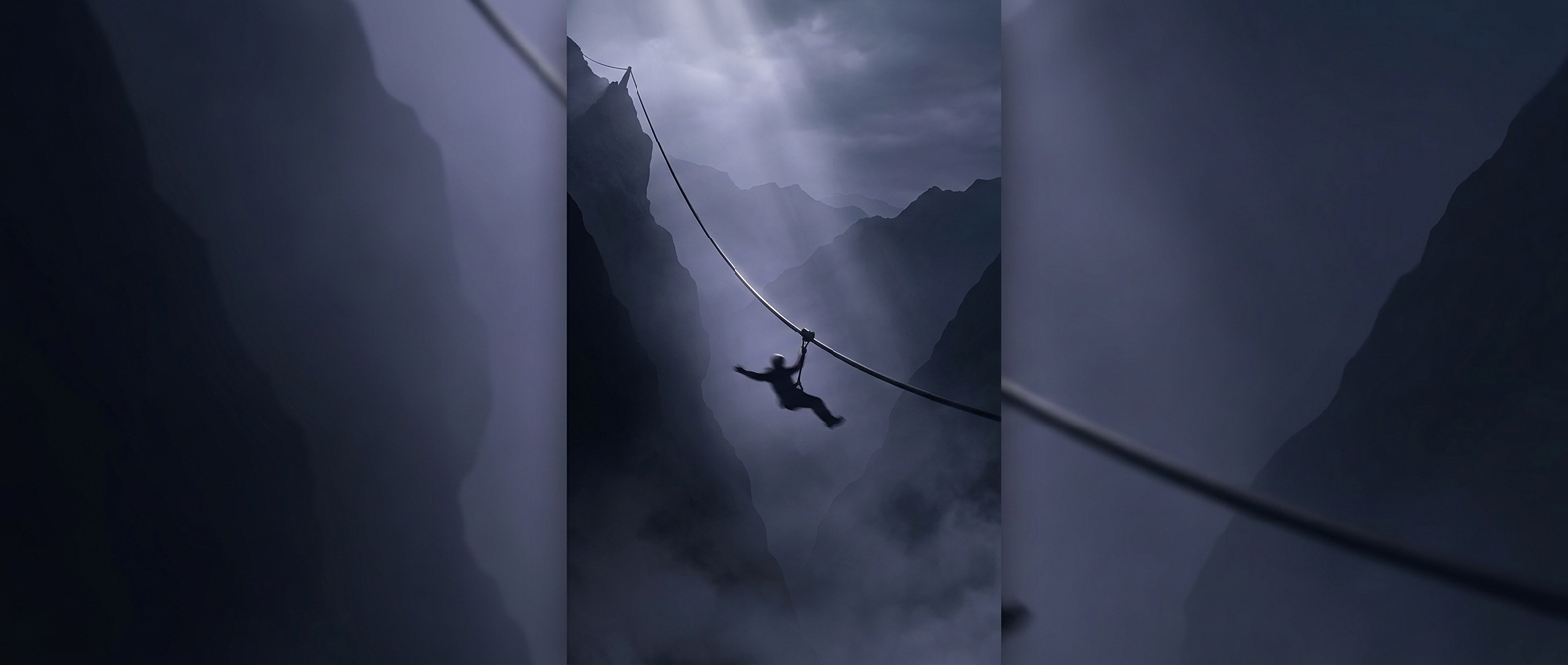
At its base, the aircraft is recovered by catching a suspended line with a hook on its tail. This is a form of “skyhook” recovery: instead of rolling to a stop on a runway, the drone flies into the line and is brought to a halt. The catch can look abrupt, but it is a planned part of the operating system, not a crash.
Together, the drop and recovery systems let the aircraft avoid two difficult tasks—landing at a remote hospital and making a conventional runway landing at its base. The package lands; the delivery aircraft keeps flying until it reaches its own catch system.