The cable turns height into motion
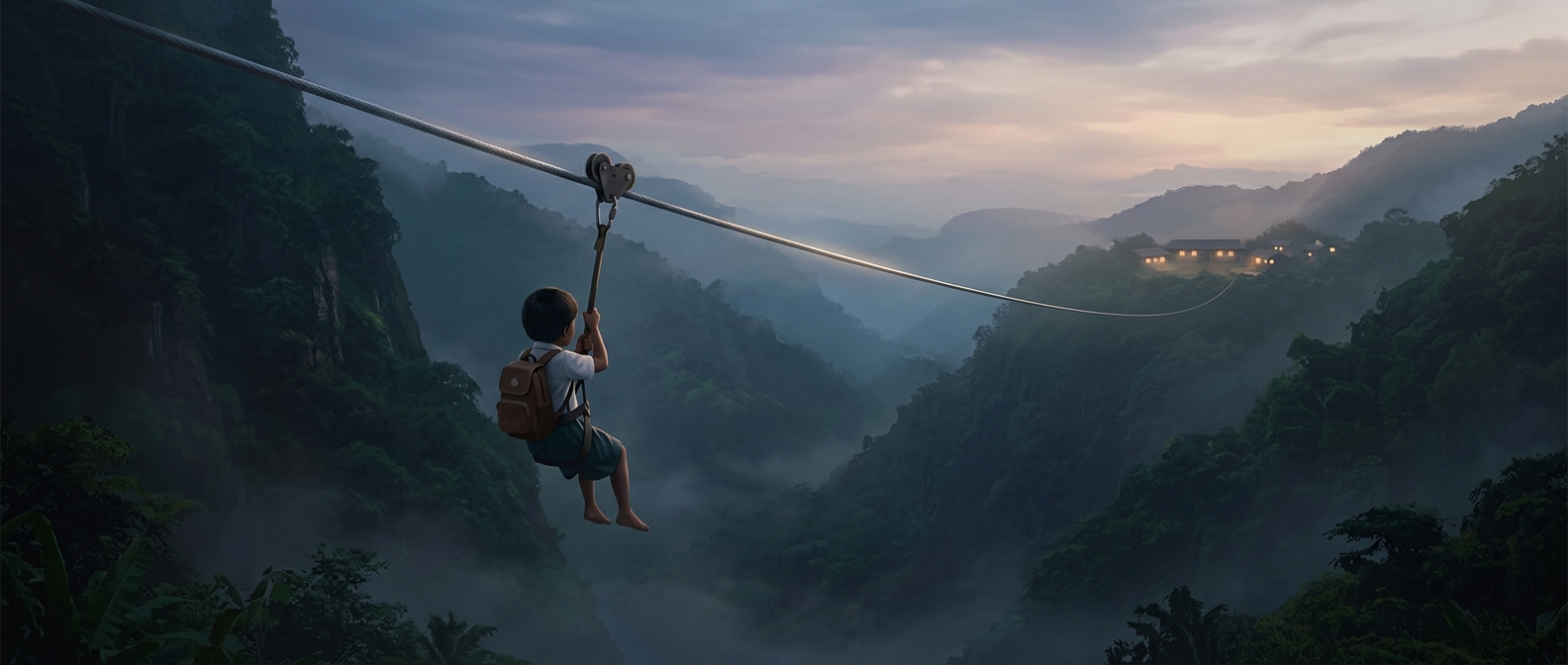
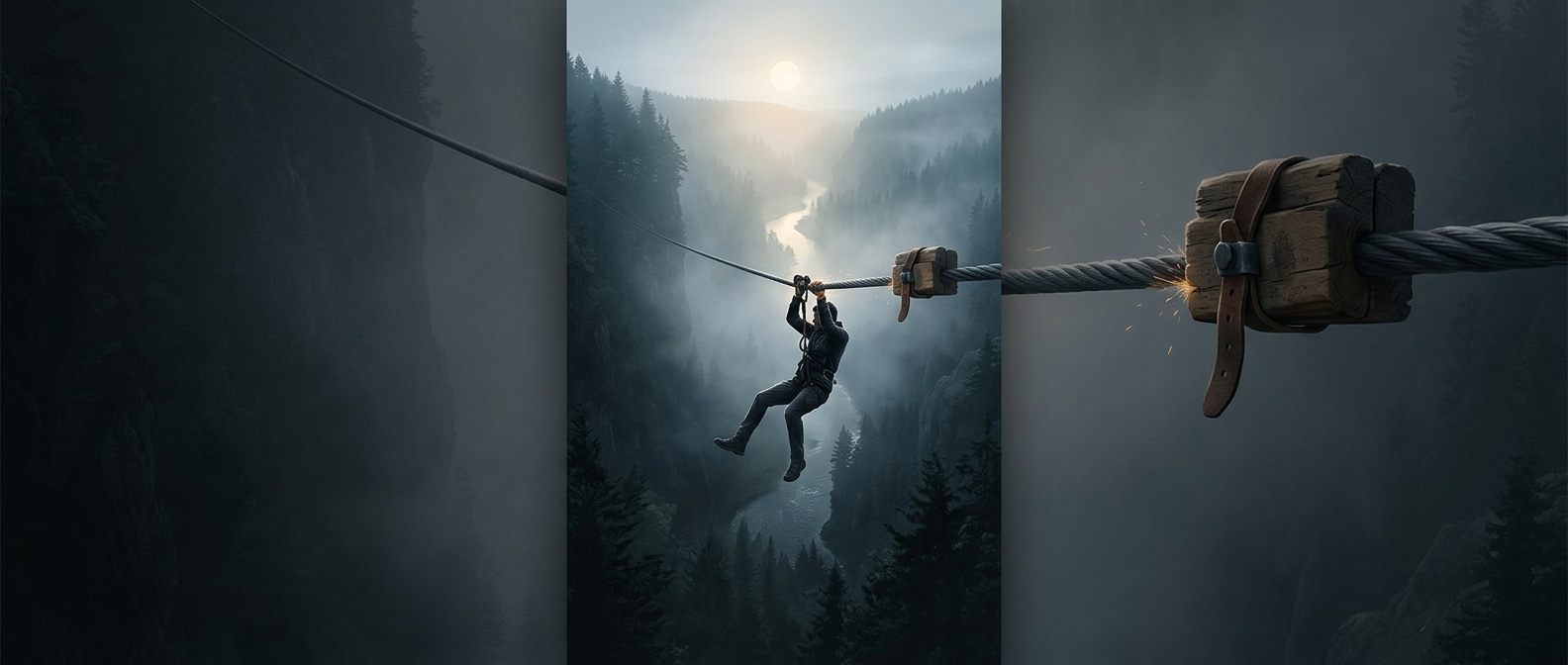
A zipline needs no motor because the rider begins above the endpoint. As the trolley rolls downhill, gravity pulls it forward; the rider’s lost height becomes kinetic energy, the energy of motion. A steeper drop generally creates a stronger pull, while a shallow section can slow the ride or leave a rider short of the landing area.
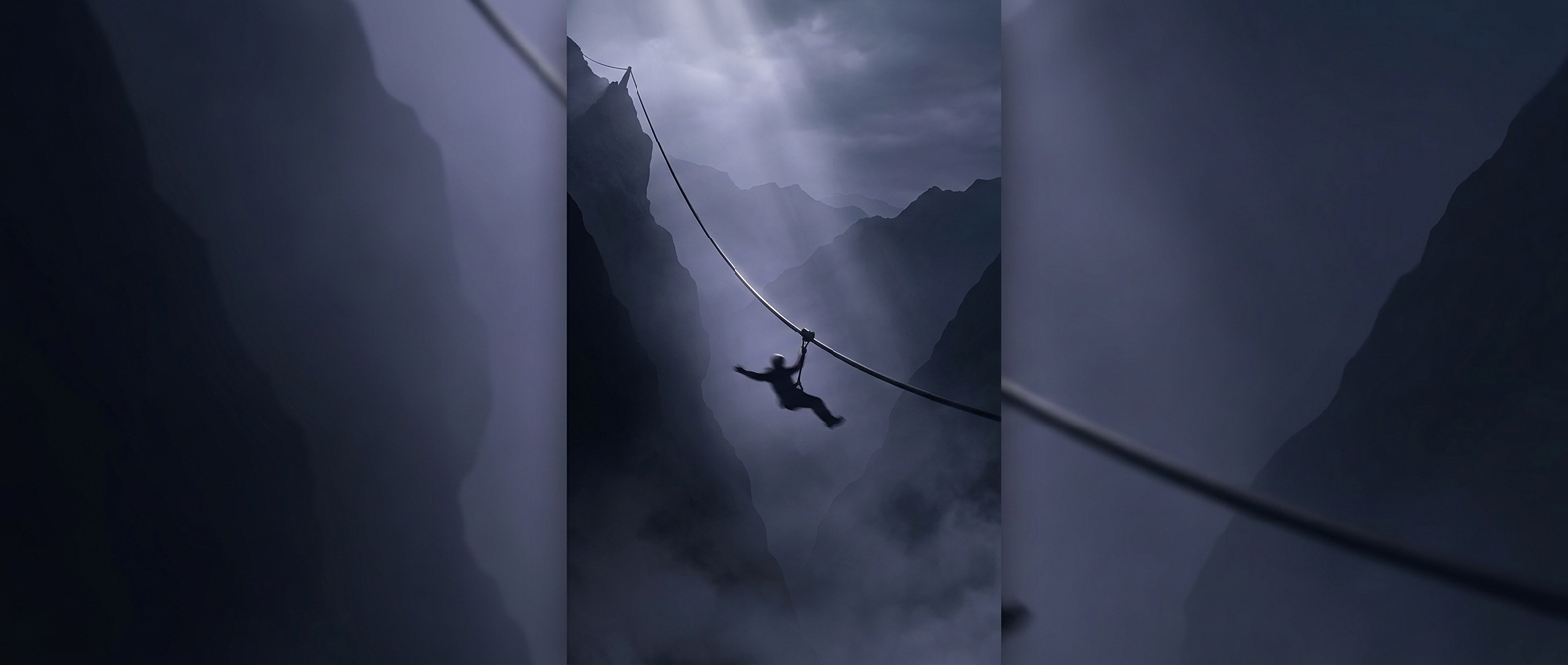
The cable is not a rigid track. It sags under the combined weight of the cable and rider, and that curve affects the route’s effective slope. Designers must account for the cable’s stretch and changing tension, too: a rider’s position shifts the load along the span, so the line’s shape and forces are not perfectly fixed.
Speed has to be managed
The trolley’s wheels reduce resistance as it travels, but they do not make the ride frictionless. Rolling resistance and air drag take some energy away. On a long or steep line, however, those losses may not be enough to keep speed within a safe range.
A braking system supplies the missing control. Depending on the design, it may press against the trolley or cable; friction then converts some of the rider’s motion into heat. The brake must slow the rider without bringing them to an abrupt stop, and its performance can vary with factors such as rider weight and conditions on the line.
That is the central engineering tradeoff: the slope must provide enough energy to carry the rider through the course, while the brake must reliably absorb the excess before the landing. On a zipline, the hill is the power source, but controlled friction is what makes the arrival manageable.