How a Drive Pulley Moves a Conveyor Belt
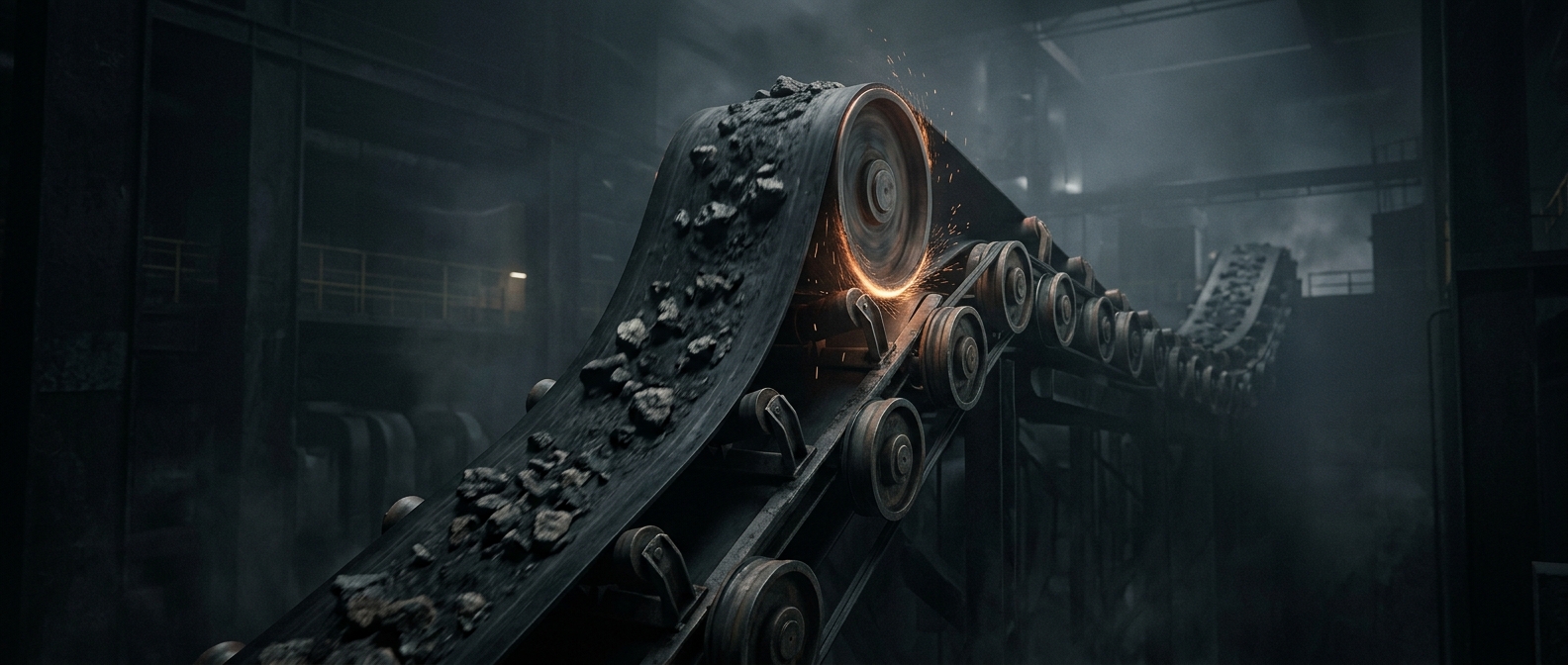
A conveyor motor does not usually pull the belt by hooking into each section of it. Instead, the motor turns a drive pulley, and friction at the point of contact drags the belt forward. The belt’s own tension presses it against the pulley, creating the grip that transfers the pulley’s rotation into belt motion.
This is traction: the same basic effect that lets a tire push against a road. If the pulley turns but the belt does not follow, the contact is slipping rather than transmitting the motor’s force.
Grip Depends on Contact and Tension
Designers can increase traction by keeping the belt under suitable tension and by making it wrap farther around the drive pulley. A larger wrap angle gives the belt more contact with the pulley, helping the drive transmit force without slipping. The pulley surface may also use a textured or rubber covering, called lagging, to improve grip, especially when dust or moisture makes the surface less favorable.
These adjustments have limits. Too little tension can let the belt slide; too much adds strain to the belt and load to the shafts and bearings. The goal is not maximum tightness, but enough grip for the expected load and operating conditions.
What Slipping Tells Operators
When the load rises beyond the available traction, the pulley can spin faster than the belt. That slip wastes energy as heat and can wear or damage the belt and pulley covering. It also offers a practical warning: the belt may be overloaded, poorly tensioned, contaminated, or facing a drive problem.
So friction is both the conveyor’s working connection and a limit on what it can carry. A belt that moves smoothly is evidence that the drive has enough grip; one that slides is showing where that grip has run out.