A Loop Turns the Counter Into a Serving Route
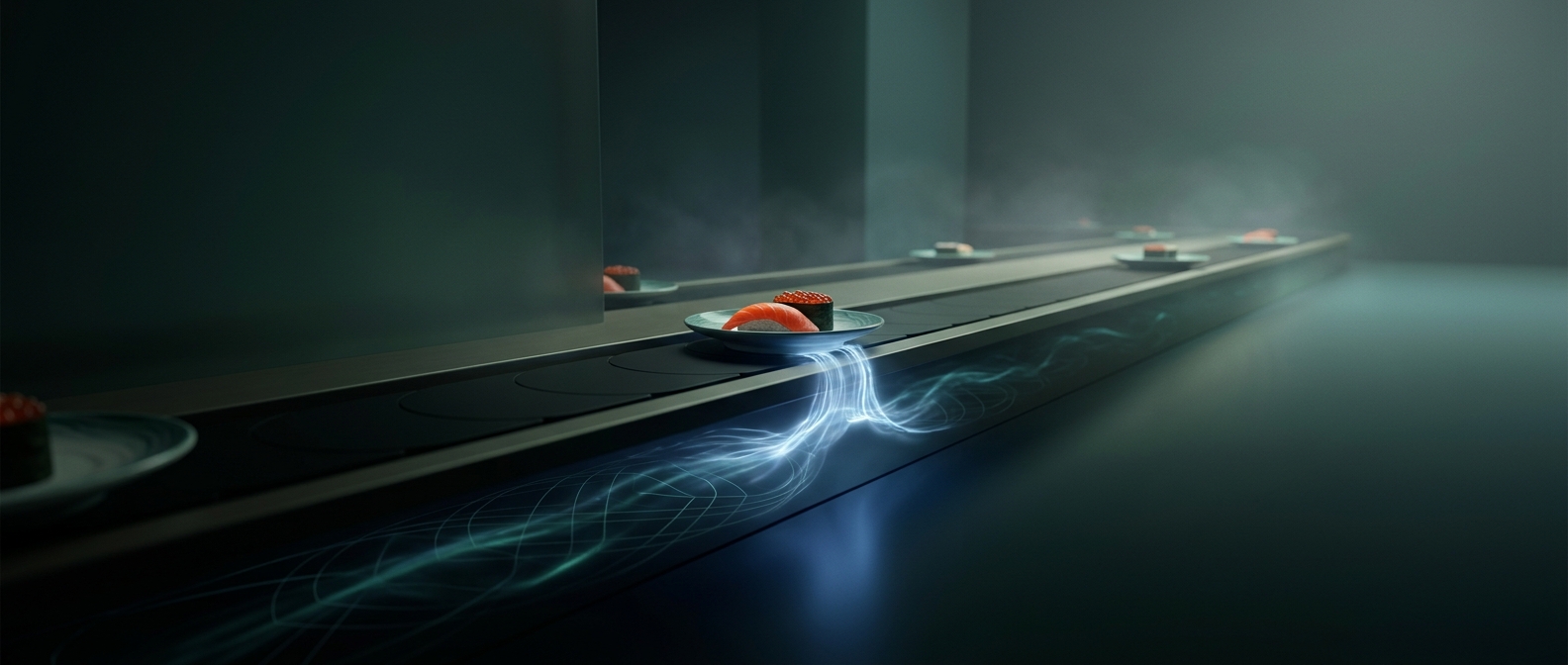
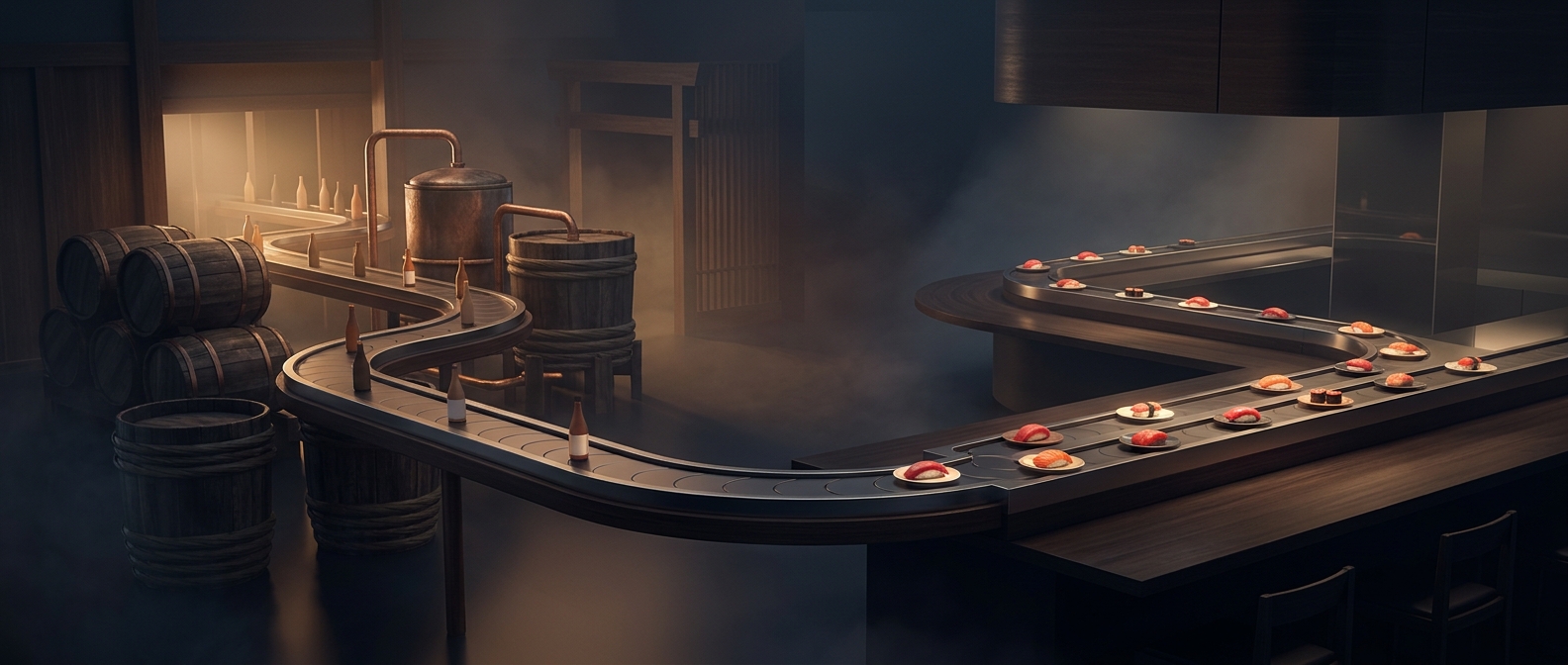
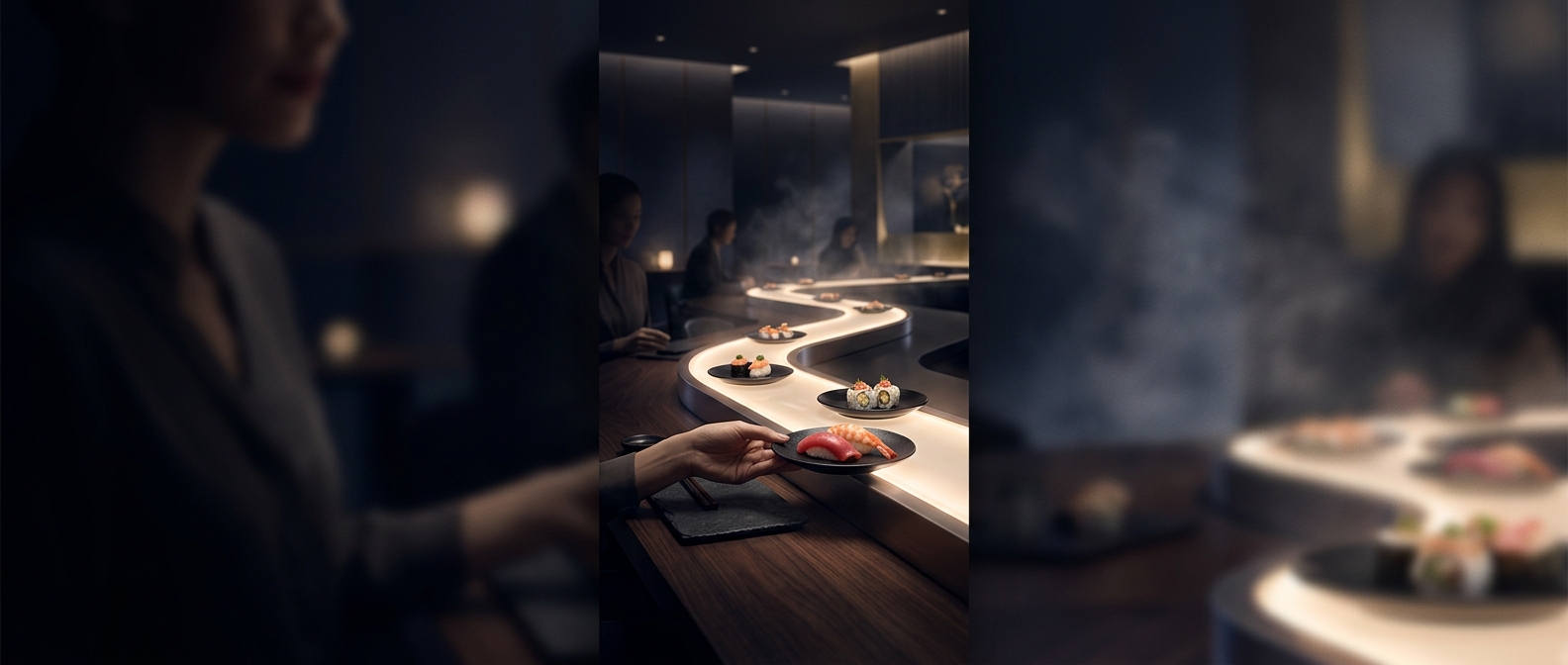
In a conveyor-belt sushi restaurant, the track is laid out so dishes travel past a row of seats and return to a point where staff can add more. A motor drives the loop at a steady pace; cooks place prepared plates onto it, and diners take the ones they want as they pass. The route does the repetitive back-and-forth that would otherwise occupy servers.
The layout is part of the system. Seats face the moving track, keeping each dish within easy reach, while the belt’s turns carry it around the counter. Because the route repeats, a plate can pass a diner more than once if nobody takes it—but prepared food cannot circulate indefinitely without attention. Staff still need to replenish dishes and remove plates that have been sitting too long.
The Belt Changes How Ordering Works
Instead of choosing from a menu and waiting for each item to arrive, diners make decisions by sight and timing. A familiar dish can be picked up immediately; an unfamiliar one can be watched as it goes by. That convenience also creates a tradeoff: the kitchen must anticipate what people will want, because food placed on the belt is already made before a particular customer claims it.
The arrangement turns the counter into both a dining space and a small distribution network. Its payoff is not that people disappear from the process—cooks and staff remain essential—but that prepared dishes can reach many seats along one continuous route. Each plate’s journey is short and visible: from the kitchen, past the diners, and off the belt when someone chooses it.