A restaurant built around a route
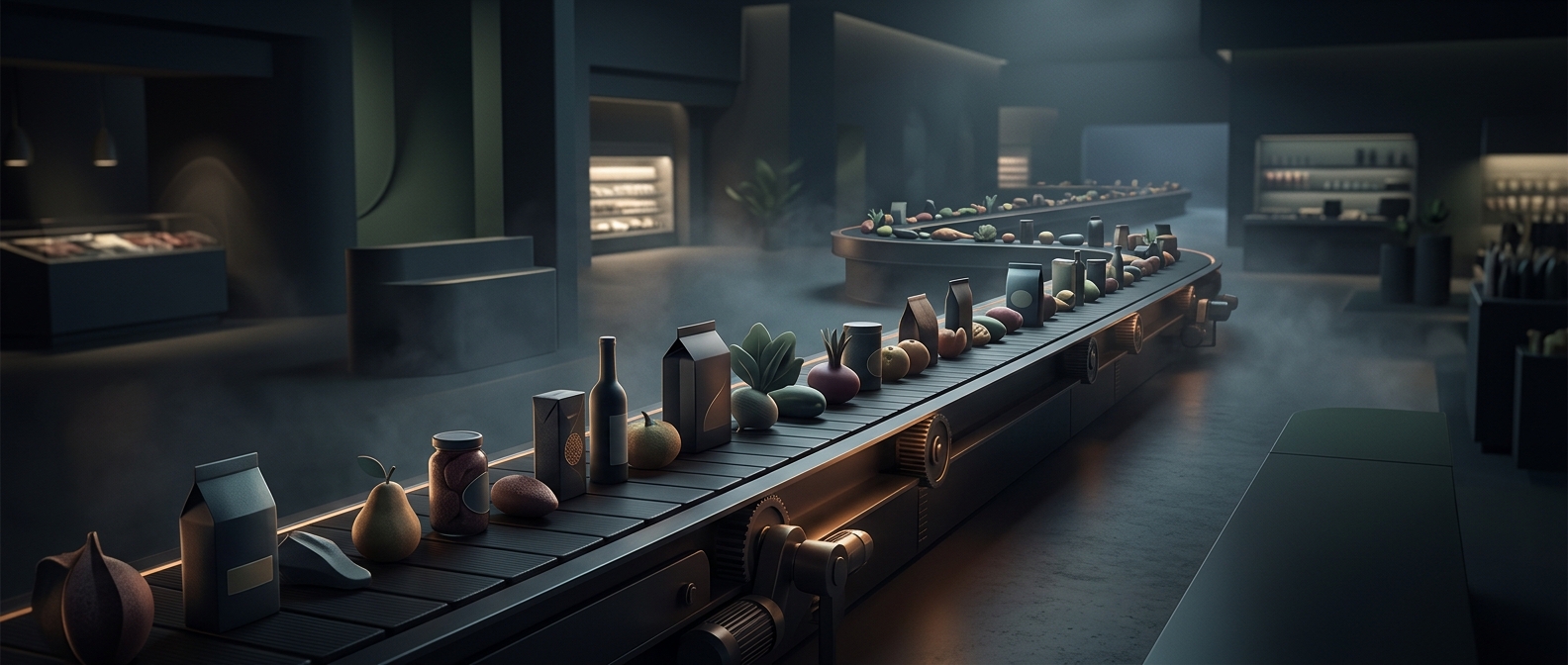
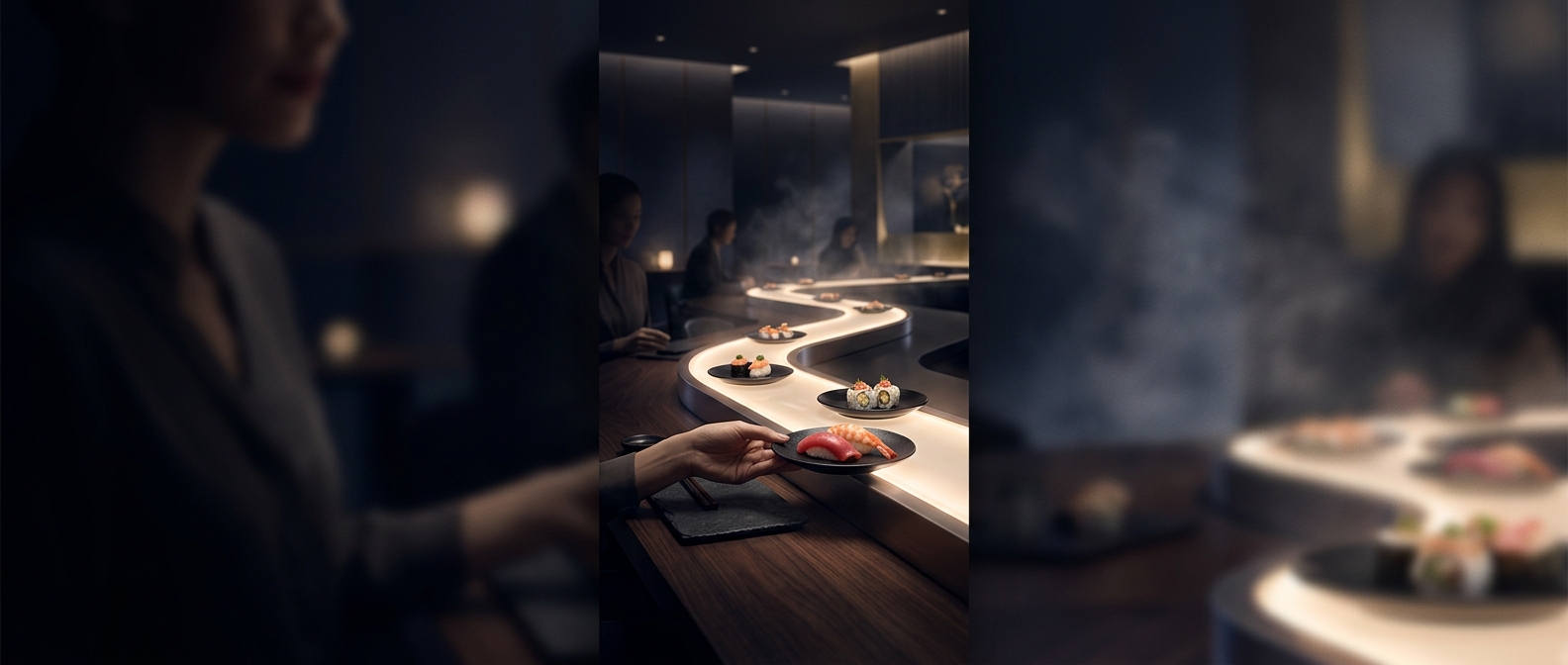
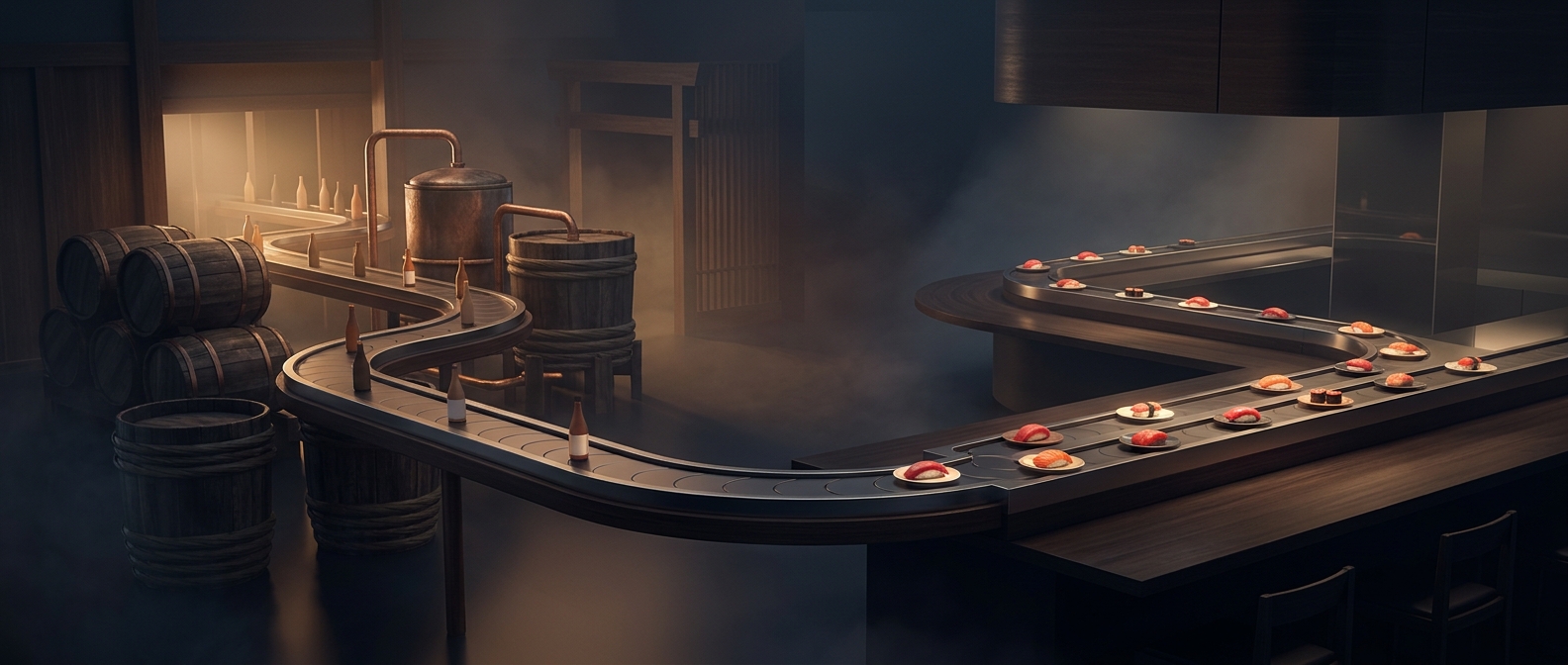
A conveyor-belt sushi restaurant turns the space between kitchen and customer into a continuous delivery route. Instead of waiting for a server to take an order and carry a plate across the room, diners sit beside the belt and take dishes as they pass. Cooks can place several small portions into circulation at once, while guests choose at their own pace.
That changes the timing of service. A plate no longer has to be made for one named customer and delivered immediately; it can travel past several seats until someone wants it. The belt therefore works best with compact dishes that are easy to spot, lift, and eat. It also makes the restaurant’s menu visible: each passing plate is both food and an invitation to choose.
The belt creates a new set of tradeoffs
The route saves repeated trips, but it does not make delivery cost-free. Food moves whether or not anyone takes it, so cooks must judge how much to put out and when to replenish it. A popular dish may disappear before it reaches every diner; a less popular one may keep circling. Restaurants manage that tension by sending out small batches and watching what gets picked up.
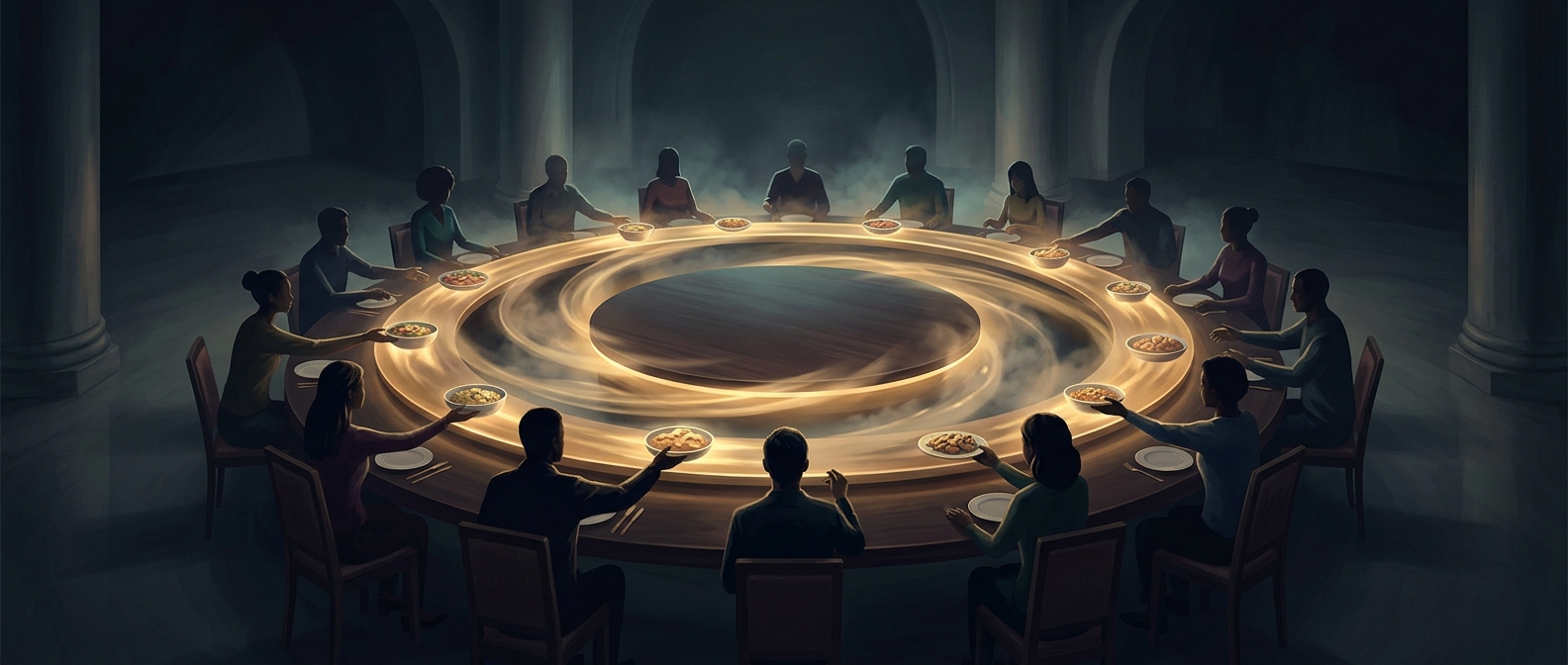
The layout also changes the diner’s role. Customers do some of the work of service themselves—choosing and collecting—while the kitchen keeps the belt supplied. The result is a meal organized less like a sequence of individual orders and more like a shared stream of choices: the next dish is already on its way before anyone asks for it.