How a tortilla turns loose food into a carryable meal
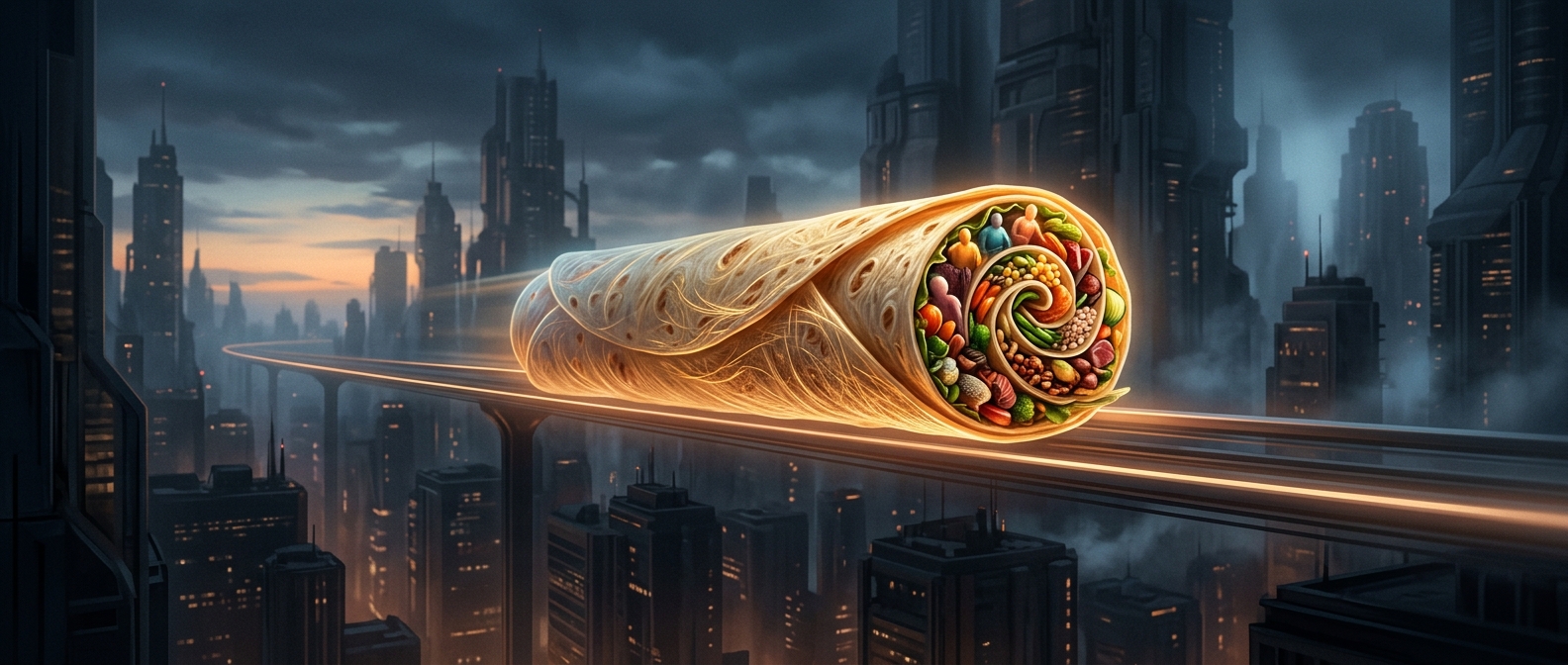
A burrito works because its tortilla is both wrapper and structure. Once rolled around the filling, the flexible sheet presses the ingredients together, limiting the gaps where pieces might shift. The overlap along the side forms a seam; keeping that seam underneath helps the burrito stay closed when it is picked up.
The folds manage the escape routes
The ends are the vulnerable points. Folding them inward before rolling the rest of the tortilla creates barriers that help contain small ingredients and sauces. It is a simple sequence: close the ends, then roll the long sides around the filling. Too much filling makes that sequence harder—the tortilla has less overlap to hold onto and is more likely to split.
The result is not a leakproof package. Thin sauces can seep through, and a tear can send the contents spilling out. But the enclosed shape lets someone carry a mixture of ingredients in one hand and eat it without assembling each bite separately. The burrito’s cleverness is practical: its wrapper becomes part of the meal, so there is no container to throw away.