Why a Crisp Shell Breaks All at Once
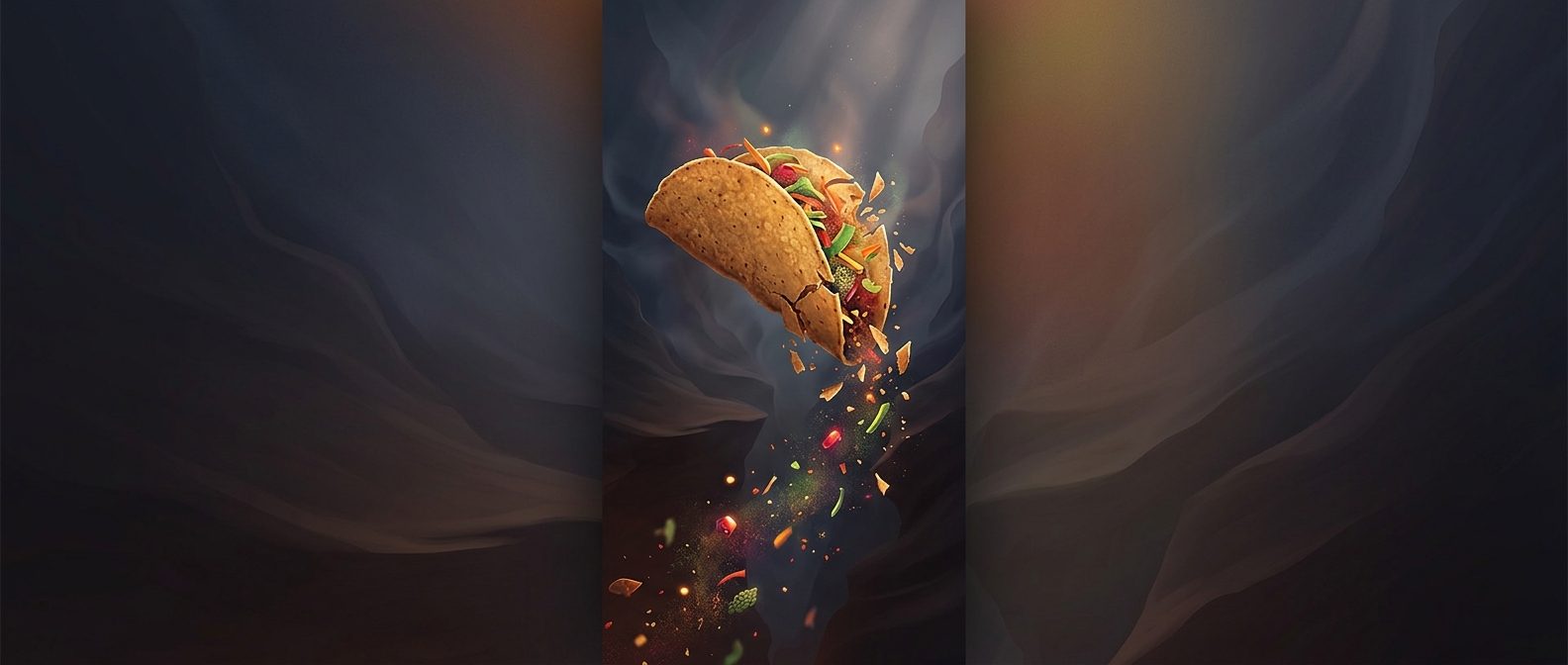
A hard taco shell is a thin, curved sheet of fried corn. Its shape can hold filling, but the shell has little give: unlike a soft tortilla, it cannot bend much to spread out the pressure of a bite. Once the force concentrates at a small spot, the shell cracks and the crack can race through the brittle material.
The First Crack Sets Off the Crumble
Your teeth press inward while the filling pushes outward from inside. That opposing pressure bends the shell, especially around its top edge and any thin or uneven spots. A tiny flaw—such as a pinhole or a hairline crack from handling—can become the starting point. When the stress there exceeds what the corn shell can withstand, it fractures; neighboring pieces break away as the shell shifts and the bite continues.
This is why a taco may shed more than the piece directly between your teeth. The curved shell carries force across its surface, so one fracture can redirect pressure into nearby areas. The filling also has nowhere to go but out through the new gaps, often nudging loose fragments onto the plate.
A Tradeoff Built Into the Crunch
Frying removes moisture and makes the shell crisp, which gives it its familiar snap. But that crispness comes with brittleness: a shell sturdy enough to stand upright can still fail abruptly under a concentrated bite. Holding the taco gently near the base and biting from the top can reduce twisting and help keep the filling in place—but once a crack opens, the shell’s own stiffness helps it spread.