A Fold Changes the Slice’s Shape
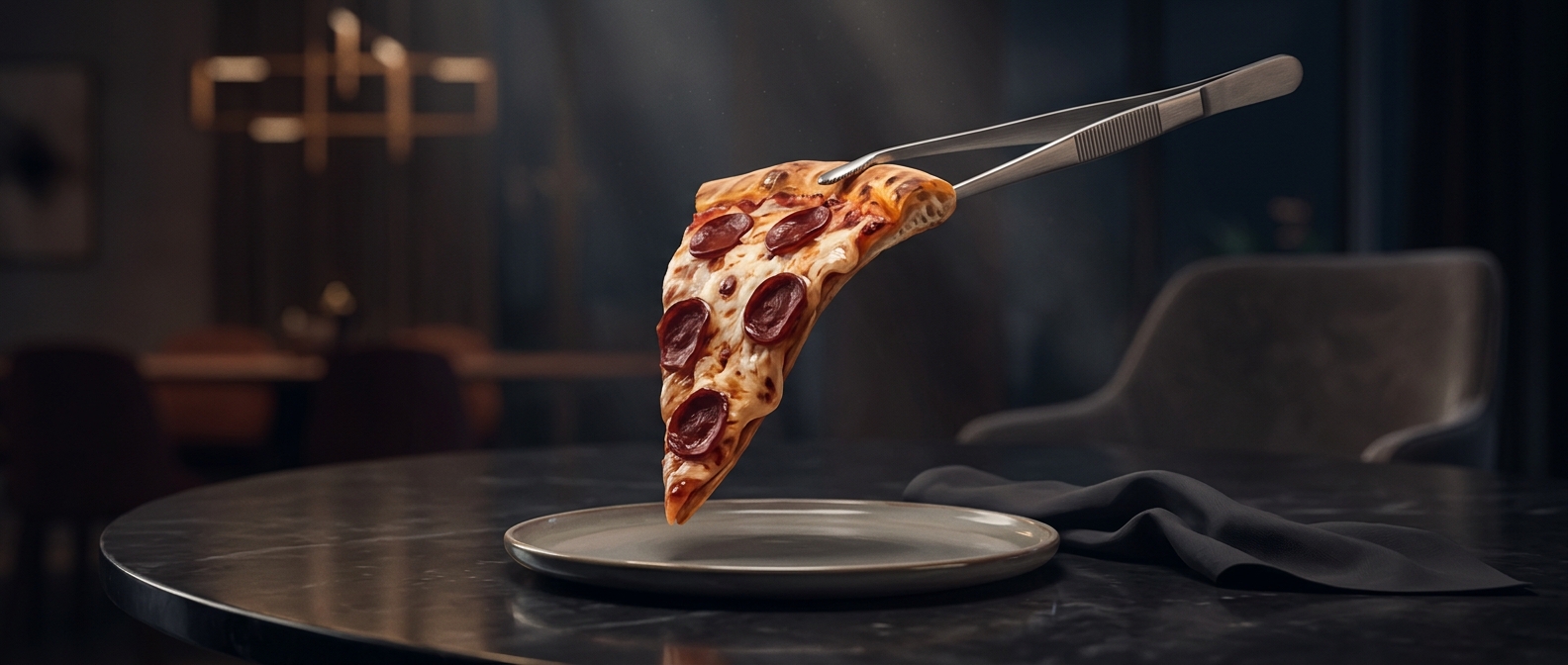
A pizza slice is broad and thin, so its pointed end can sag when you lift it. The farther that end hangs from your hand, the more the slice bends under its own weight. Fold it lengthwise, and the flat surface becomes a shallow V. That shape is harder to bend than the same dough left flat—not because the slice gains material, but because more of it sits away from the fold, where it helps resist bending.
The effect is similar to creasing a sheet of paper: a flat sheet flops, while a crease helps it hold a shape. The fold gives the slice a more stable path from hand to tip, so the part you’re eating is less likely to droop toward the plate.
More Control at the First Bite
A sagging slice can tilt its toppings toward the point or let the tip buckle as you bite. The folded shape helps keep the slice aligned and makes it easier to support with one hand. It also narrows the surface, bringing the two sides closer around the toppings. That can make a heavily topped slice less messy to handle, though it won’t stop hot cheese from stretching or toppings from shifting altogether.
The useful trick is structural, not magical: folding turns a floppy, flat slice into a more self-supporting shape, making the walk from plate to mouth a little less precarious.