Why ketchup clings to a fry
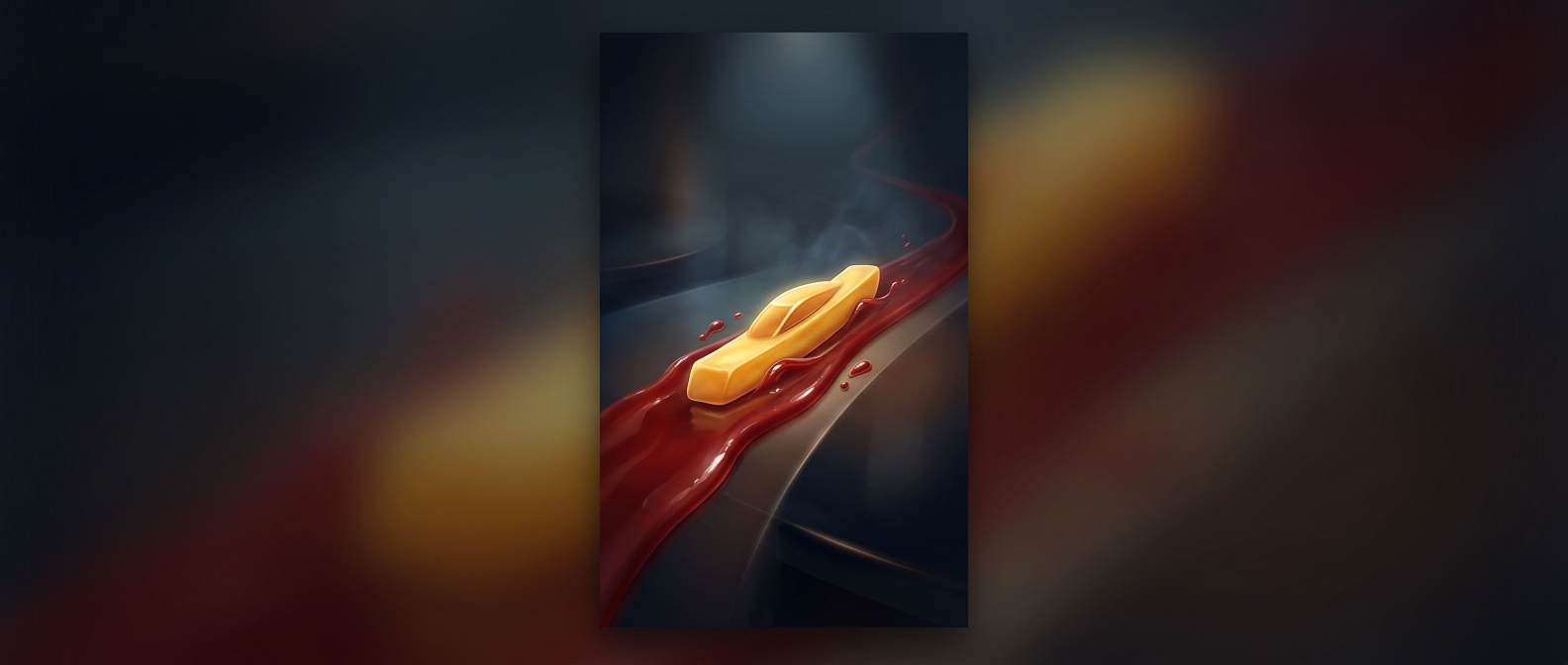
Ketchup is thick enough to resist flowing freely, but it still moves when a fry pushes through it. Once the fry comes out, the sauce has to drain or slide off its surface. A smooth, slick surface gives it little to hold on to; a fry’s tiny pits, ridges, and crisp edges create places where ketchup can lodge instead.
Those irregularities also help the sauce stay attached. Ketchup makes contact with many small parts of the fry at once, and its thickness slows the movement of the sauce between them. The result is a coating that survives the trip from plate to mouth rather than slipping back into the dip.
A scoop shaped by cooking
The fry’s form helps, too. Its long, slightly curved body can carry sauce along one side, while a broken or sharply cut end can catch a thicker dab. Frying dehydrates the potato’s outer layer and makes it crisp, producing the rough texture that gives ketchup more footholds. Salt can add a little extra surface grit, though the fry’s cooked texture does most of the work.
So the fry is not a scoop because it was engineered to be one. Its shape and rough crust happen to suit a sauce that moves slowly and clings to uneven surfaces. That is why a well-dipped fry can carry ketchup without needing a utensil.