How broth becomes a dumpling filling
The trick begins before the dumplings are shaped. Stock made with collagen-rich ingredients—such as bones, skin, or connective tissue—can set into a firm jelly when chilled. The cook cuts that gel into small pieces and folds them into the filling. At room temperature, the pieces hold their shape well enough to handle.
The wrapper is then gathered and sealed around the filling. That seal has to contain not just meat or vegetables, but liquid that will appear later. A tight seam and a wrapper that is neither torn nor stretched too thin help keep the broth inside as the dumpling cooks.
Steam turns the gel back into soup
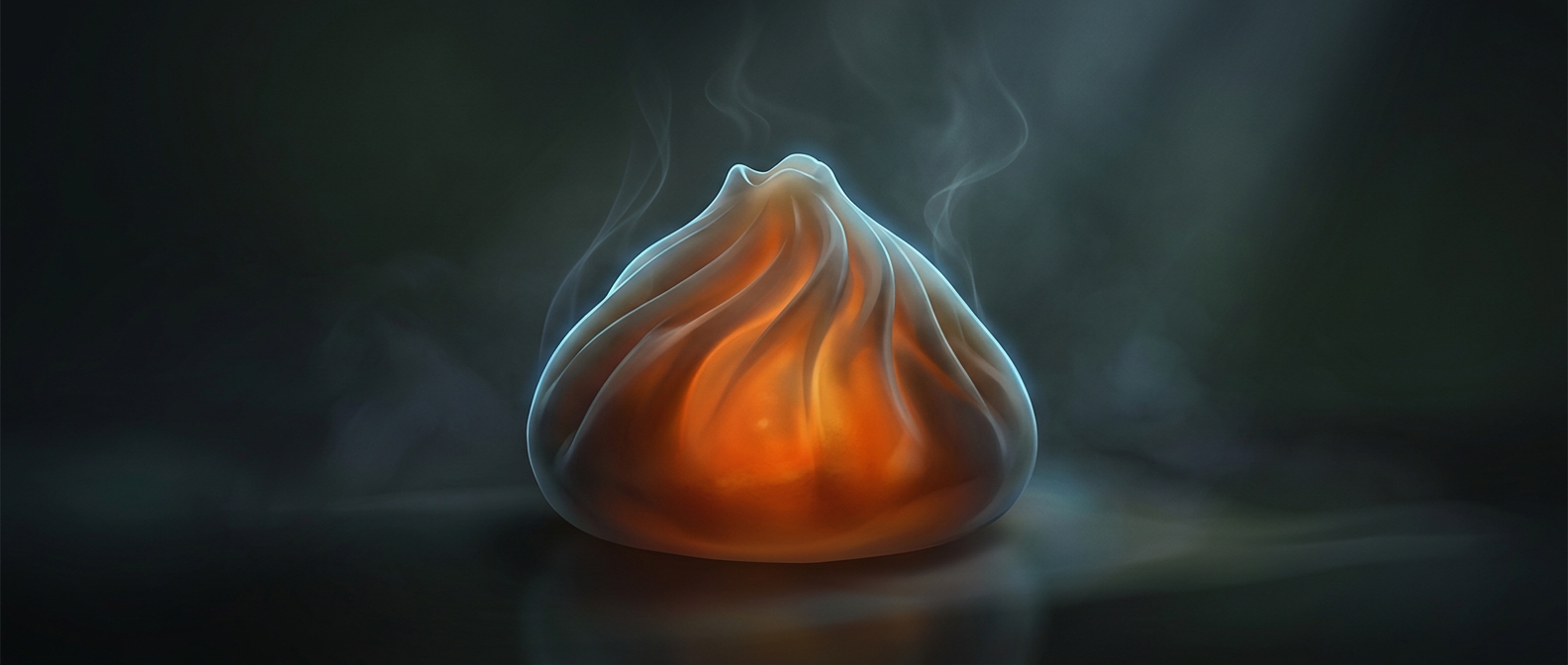
In the steamer, heat melts the stock jelly. The filling becomes a pocket of hot liquid, while the dough cooks into a soft shell around it. The broth is not added after cooking, and it does not seep through the wrapper: it begins as a solid gel and liquefies inside the sealed dumpling.
That transformation is why the first bite takes care. The wrapper can look intact while holding broth hot enough to spill when pierced. A small bite or puncture lets the steam and liquid escape gradually, turning a hidden cooking trick into the dumpling’s defining feature.