Why a bicycle wheel’s thin spokes can carry a rider
A spoked wheel works less like a set of little pillars holding up the bicycle and more like a carefully balanced suspension. The spokes are tightened between the hub at the center and the rim around the tire. Their pull keeps the rim firm and helps it retain its shape under load.
When the rider’s weight presses down on the wheel, the rim flexes slightly toward the hub where it meets the ground. The spokes in that small area lose some tension; the rest remain taut and help support the wheel. In a properly built wheel, the spokes do not take turns being pushed like columns. They work by staying under tension, with the load changing how tightly each one is pulled.
Why tension matters
A spoke is slender because it does not need to resist being crushed. It needs to withstand being stretched. The rim and hub spread the forces across many spokes, so no single spoke has to carry the rider’s full weight. This arrangement keeps the wheel light while still making it stiff enough to roll straight and support repeated impacts.
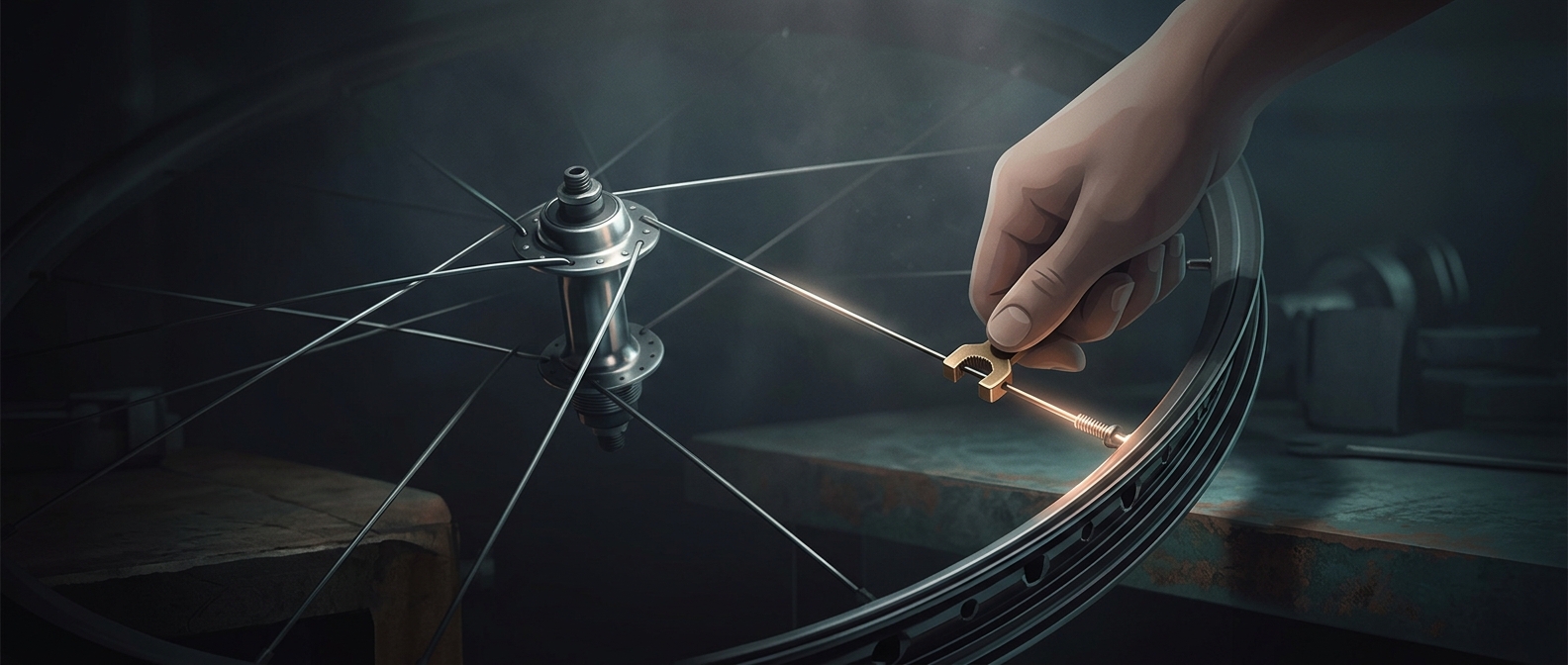
The balance is important. If spokes are unevenly tightened, the rim can pull out of alignment or the wheel can become less able to share loads evenly. That is why wheel building involves adjusting spoke tension as well as centering the rim. The delicate-looking web is strong not because its wires are massive, but because their pulls are coordinated—and because the wheel’s load is distributed across them as it turns.