How spoke tension keeps a wheel true
A bicycle wheel is not held together by spokes acting like rigid struts. Each spoke is a thin rod under tension: it pulls the hub toward the rim, while the spokes around the wheel balance those pulls. The rim’s stiffness and the even distribution of tension let the wheel carry a rider’s weight without collapsing into a lopsided shape.
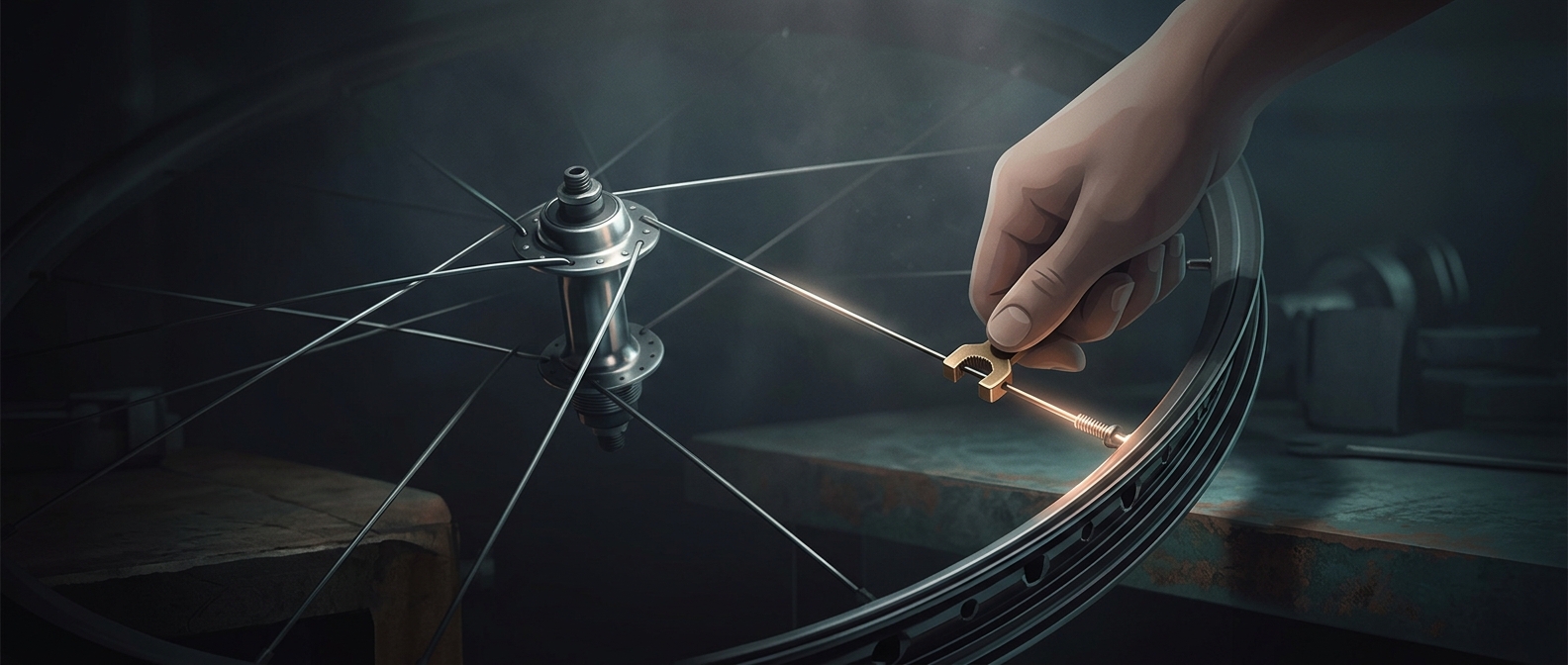
At the rim, each spoke ends in a small threaded fitting called a nipple. Turning it changes how far the spoke is drawn into the rim, adjusting its tension. A mechanic can use these tiny adjustments to bring a section of rim toward or away from the hub and restore a straight path as the wheel spins. This process is called truing.
Why small adjustments matter
A rim wobble often comes from uneven tension rather than a single obviously bent spoke. Tightening one spoke changes the forces on the nearby rim, so a mechanic works in small steps and checks the wheel repeatedly. Over-tightening can strain a spoke or damage the rim; leaving one area too loose can let the wheel flex more than it should.
The design makes routine correction possible without replacing the whole wheel. A slight side-to-side wobble can often be corrected by adjusting a few nipples, while a badly damaged rim or broken spoke may require more extensive repair. The practical payoff is that a wheel can stay aligned through repeated loads—and a tiny turn at the rim can prevent a small wobble from becoming a bigger mechanical problem.