How a Derrick Keeps a Heavy Load in Balance
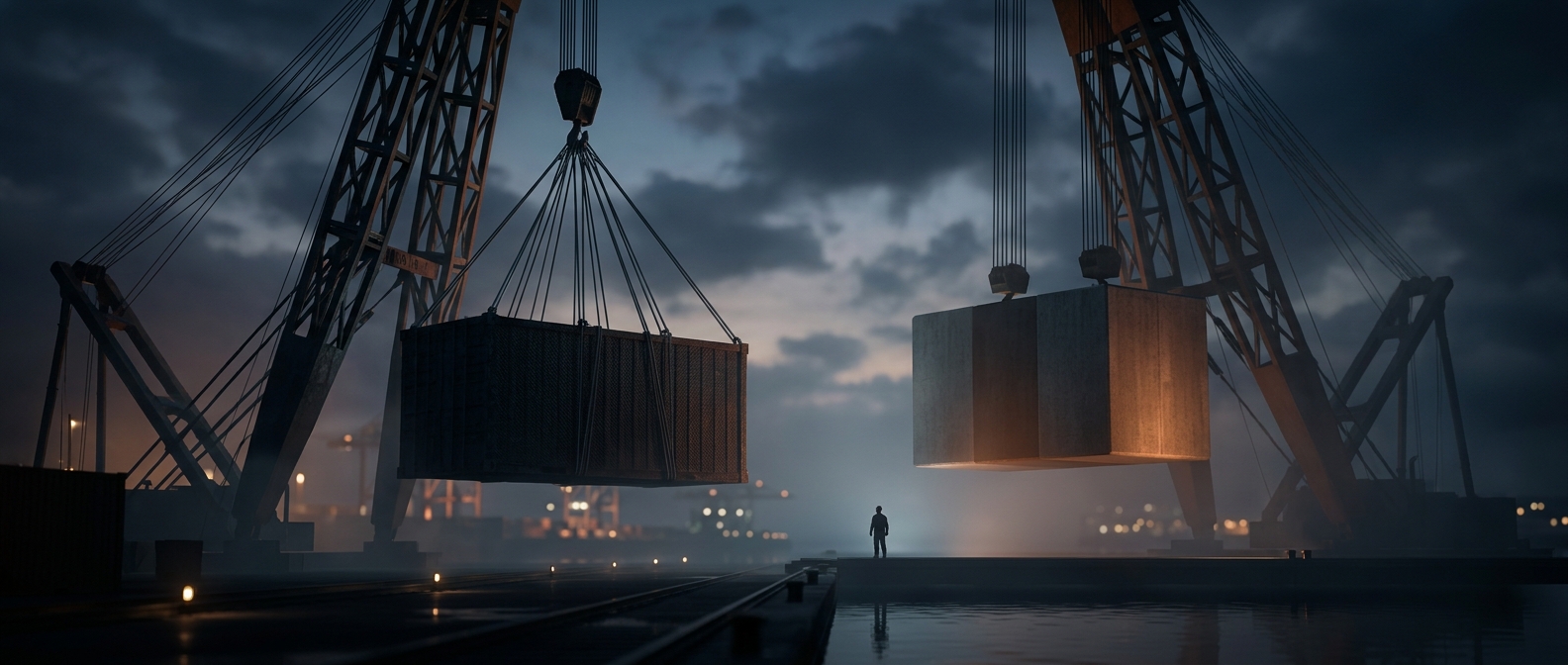
A derrick lifts by extending a boom—the long, angled arm that carries a load—away from its supporting structure. The farther the load sits from the base, the more strongly it tries to rotate the boom and tip the derrick. Engineers call that turning effect torque. A load’s weight matters, but so does its distance from the pivot: a lighter load far out can strain the structure more than the same load close in.
The Counterweight’s Job
A counterweight creates torque in the opposite direction. Placed on the other side of the derrick’s pivot, it pulls down against the load’s tendency to tip the boom forward. This does not make the load lighter; it changes how forces act on the whole machine, helping keep it stable while lifting.
The balance depends on both weight and leverage. A counterweight close to the pivot may need to be very heavy, while one farther away can provide the same turning effect with less mass. The derrick’s geometry and the position of the load therefore matter as much as the raw weight involved.
Why Balance Has Limits
Counterweights reduce tipping torque, but they do not make a derrick capable of lifting anything. The boom, cables, joints, and supporting structure must still withstand the forces, and the base must remain stable. As the boom reaches farther or the load swings, the forces change; operators and engineers must account for those conditions rather than treating the counterweight as a universal safeguard.
That is why a derrick’s lifting capacity depends on where a load hangs, not just what it weighs. Moving a massive load a few feet outward can change the balance enough to determine whether the lift is safe.