Why a tight string can go slack underwater
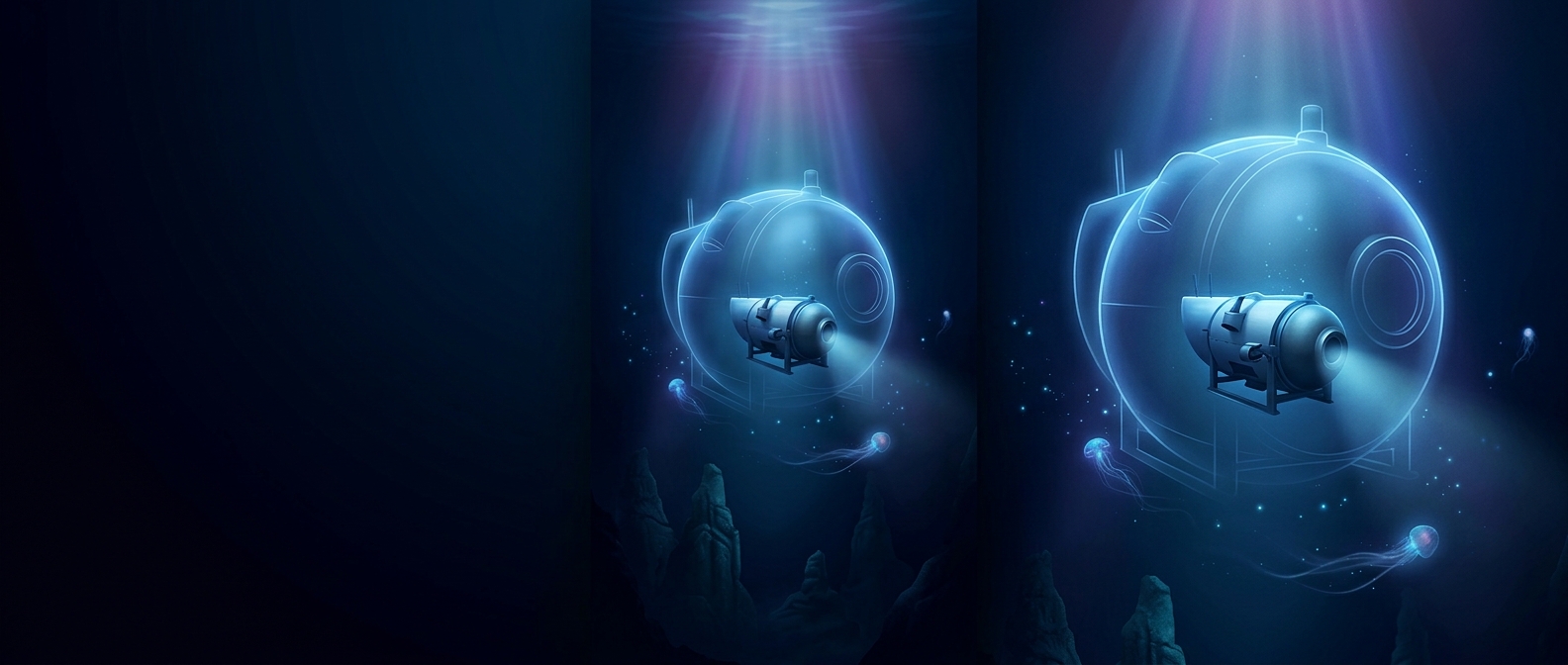
The ocean’s pressure rises with depth because more and more water presses down from above. In seawater, it increases by roughly one atmosphere for every 10 meters. A crewed submersible’s pressure hull—the strong inner shell that keeps the cabin near ordinary air pressure—must resist the difference between that outside pressure and the air inside.
The hull does not have to visibly cave in to move. Under load, even a stiff structure can deform by a small amount. If two points on the inside wall move slightly closer together, a string pulled taut between them loses tension and sags. The string is acting as a simple indicator of the hull’s changing shape, not as a measure of how much the whole vessel is collapsing.
A tiny movement with major engineering stakes
Pressure-vessel designers have to account for this deformation, especially because a shell under external pressure can fail suddenly if it buckles—bends inward beyond what its structure can support. Shape, thickness, materials, and the placement of stiffening structures all affect how it carries the load. A round pressure hull is useful in part because pressure is distributed around it, rather than concentrated on a broad flat wall.
A sagging string makes an otherwise invisible effect easy to picture: at great depth, the ocean is continuously squeezing the vessel, and its walls respond with minute movements. The hull’s job is to keep those movements controlled and safely within its design limits.