Why a cruising jet gives few clues to its speed
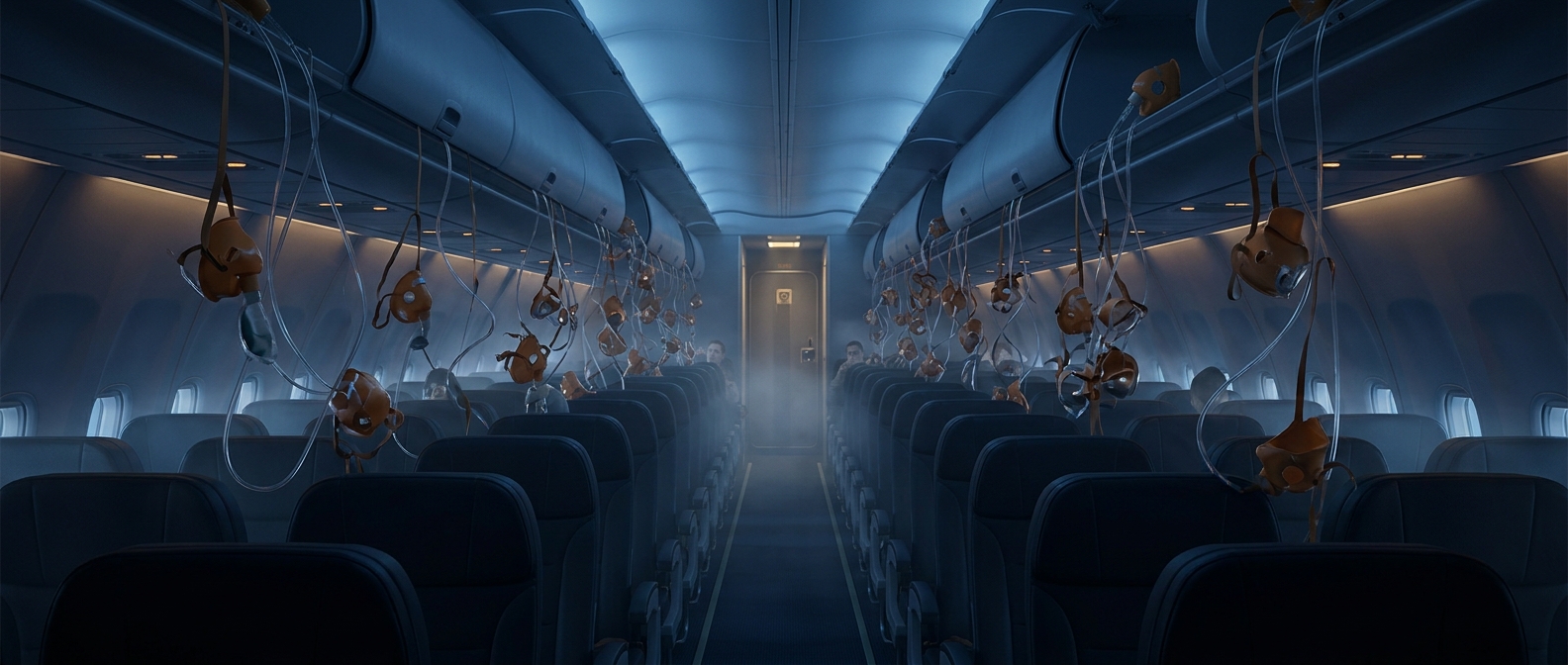
Your body does not have a built-in speedometer. It senses changes in motion—especially acceleration, braking, turns, and jolts—because those forces push on you. Once a plane has settled into a straight, steady cruise, it is no longer pushing you forward in a noticeable way. Your seat, the cabin, and the air around you are traveling together, so there is little relative motion for your senses to detect.
This is the same reason a smooth train can feel nearly still when its speed is constant. The plane’s velocity matters relative to the ground, but inside the cabin, the more noticeable question is whether anything is changing its motion.
What would make the speed noticeable?
Takeoff provides a strong cue: the engines accelerate the aircraft, and the seat presses against your back. A turn, a patch of turbulence, or the start of descent also changes the forces acting on you. Those changes are easier to feel than the plane’s steady forward movement.
Looking outside can help, but the view may not offer an obvious speed reference. High above the ground, distant features shift slowly across the window; clouds may appear to drift alongside rather than rush past. With no nearby objects streaking by, the view can reinforce the cabin’s sense of stillness.
That calm does not mean the aircraft has stopped or that it is moving through empty space without resistance. It means the cabin provides few changing forces or visual cues that reveal its speed. A sudden bump can make the motion unmistakable—not because the plane has suddenly become fast, but because its movement has changed.