Why a sailboat can move faster than the wind
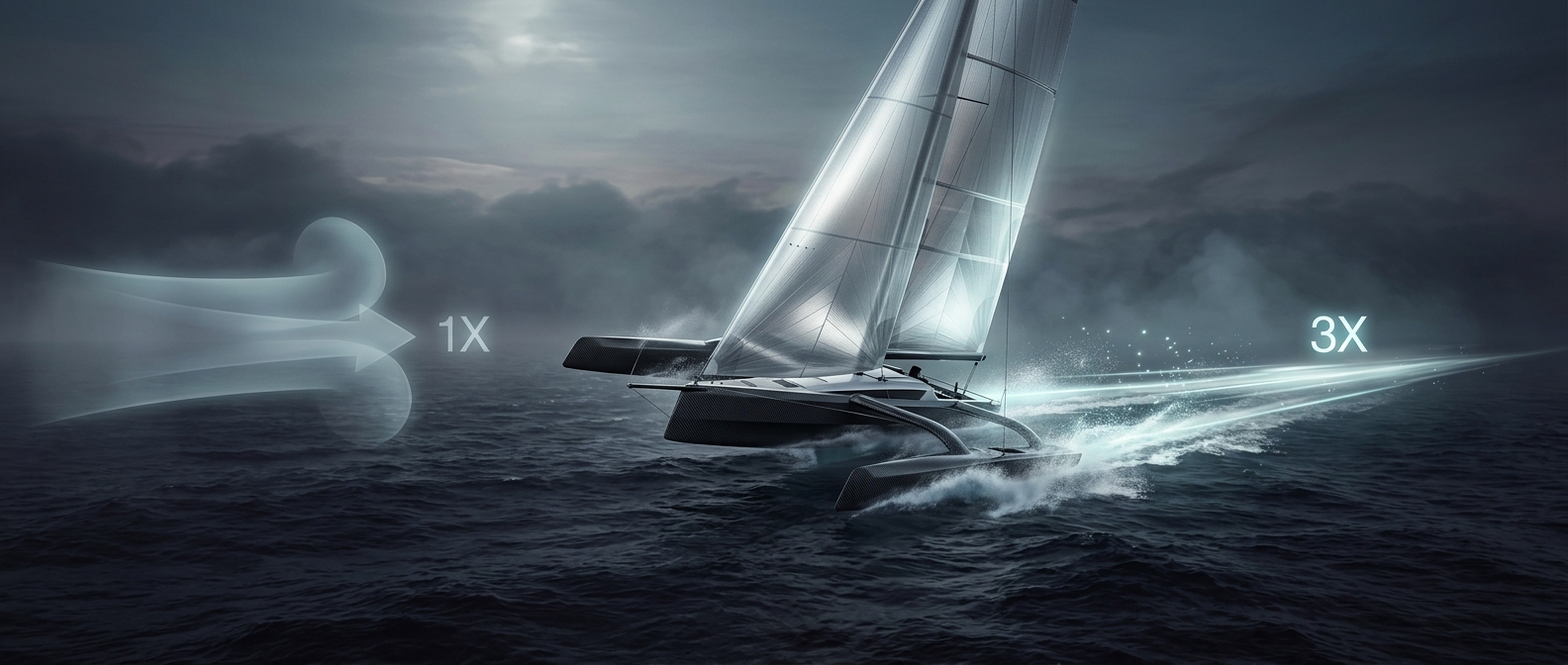
A sailboat does not simply get pushed along by a steady breeze. As the boat moves, its motion adds to the wind’s flow across the sails. Sailors call the result apparent wind: the wind the boat experiences, combining the true wind with the air rushing past because the boat is moving.
That airflow lets the sails work like wings. When air passes around a sail at an angle, pressure differs across its two sides, producing a force that can pull the boat forward as well as sideways. The keel or centerboard—a fin beneath the hull—resists the sideways force, helping turn much of the sail’s pull into forward motion.
A useful feedback loop—with limits
On a course that lets the sails generate forward pull, the boat speeds up. Its motion then makes the apparent wind stronger, which can increase the force on the sails and help it accelerate further. In suitable conditions, this feedback allows the boat to travel faster than the true wind.
It is not free energy or a perpetual boost: the wind supplies the energy, while drag in the water and air, waves, and the boat’s design limit its speed. The boat also cannot sail straight into the wind; it must angle across it, changing course in a zigzag if it needs to make progress upwind.
So “outrunning the wind” describes a comparison of speeds, not a boat leaving the wind behind. The wind is still powering the trip—the boat’s motion simply changes the airflow its sails can use.