How a Dust Devil Gets Its Spin
Heating can make air rise, but a rising plume does not automatically become a whirlwind. Near the ground, small differences in wind speed and direction can create a weak horizontal swirl. As the warm air climbs, it stretches that rotating air upward—much as a spinning skater speeds up by drawing in their arms—concentrating the spin into a narrow column.
From Loose Soil to Airborne Dust
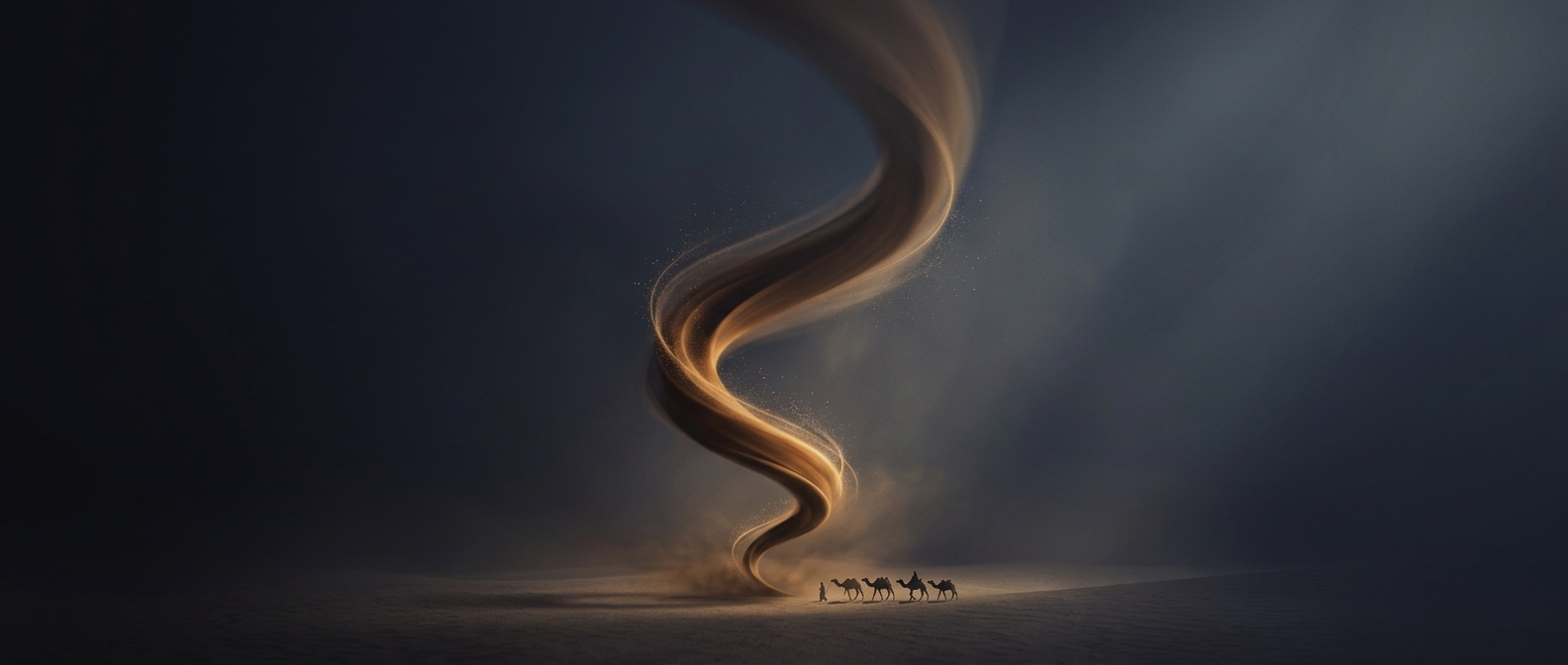
The rotating column creates fast winds near the surface. Those winds tug at grains and clumps that are not firmly anchored; turbulence then mixes some of the loosened material into the rising air. The dust makes the otherwise hard-to-see vortex visible, but it is cargo, not the source of the spin.
A dust devil cannot lift every particle equally. Heavy grains tend to fall back quickly, while finer particles can remain suspended longer and travel farther before settling. Whether dust gets picked up at all depends on the surface: dry, bare ground offers more loose material than soil bound by moisture or vegetation.
A Brief, Local Transport System
Unlike a large weather system, a dust devil is powered by uneven heating close to the ground and usually fades when that supply of rising warm air weakens. While it lasts, it can move dust from the surface into the air above it—sometimes leaving a narrow trail of disturbed ground behind. Its visible column is a reminder that even a small, short-lived vortex can redistribute the finest material across a much larger space.