How a bus seat becomes a protective compartment
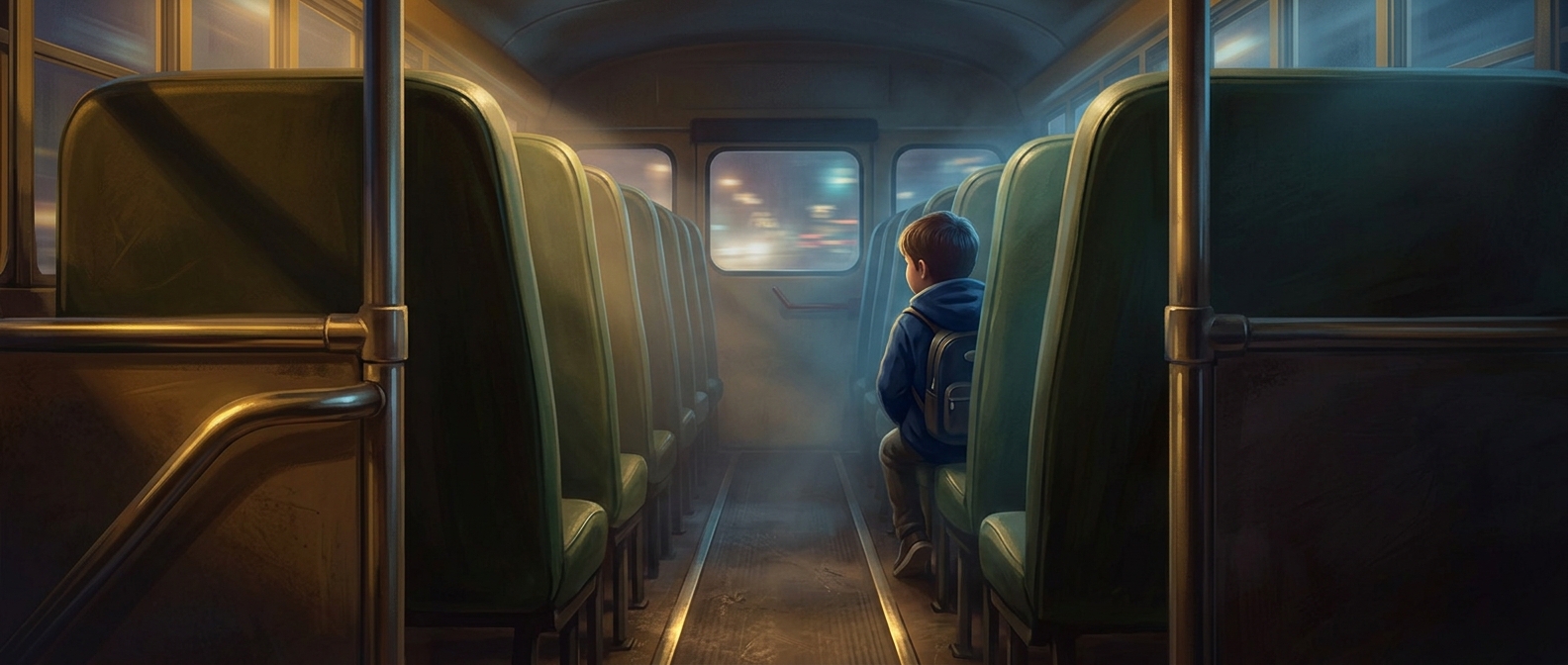
Traditional school buses are designed around compartmentalization: each child sits within a small protective space formed by a padded seat in front and closely spaced seats to either side. In a frontal crash, a seated child moves forward; the high seatback helps limit that motion and spreads the impact across a broader area of the body rather than concentrating it at a narrow point.
The padding matters because it compresses under impact. That gives the child’s body more time and distance to slow down, reducing the sharpness of the blow. The seat itself is built to absorb energy and bend in a controlled way, rather than act like a rigid wall.
Why this approach was practical
A bus carries many children, who may shift position, fall asleep, or struggle to fasten a belt correctly. A protective seat arrangement works without asking each passenger to buckle up, and it can protect several seated children at once. That simplicity helped make it a longstanding approach for large school buses.
But the protection depends on children being seated within the space the seats create. Belts can help restrain a passenger in circumstances where compartmentalization is less effective, such as certain severe impacts or a rollover. Some buses are equipped with them; padded seats and seatbelts are not mutually exclusive.
The key design idea is not that a seatbelt is useless, but that the bus’s rows of seats can do part of the restraining work. A child’s position in that small padded compartment is what makes the arrangement function as intended.