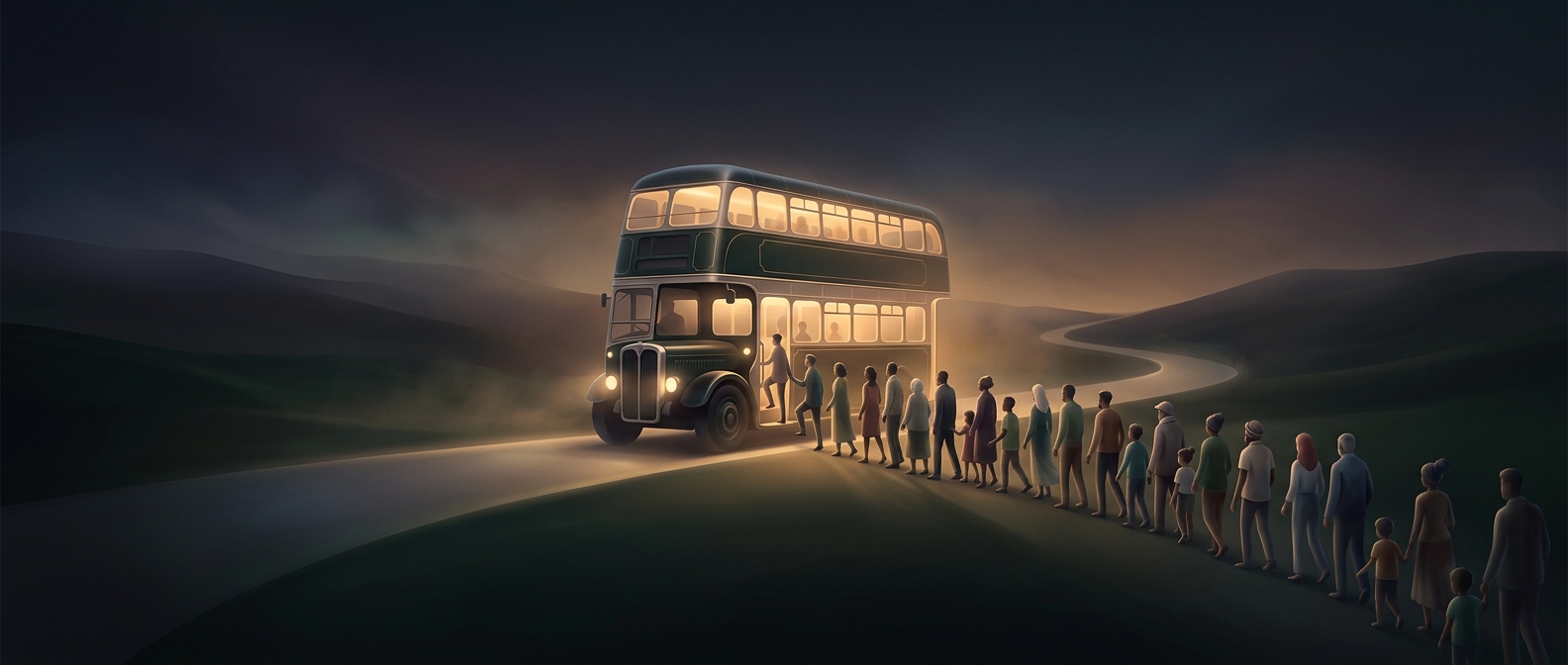
A truck cab pulled the crowd
A camello was less a bus than a long passenger trailer hitched to a truck tractor—the powered cab and engine at the front. That split mattered during Cuba’s 1990s fuel crisis: a truck could haul a large load of people in a single trip, without requiring a conventional bus for every vehicle on the road. The trailer itself did not need an engine or driver’s cab of its own.
Why the “camel” shape mattered
The passenger body rose into two distinct humps, giving the improvised vehicle its nickname: camello, Spanish for “camel.” Its unusual outline was a visible clue that this was a conversion built around available equipment, not a standard city bus. The raised sections made the trailer’s interior shape unlike the single-level box passengers might expect, though the key design choice was its basic combination of truck power and a large passenger space.
Capacity in exchange for convenience
The arrangement addressed one urgent problem—moving many people with a limited supply of conventional buses—but it was a compromise, not a like-for-like replacement. A tractor-trailer is longer and less nimble than an ordinary bus, and passengers depended on the truck and trailer operating together. Its value came from using what could be assembled and put into service, rather than waiting for a purpose-built fleet.
That is what made the camello memorable: a fuel shortage reshaped not just how Cuba moved people, but what a bus could look like.