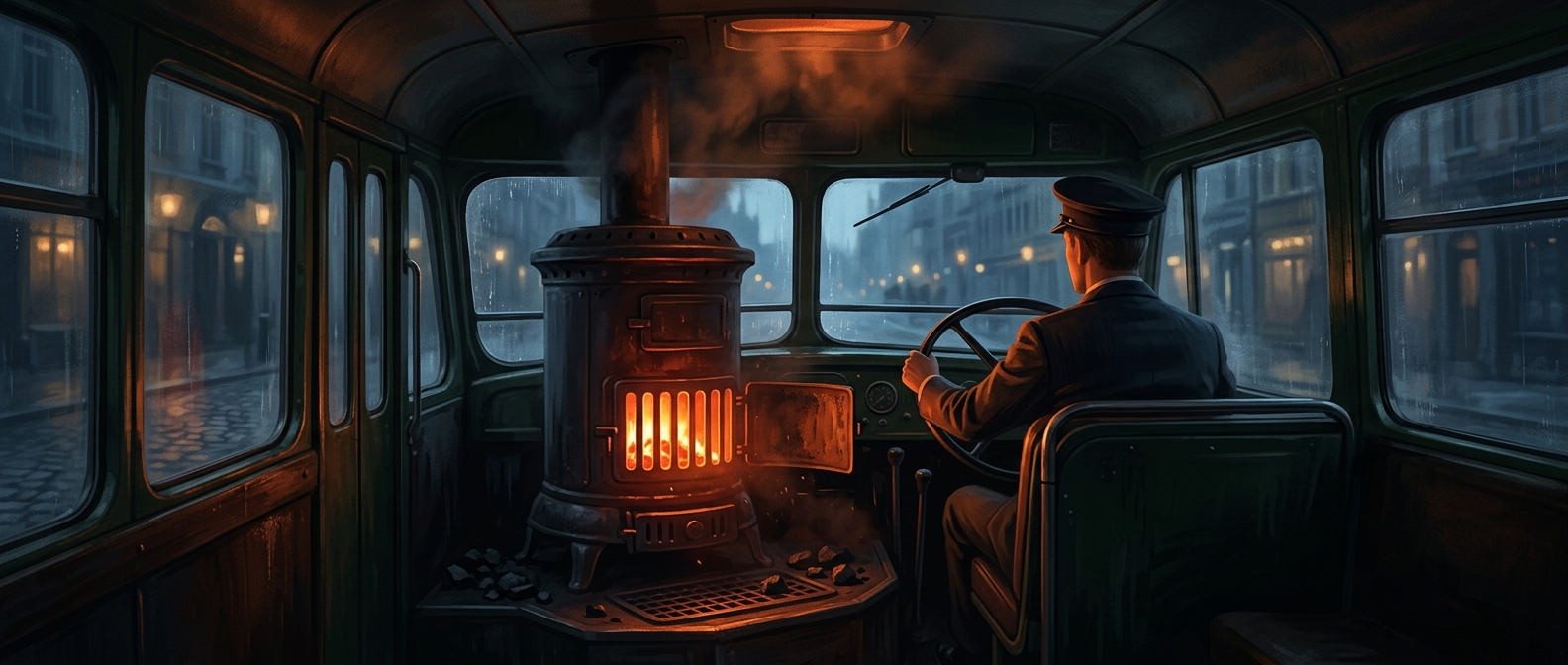
Heating a moving room with a real fire
Before engine-powered cabin heaters became standard, a coal stove offered a direct way to warm a bus’s passenger compartment. Burning coal released heat that warmed the stove’s metal body and, in turn, the nearby air. As that air circulated through the cabin, passengers could gather warmth without relying on a separate modern heating system.
The arrangement made the bus a small, moving room with an active fire inside it. Unlike a heater that draws warmth from the engine, a stove needed its own fuel and someone to tend it. Coal had to be brought along, fed into the fire, and replenished as it burned; the remaining ash also had to be dealt with.
The tradeoff behind the warmth
A stove could keep passengers more comfortable on a cold journey, but it added work and hazards to ordinary bus operation. Any fire needs controlled airflow and a safe route for smoke and combustion gases to leave the passenger space. The stove and its hot surfaces also had to be kept from becoming a danger in a crowded vehicle that jolted and turned on the road.
That tradeoff helps explain why the stove was more than a quirky accessory: it was part of the bus’s heating system, but one that required fuel handling, ventilation, and attention from people on board. Passengers traveled beside the machinery that made the cabin livable—so the vehicle carried not only its riders, but the means to keep them warm along the way.