A bus that carried its energy in rotation
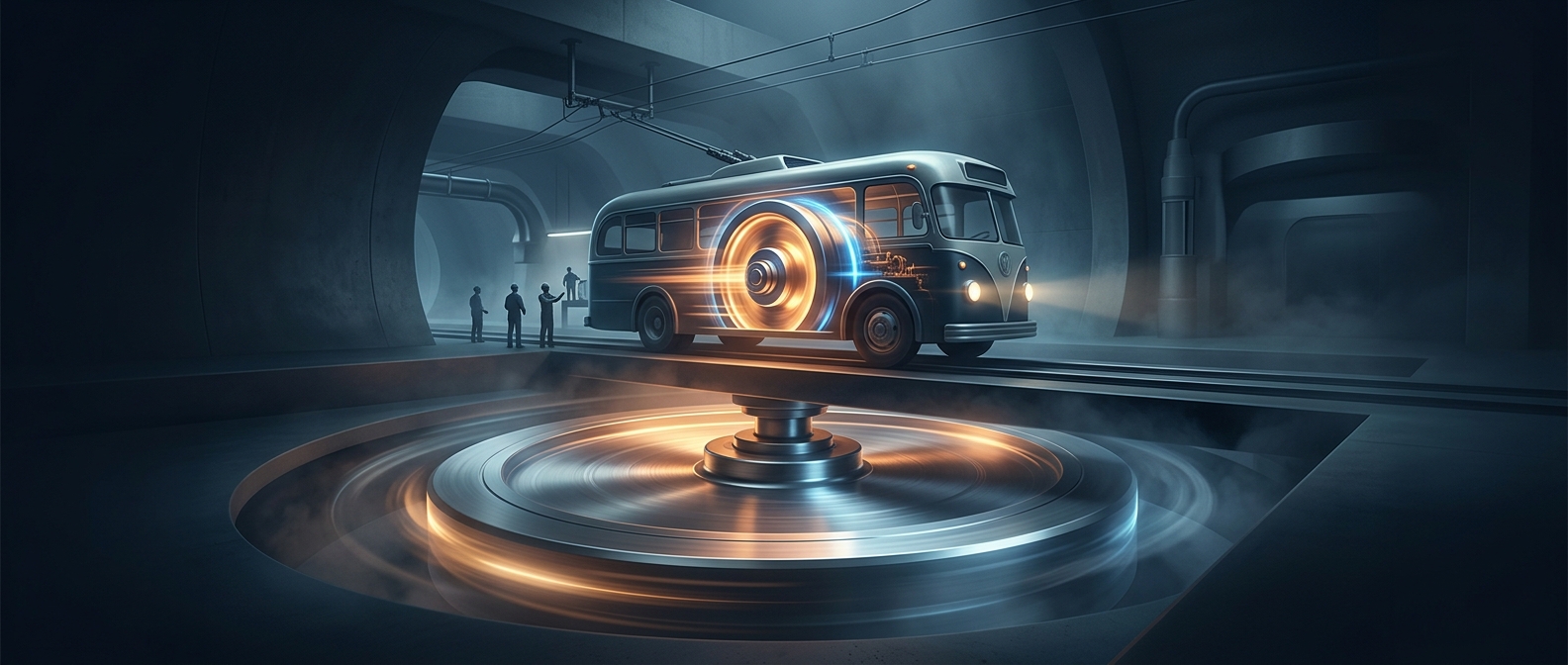
A flywheel is a heavy wheel that stores energy while spinning. In a flywheel bus, electricity at a stop drove a motor that spun the wheel up; once the bus pulled away, the spinning wheel supplied energy back through an electric generator. That electricity powered the motors turning the wheels.
The bus was therefore carrying stored energy, not making energy from the flywheel. As it traveled, the wheel gradually slowed, and the bus had to recharge before the stored energy ran out. The system made sense for routes with frequent stops and charging points, where a brief connection could provide enough power for the next stretch.
The tradeoff was weight for short-range power
A flywheel can release energy quickly, which suits a vehicle that repeatedly accelerates from rest. But storing enough energy for a long journey requires a large, heavy wheel—and the wheel loses speed as its energy is used. Gyroscopic forces from a rapidly spinning mass also make how the wheel is mounted and controlled an engineering concern.
That limited the idea’s appeal compared with carrying fuel or using batteries that could store more energy for longer trips. A flywheel bus depended on a route designed around regular recharging, rather than the freedom to travel far between refills.
Its most distinctive feature was also its operating rhythm: the bus gathered energy while passengers boarded, then spent it over the next few blocks.