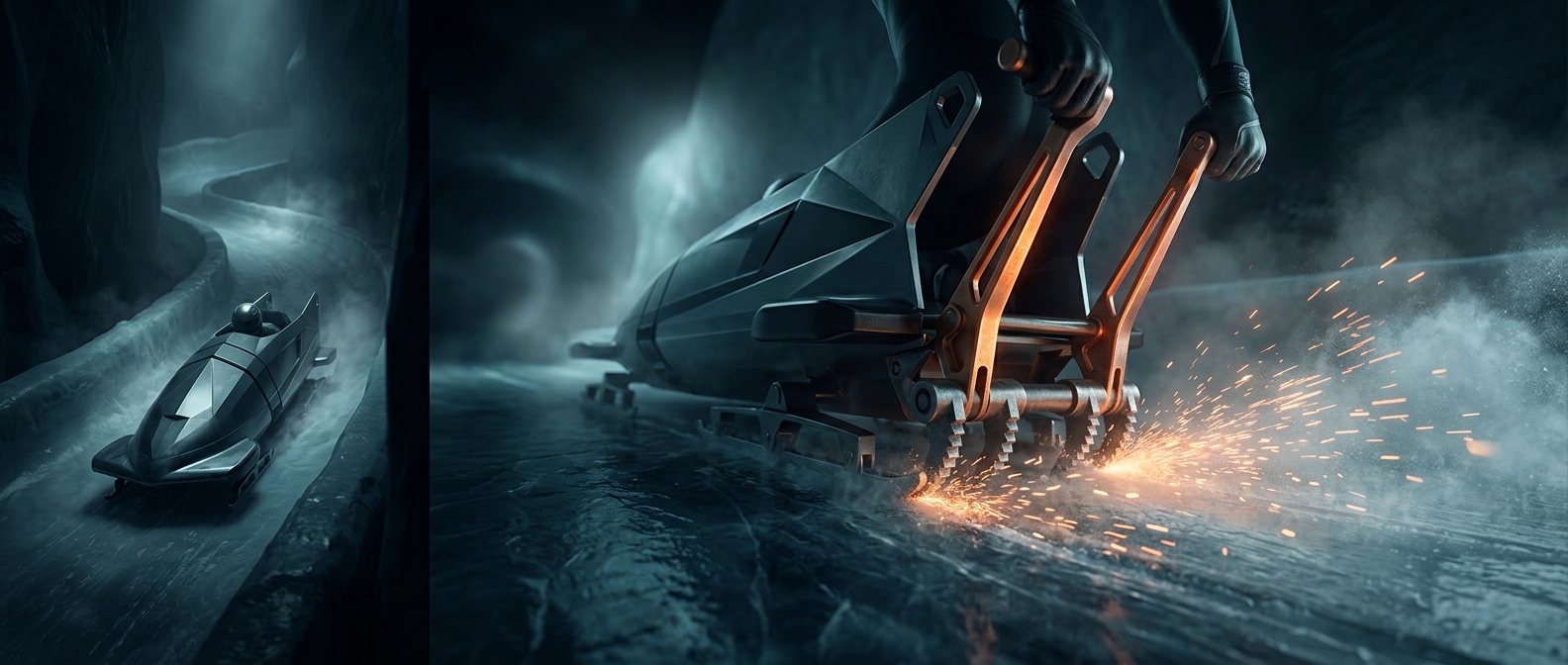
Why the brake waits until the finish
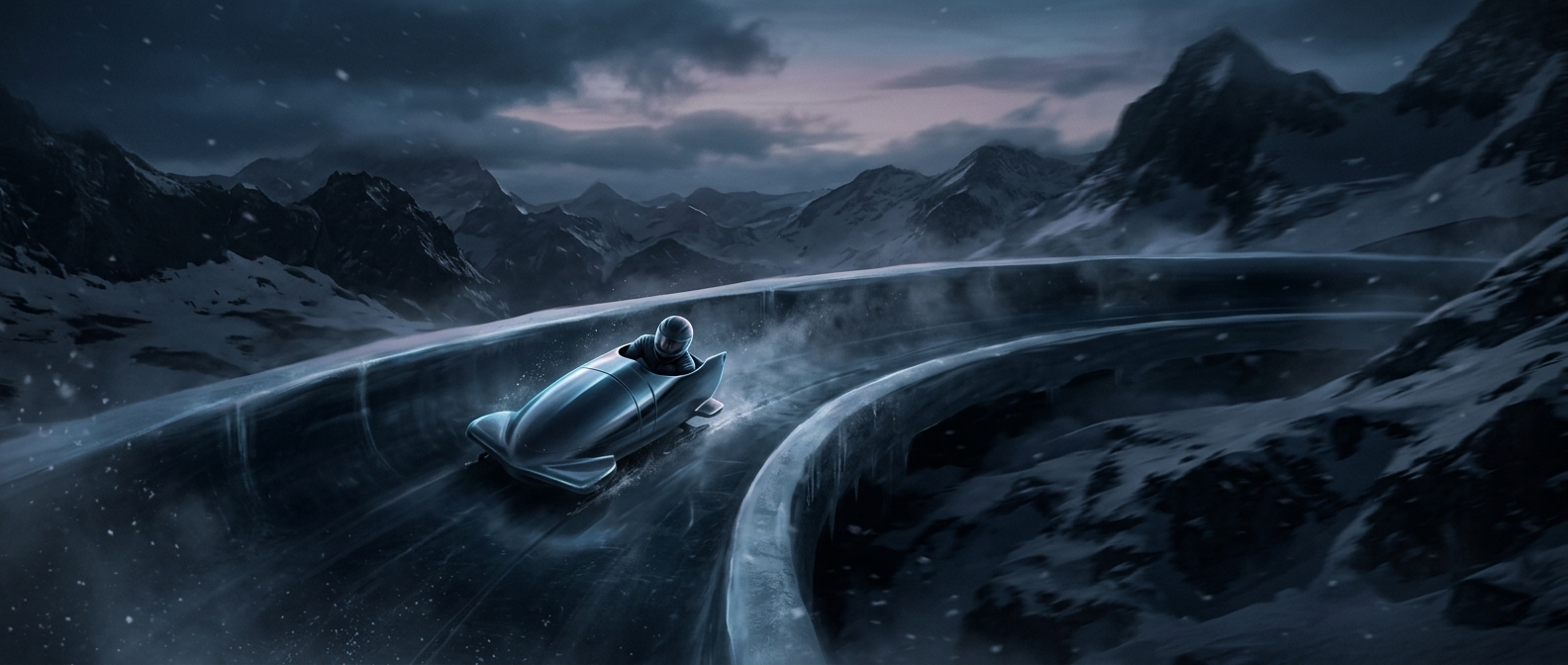
A bobsled’s brake is deliberately kept out of the way during the timed run. The sled is built to glide on narrow steel runners, and even a small amount of extra drag would oppose its motion and cost speed. The brakeman—the crew member at the rear—keeps a hand on the brake control but does not lower the braking bar while the sled is racing.
That restraint matters because the sled is carrying substantial momentum by the time it reaches the finish. A brake applied too soon would slow the crew before the clock stops; applied afterward, it can help bring the sled under control in the track’s runout area.
A metal comb turns motion into heat
After the finish, the brakeman pulls a lever that lowers a toothed metal bar onto the ice behind the sled. The teeth scrape and dig against the surface, creating friction. That friction opposes the sled’s forward motion and converts some of its kinetic energy—the energy of movement—into heat, while the bar and ice wear against each other.
The effect is more like dragging a rough metal scraper across the ice than squeezing a car’s wheel brakes. It does not make a fast sled stop on the spot: the sled keeps moving while the brake steadily bleeds away its speed. The teeth also explain the familiar cheese-grater comparison. The detail is functional, not decorative: the runners are optimized to preserve a glide, while the rough bar is brought into contact only when that glide needs to end.