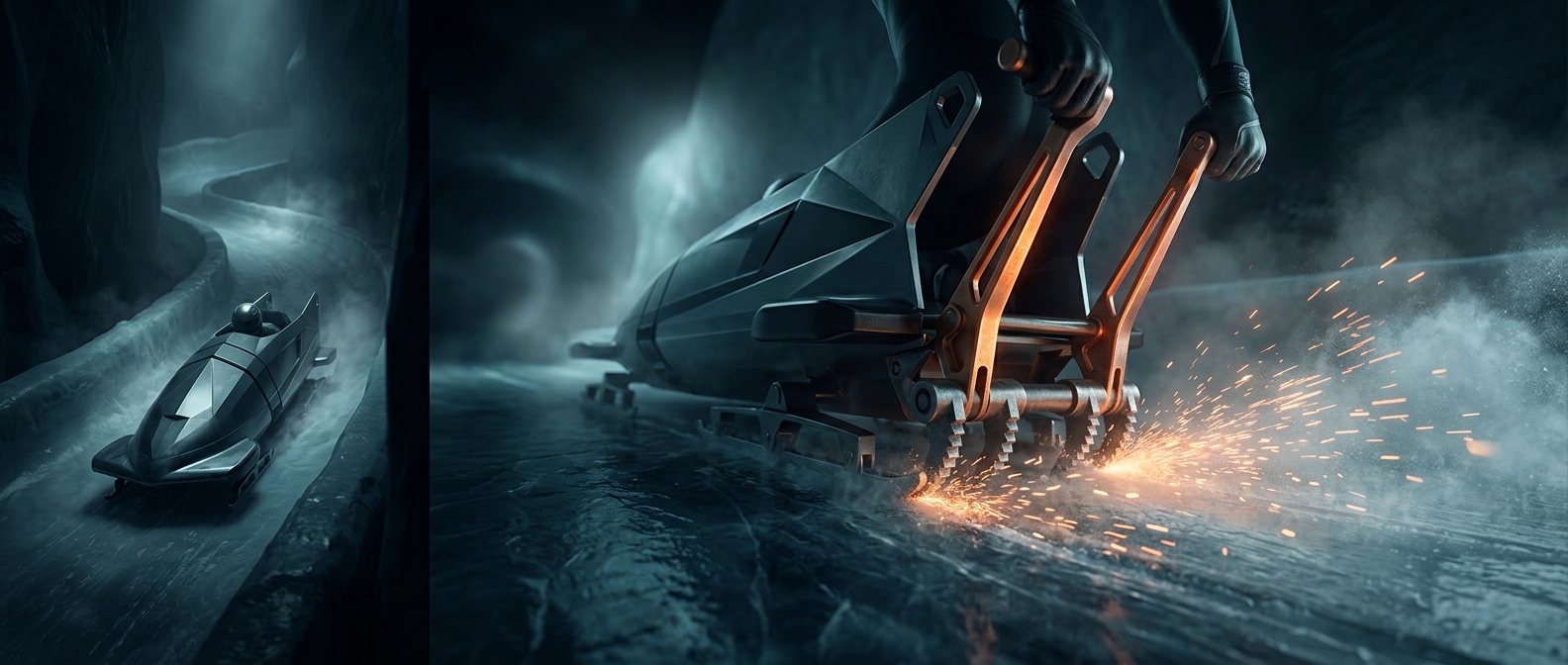
Why monobob uses one shared sled design
In a conventional two- or four-person bobsled, athletes and teams can work with equipment tailored to their operation. Monobob changes that equation: each competitor races alone in a standardized sled. The aim is to make the vehicle itself a less decisive source of difference, so the contest turns more directly on how well each athlete starts and drives.
Standardization does not make the sled irrelevant. Small changes in steering inputs, line choice, and timing can alter how the sled moves through a course. It means competitors are not supposed to gain an edge by bringing a uniquely designed machine; they must find speed with the same basic equipment as everyone else.
The athlete has to do every job
At the start, the racer runs while pushing the sled, then climbs aboard and steers through the course. In a team event, several athletes contribute to the push, while the driver focuses on guiding the sled. In monobob, one person must supply the launch power and handle the driving.
That makes the start especially consequential. A strong push helps build speed before the sled reaches the steep, banked turns, where the athlete must steer without wasting momentum. A poor line can cost time, and there is no teammate to share the physical work or correct the run.
A different kind of equipment race
The shared design shifts attention from equipment development to execution, but it cannot erase every variable: athletes still face changing ice and must make decisions at speed. Monobob’s central tradeoff is straightforward: the sled is standardized; the effort and judgment are not. One racer must create the speed, guide it down the track, and absorb the consequences of every steering choice.