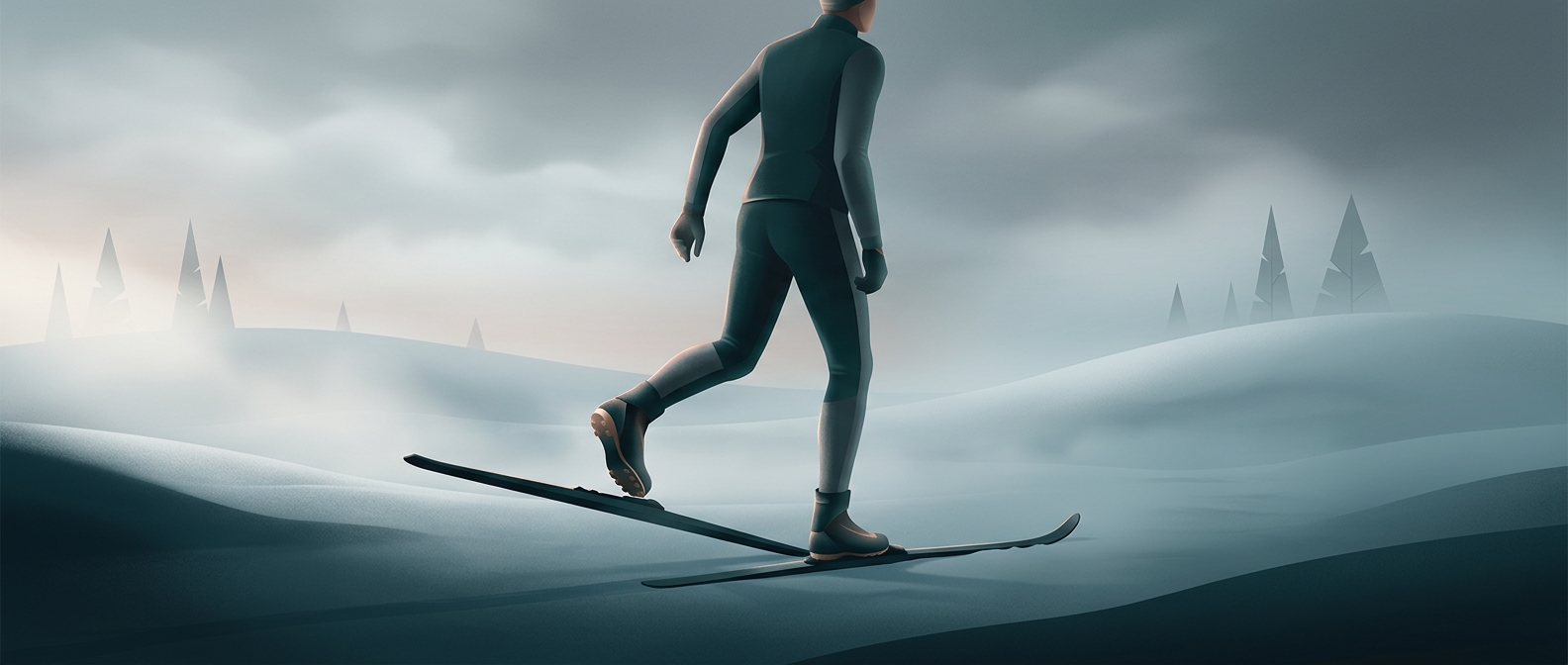
A free heel makes each stride a kick-and-glide
In classic cross-country skiing, the skier alternates between briefly gripping the snow and sliding over it. The binding holds the boot at the toe but allows the heel to rise, so the ankle can flex as the skier steps forward and presses down.
That pressure helps the ski’s grip zone—the section beneath the boot—catch the snow. Depending on the ski, grip may come from textured scales or special kick wax. The skier pushes backward against that grip; the snow pushes the ski and skier forward. Then the skier shifts weight to the other ski, releasing the first one to glide.
Why the ski does not need to stay fixed to the boot
A rigid heel connection would make the ski behave more like an extension of the whole leg. The toe hinge instead lets the heel lift during the kick while the ski remains on the snow, ready to grip and propel the skier. As the leg swings through, the ski follows beneath the foot rather than being lifted with every step.
The result is a rhythm of short, controlled pushes and longer glides. The free heel is not just a lighter binding choice: it lets the skier use a walking-like stride to turn pressure against the snow into forward motion.