Why a Telemark turn starts with a lunge
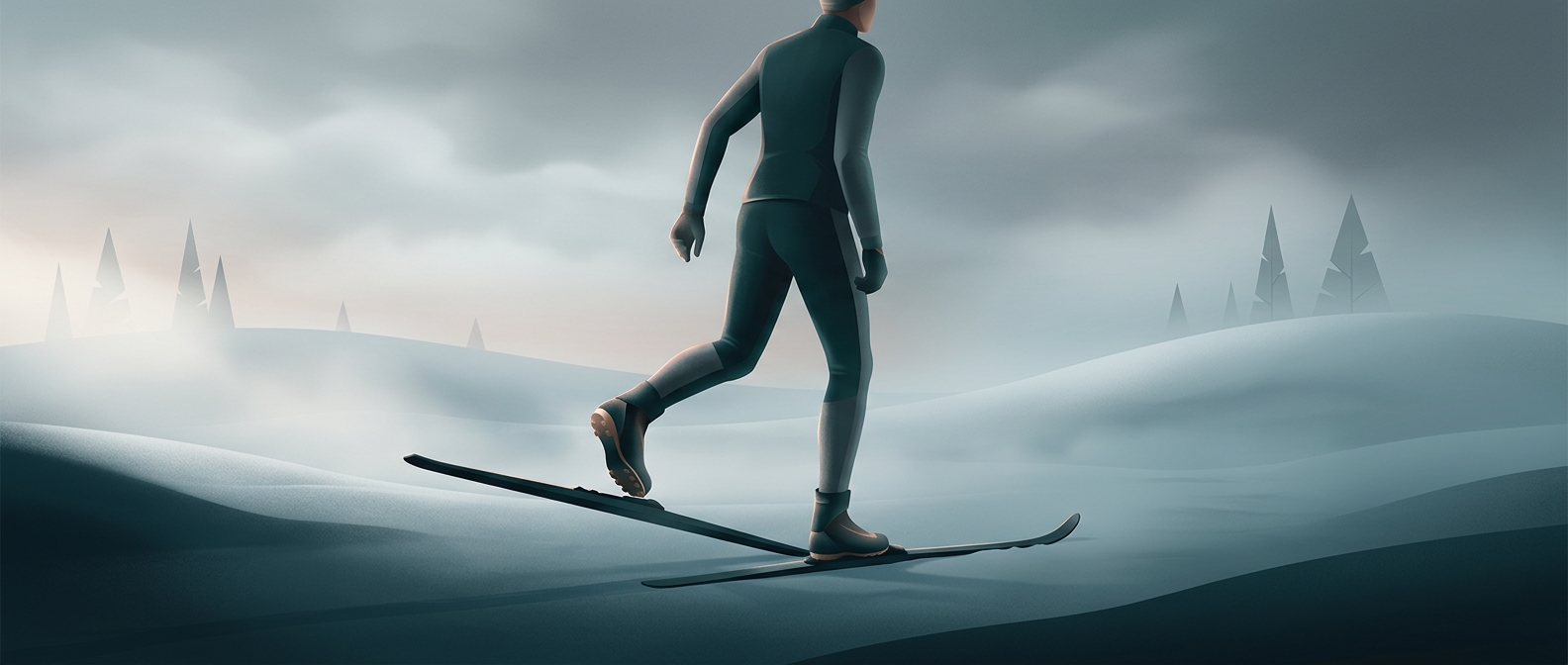
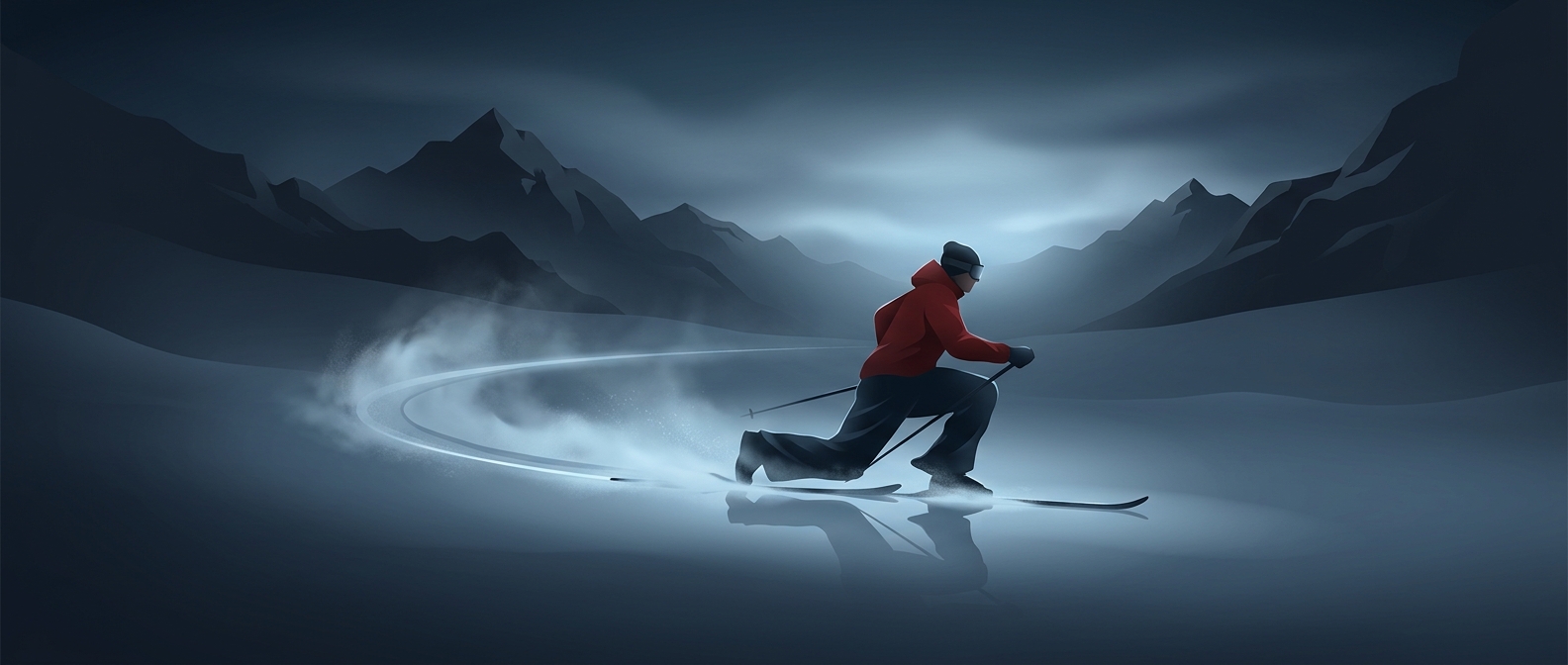
In Telemark skiing, the heel is not fixed to the ski. That freedom lets the skier lift the heel and move the foot, but it also changes how a turn is controlled: the skier cannot simply lean both boots into the same edge as in conventional alpine skiing. Instead, the skis are staggered, with one foot forward and the other trailing, and the skier bends deeply at the knees.
How the movement steers the skis
The lunge lowers the skier’s center of mass and helps keep weight balanced over the two skis. As the skier tips them onto their edges, those edges bite into the snow and bend the skis slightly. A bent ski follows a curved path, so turning its edges across the slope guides the skier around the corner. The forward-and-back stance lets the skier adjust pressure between the skis while keeping both in contact with the snow.
The trailing ski’s raised heel is central to the characteristic motion, but the lunge is not a flourish added for appearance. It is the stance that makes a free-heel ski controllable through a turn. On changing terrain, the skier can shorten or deepen the lunge to adapt balance and pressure without locking the rear foot down.
A different bargain between freedom and control
A fixed-heel binding connects the boot at both toe and heel, making it easier to drive the ski through a turn with a rigid boot-and-ski unit. Telemark bindings hold the toe while allowing the heel to rise, giving the skier more freedom of movement but demanding active balance and coordination. The visible “curtsy” is that tradeoff in motion: the heel can lift, and the skier supplies the stability with a low, staggered stance.