The hillside sets the shape
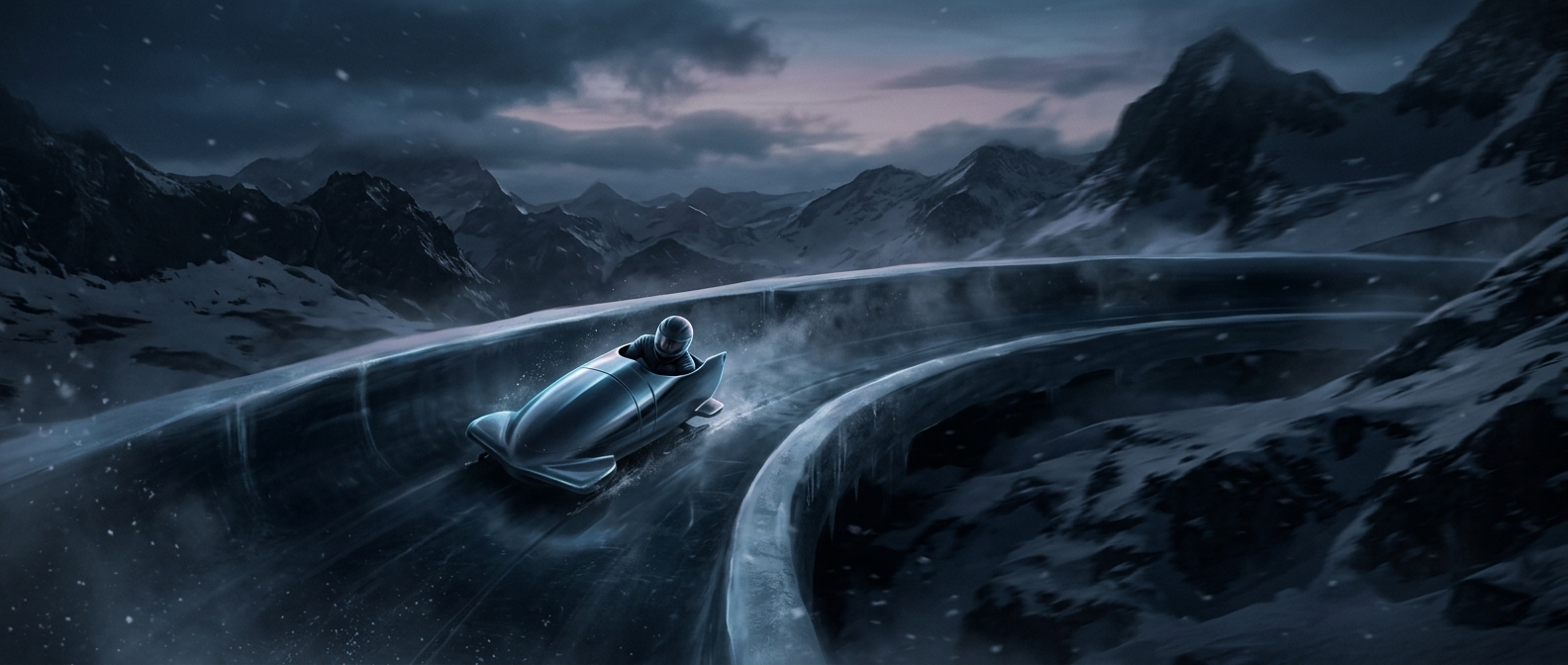
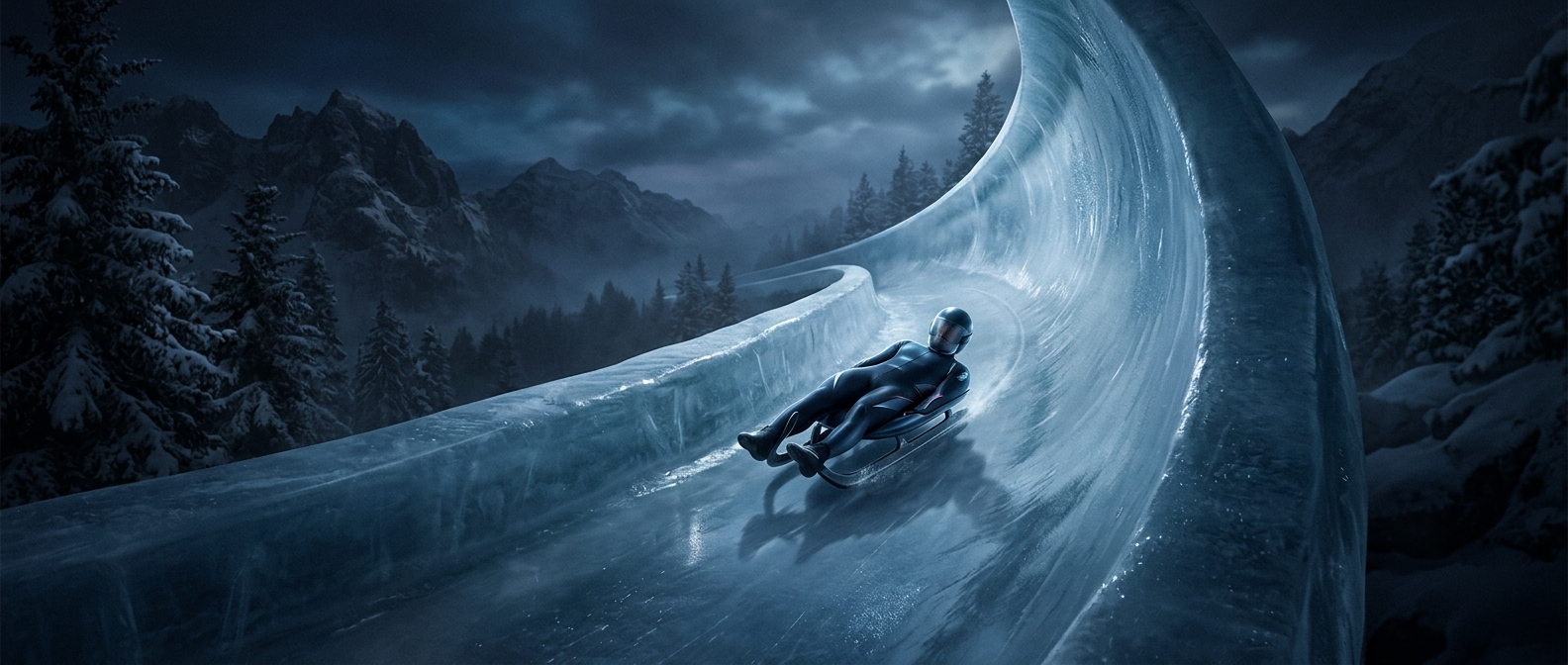
A natural-track luge course is built around a slope that already exists. Its bends follow the terrain rather than being formed as a permanent concrete channel. Crews use snow to build up the turns, then add water that freezes into a smooth, banked surface. The result is a track whose contours are made from ice, including the raised outer sides of its curves.
That construction makes each bend a piece of practical engineering. The bank slopes upward at the outside, helping redirect a fast-moving sled around the curve instead of letting it continue straight. The icy sides also give the track a boundary: the sled’s path is constrained by the shape of the turn, not by a separate metal rail.
The wall is part of the riding surface
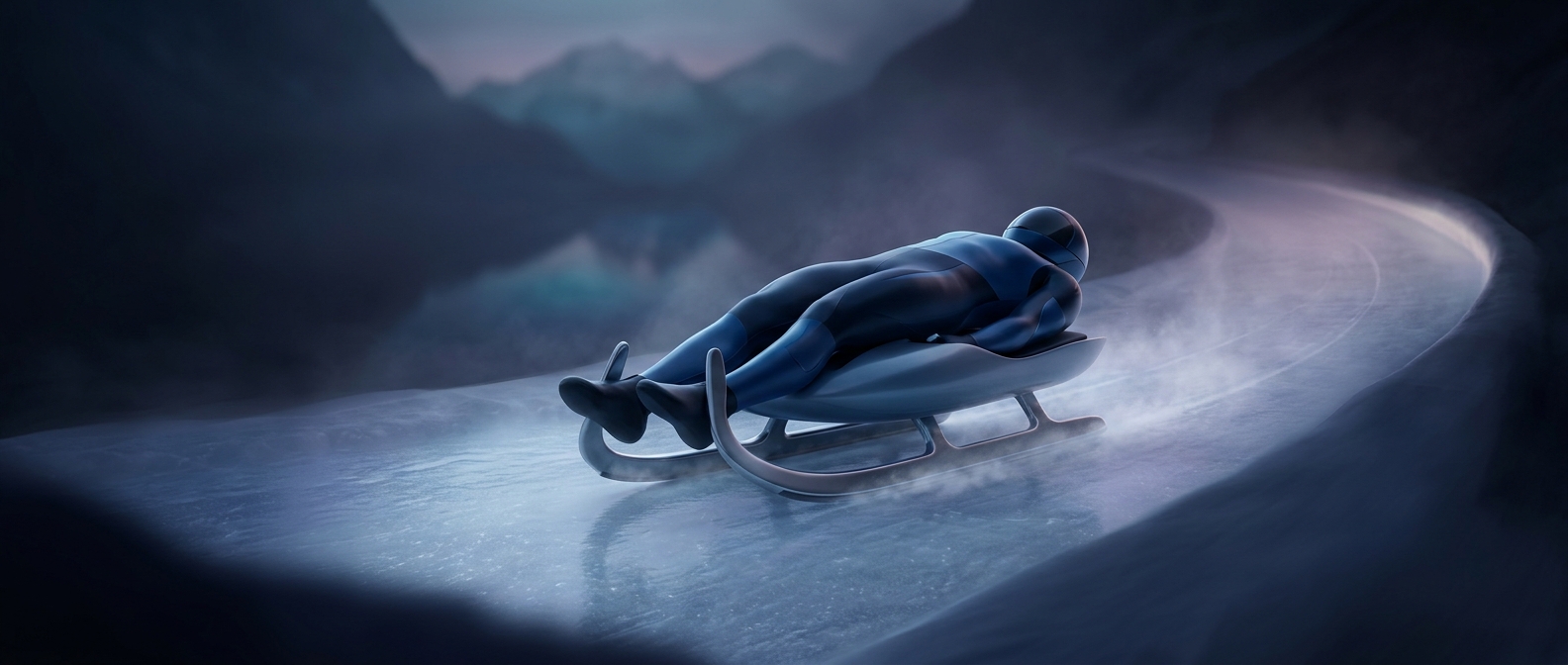
Luge steering is subtle. Riders use pressure through their legs and shifts in their body position to influence the sled’s runners. But the track does much of the work of keeping a run contained. As the sled enters a bend, its motion presses it toward the outside; the bank and raised ice wall guide it along the curve.
Because the course is outdoors and made from frozen material, its shape has to be maintained, not simply built once and left alone. Snow and ice must form a continuous riding surface and a dependable profile through each turn. The track’s guardrail, in other words, is also its pavement: changing the ice changes both the boundary and the route the sled follows.