Tiny Spikes Turn a Slick Track Into a Launch Surface
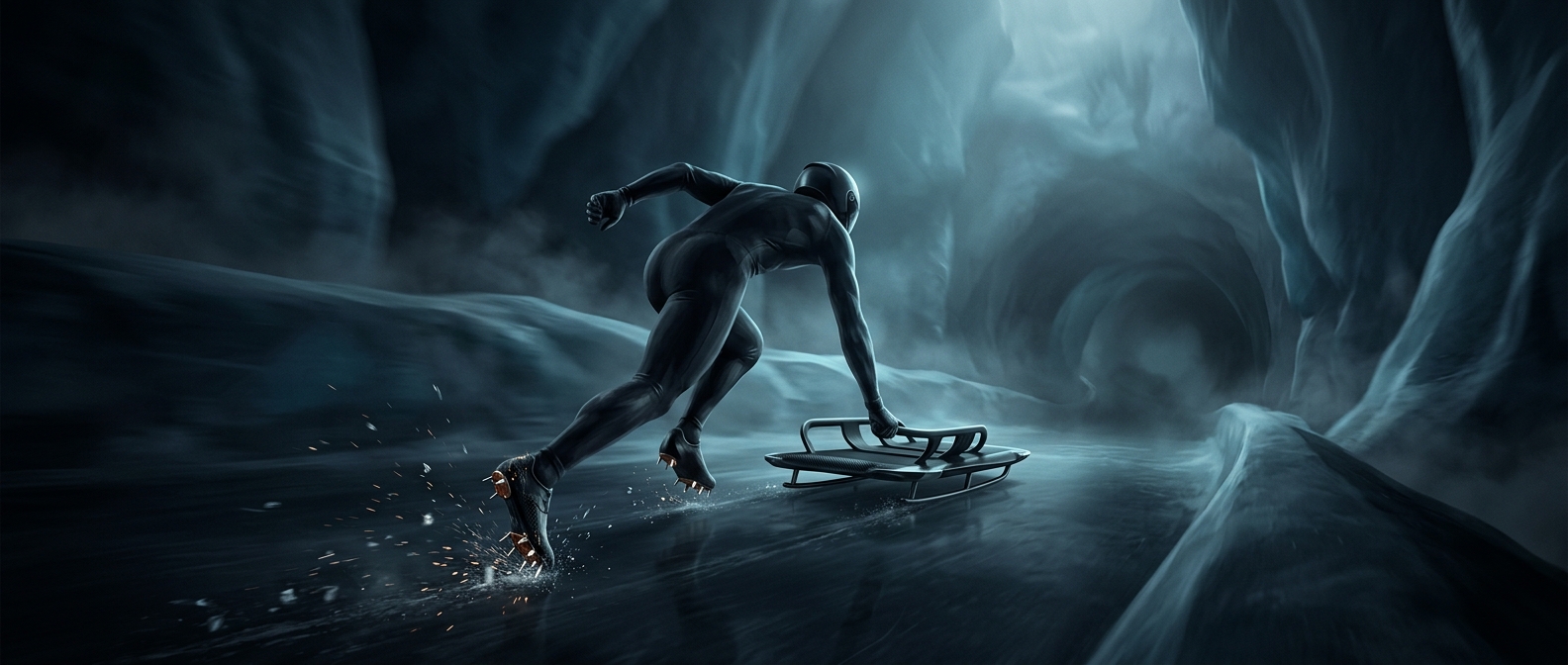
At a skeleton start, the athlete is not simply running on ice: each stride has to push backward against it to drive the body and sled forward. Smooth soles would slide, wasting much of that effort. The shoes’ small metal spikes press into the ice’s surface and give the runner points of purchase, much as cleats help on grass—though here the grip comes from many tiny contacts rather than long studs.
That traction matters because the athlete accelerates the sled by sprinting while pushing it. A firm foot plant lets the runner transfer force into the ice instead of skidding, building momentum before climbing onto the sled. The start is brief, but speed gained there carries into the run.
Grip Matters Only During the Push
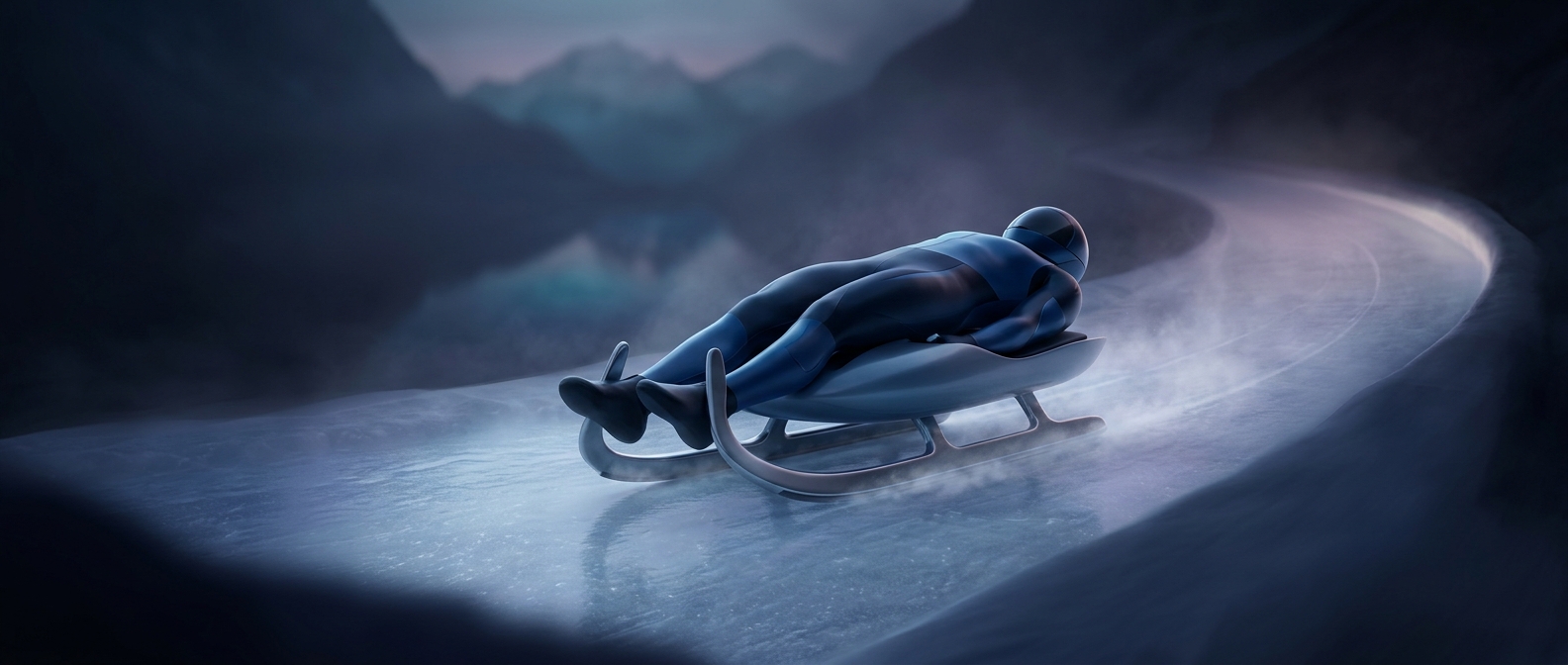
Once the racer is aboard, the shoes no longer serve as the main source of speed. The sled glides along the track, and the athlete’s feet are tucked in rather than driving each stride. The spikes are therefore specialized for a narrow, demanding moment: getting enough grip to accelerate without turning the shoes into bulky running gear.
The contrast is what makes the design memorable. Skeleton racers begin with a sprint that depends on gripping a surface famous for being slippery, then leave that grip behind as soon as they dive onto the sled.