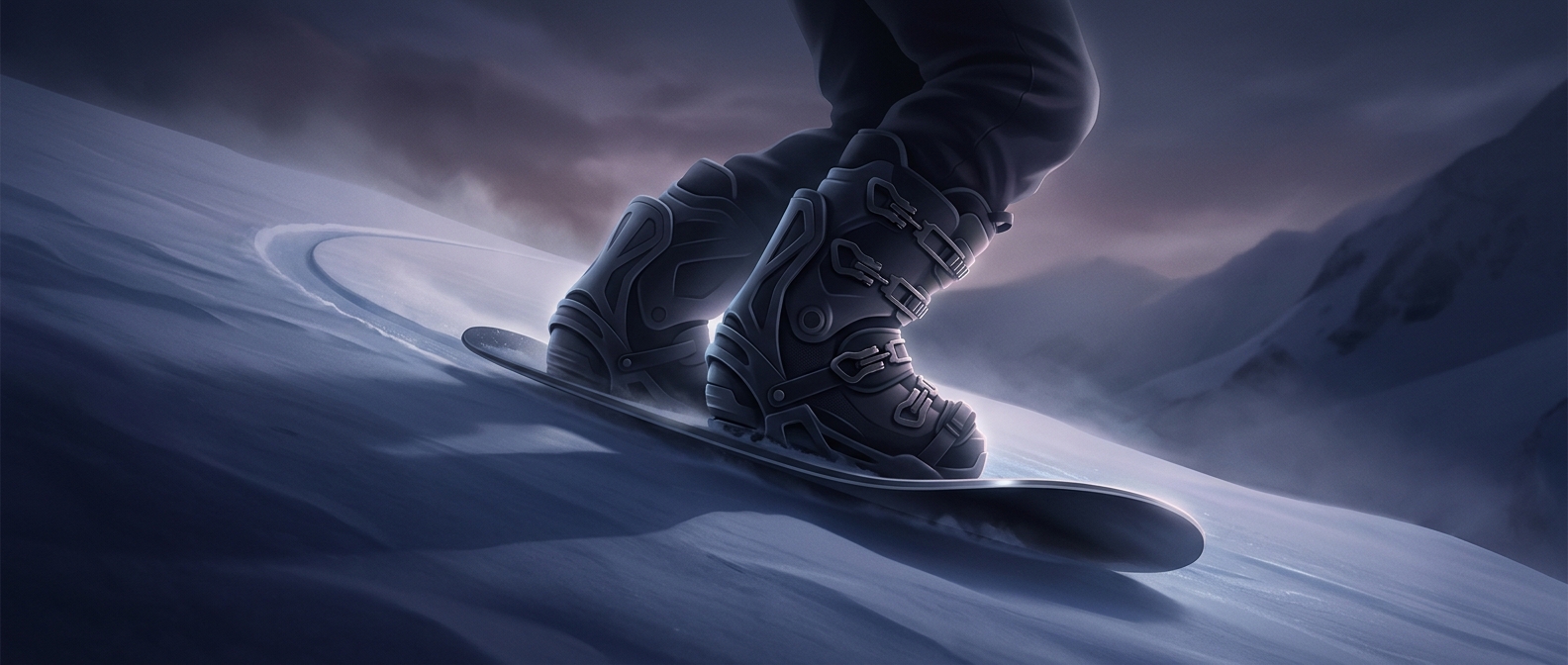
Two sports, two ways to steer
A snowboarder stands sideways on one board, with both feet attached. To turn, the rider shifts pressure toward the toes or heels, flexing the ankles and knees to guide the board’s edge into the snow. A soft boot allows that movement while still supporting the foot inside the binding.
An alpine skier stands facing forward on two separate skis. The skier steers and controls their edges through movements transmitted from the legs into each ski. A rigid plastic boot helps make that connection direct: its stiff shell supports the ankle and lower leg, so pressure on the boot can tip the ski rather than simply bending the footwear.
The tradeoff shows up off the slope
That stiffness is useful for controlling skis, but it makes walking awkward. Alpine boots often keep the ankle in a fixed position and have hard soles, so steps can feel short and clunky. Soft snowboard boots bend more at the ankle and generally let the foot roll through a walking step, making the walk from the car park or lift less cumbersome.
The difference is not that snowboard boots are ordinary shoes. They still need to hold the foot securely and transfer force through the bindings, so their soles and construction are more substantial than everyday footwear. Their flexibility is a deliberate compromise: enough support to control the board, with enough movement for the rider to walk—and to make the small ankle adjustments that help steer it.