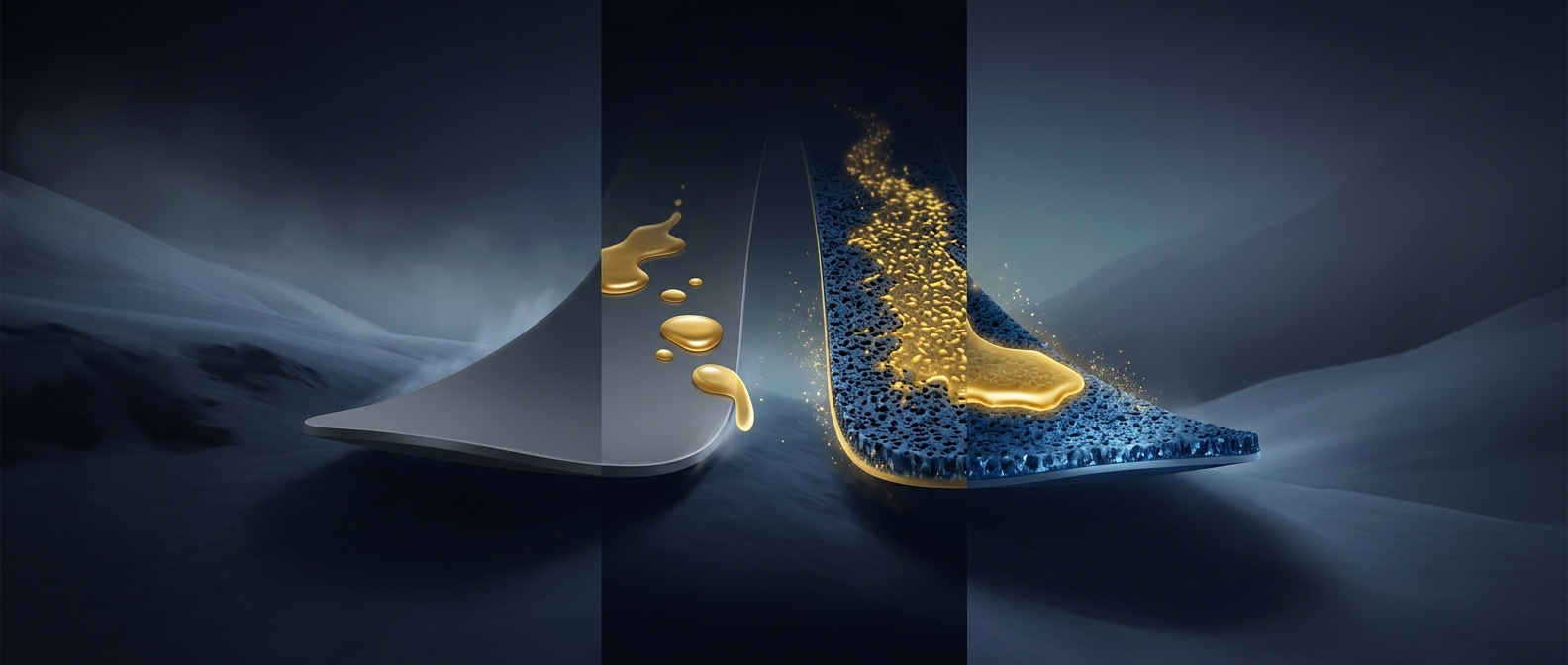
How the base is made shapes its texture
A snowboard’s base is usually polyethylene, a tough, slick plastic. In a sintered base, polyethylene powder is compressed and heated until its particles fuse. The result has a fine, slightly porous structure. An extruded base is made by melting the plastic and pushing it through a shaped opening, producing a denser, more uniform surface.
Those tiny differences matter when wax is applied. Hot wax softens and spreads across the base; some can work into the minute spaces in a sintered surface. The smoother, less porous structure of an extruded base offers fewer places for it to lodge, so more wax is removed during scraping and brushing, and the base generally holds wax for less time.
What that means on snow
Wax helps the board glide by changing how its surface interacts with snow and moisture. It wears away as the board slides, especially where the base meets the snow. A sintered base can take up more wax during hot waxing, which can help it maintain glide longer between treatments. That does not make the base permanently lubricated: wax still wears off and needs replenishing.
An extruded base is often a practical choice for less frequent waxing and straightforward repairs, while a sintered base rewards more regular care. The difference is a maintenance tradeoff, not a simple measure of board quality: the base determines how readily the board takes wax, but conditions and upkeep determine how that advantage plays out on a day on the mountain.