Why a Snowboard Has a Small Patch of Grip
A snowboard is easiest to steer when both boots are secured to its bindings. But riders often keep one boot free while standing in a lift line or getting off a chairlift: that makes it easier to shuffle forward and lets them step away quickly. The challenge comes when the board starts moving before the free boot is strapped in.
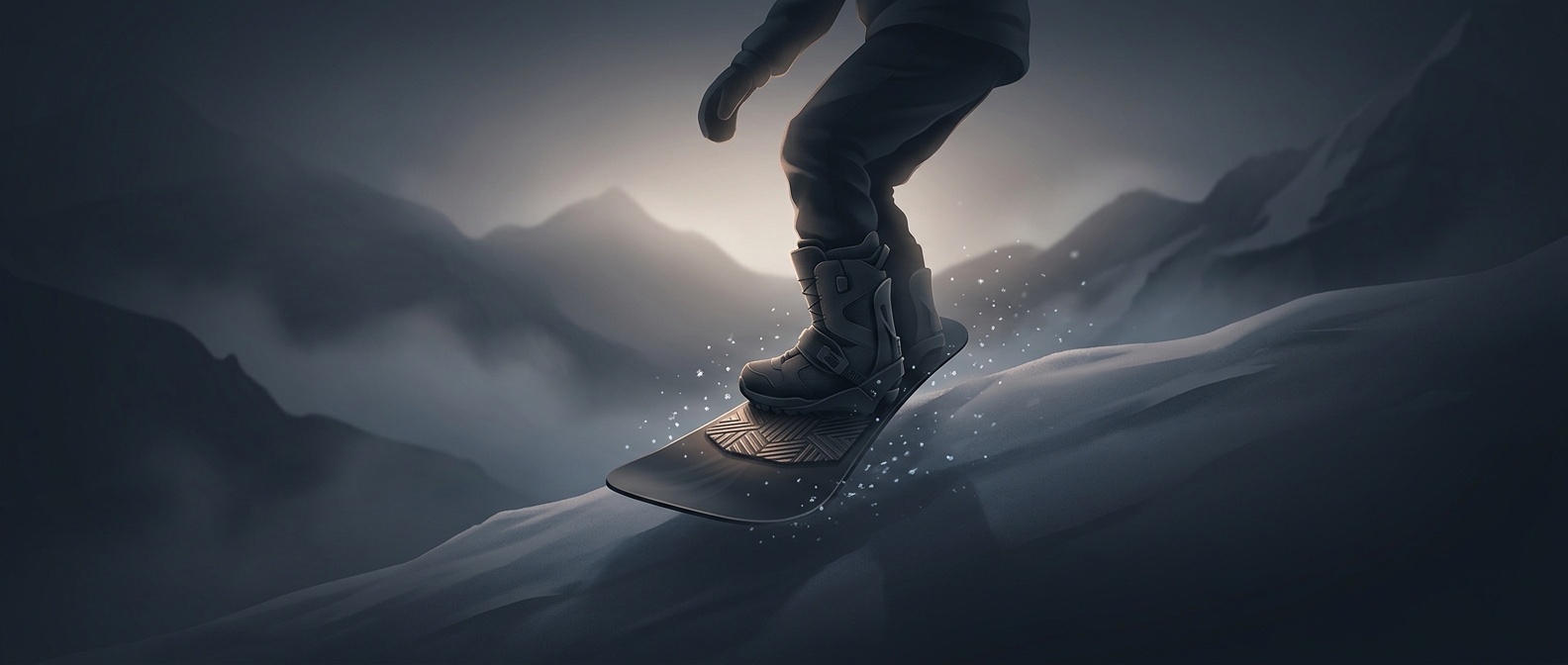
A stomp pad gives that loose boot a rough, raised surface to press against, usually near the rear binding. Its texture catches the sole’s tread better than the smooth board does, helping the rider keep the free foot in place while the strapped-in foot guides the board.
Grip for the Awkward Part of the Ride
With only one foot attached, a rider has limited control. The board can slide or yaw—turn sideways—especially while gliding over a short, flat stretch after leaving the lift. If the free boot slips, the rider may lose balance or have to stop and strap in before continuing.
The pad’s bumps or ridges increase friction by giving the boot’s sole more edges to press against. It does not fasten the boot down like a binding; the rider still has to keep weight on the foot and balance over the board. Snow packed onto the sole or pad can also reduce grip.
That modest patch matters at a specific transition: the board is moving, but the rider is not yet fully attached to it. A stomp pad makes that brief, one-footed glide easier to manage without replacing the binding that provides control once the ride gets going.