Why a Snowboard Has a Split Tail
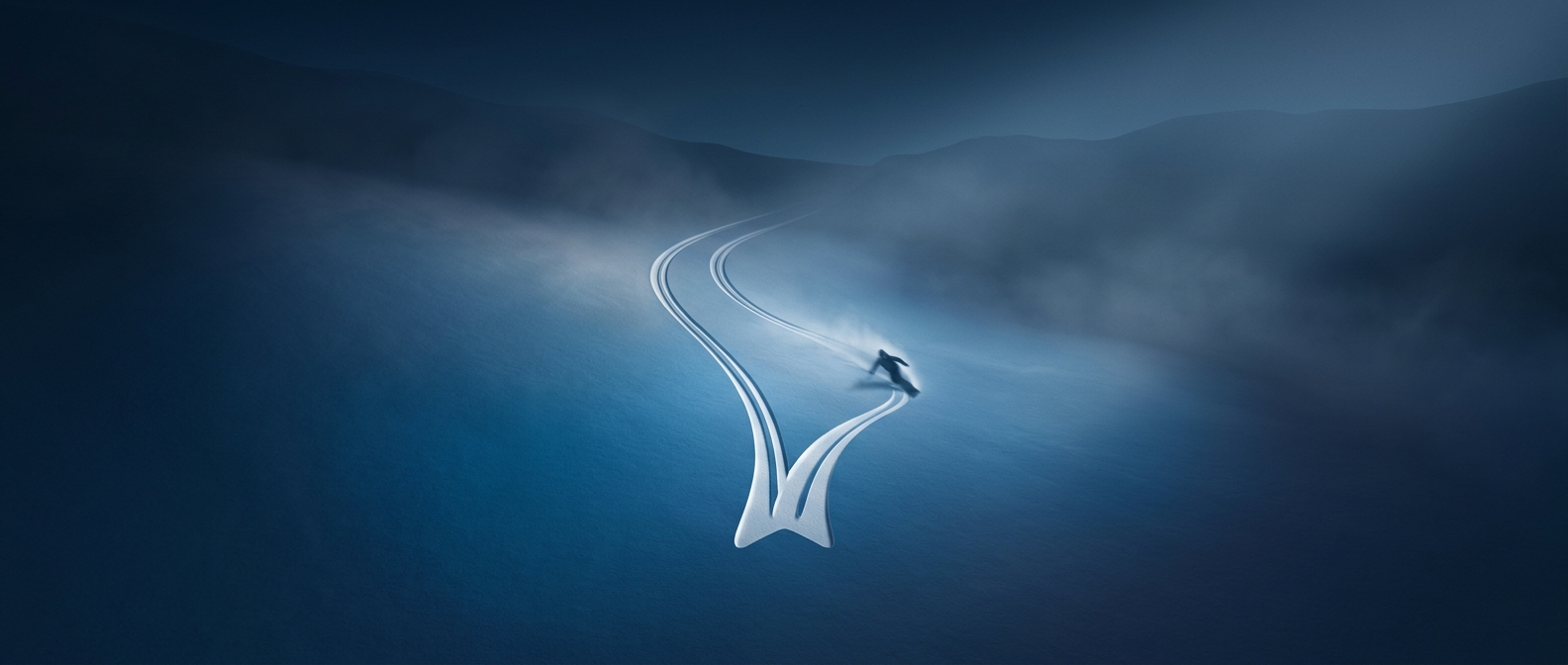
In deep powder, a board is supported by snow that gives way under pressure. Its shape and flex determine whether it settles level or tips nose-first. A swallowtail’s V-shaped cut divides the rear into two narrow sections, changing how the tail bears on soft snow.
The Tail Sinks; the Nose Rises
The two tail sections can flex more readily than a solid tail. As they bend and settle into powder, the back of the board drops relative to the wider front. That shifts the board into a nose-up angle, helping it skim over snow rather than plowing into it.
The effect is especially useful when a rider is moving slowly or steering through deep, loose snow, where momentum alone may not keep the nose up. The board’s overall shape and the rider’s stance still matter; the notch is one part of a design that helps manage how the board floats.
A Design Tuned for Powder
That specialization comes with a tradeoff. A split tail offers less continuous support at the rear than a solid tail, so swallowtail boards are generally shaped for powder rather than for every kind of riding. The cut is not just a visual flourish: it changes which end gives way, allowing the board to ride through deep snow with its nose lifted.