How a Highback Turns a Lean Into Edge Pressure
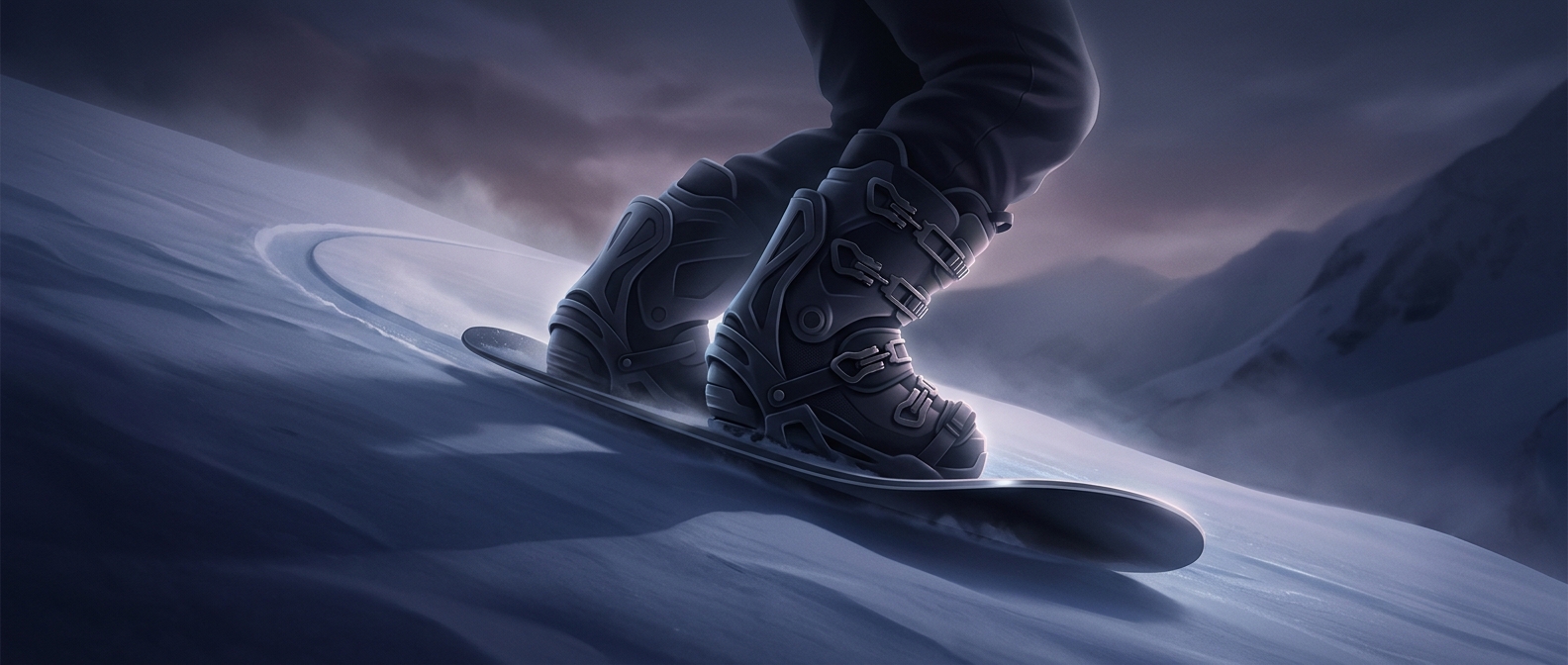
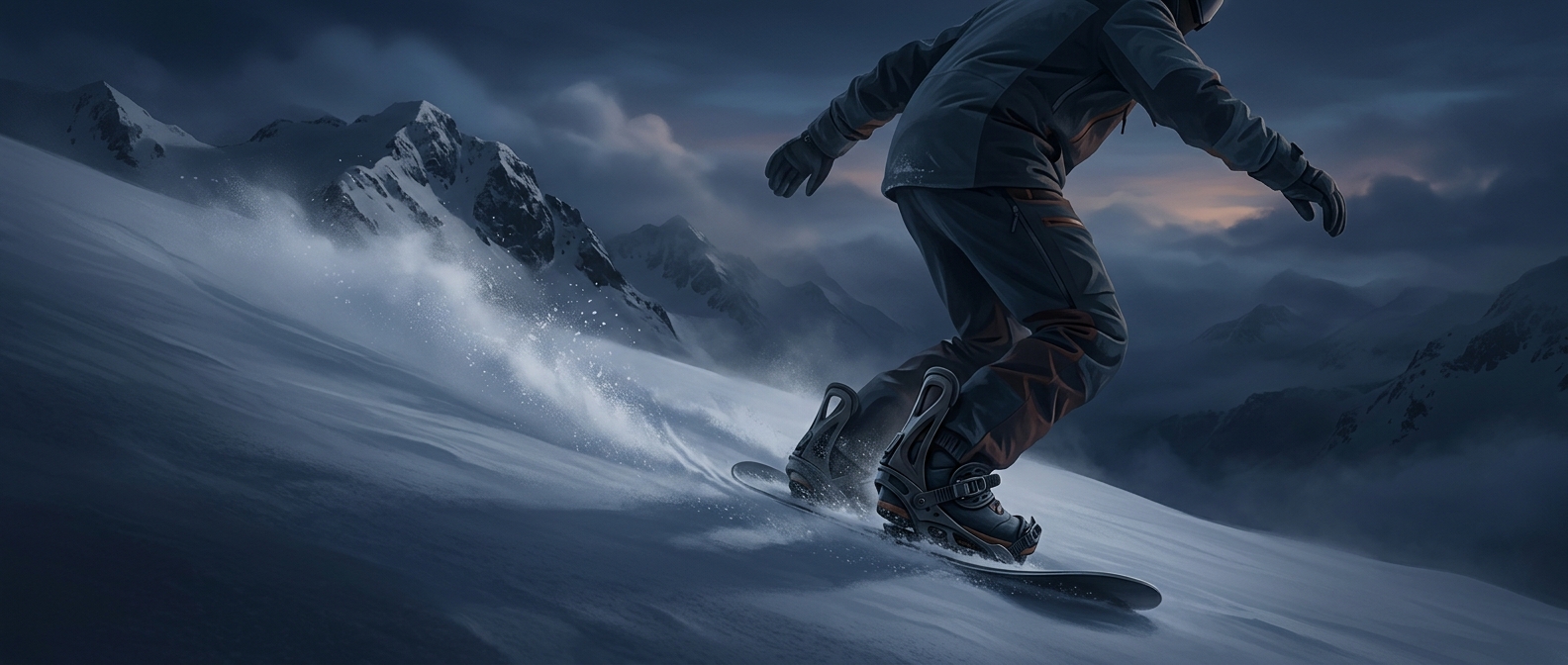
A snowboarder’s heel edge sits along the board’s heel-side rail, but the rider’s leg is several inches above it. The binding connects those two levels. Its highback—the upright panel behind the boot—gives the calf a firm surface to push against, so pressure from the leg can travel through the boot and binding into the board.
When the rider bends the ankles and knees toward the heel side, the calf loads the highback. The binding resists that push and passes force into the board, helping tip it so the heel edge presses into the snow. The edge can then grip and guide the board through a turn. The highback is not steering by itself: the rider’s balance, the board’s flex, and pressure through the rest of the binding all contribute.
Why the Panel’s Shape Matters
The highback acts as a lever because it rises above the board and braces the lower leg. A small movement at the boot can therefore create a useful change in pressure at the edge, without the rider having to drag a foot across the snow. Its stiffness and angle affect how directly that pressure is felt: a more supportive setup can respond promptly, while a softer or less upright one allows more movement before the force builds.
That tradeoff is useful because turns demand both control and adjustment. The highback gives the rider a solid place to press, while the boot and binding still need enough give for the rider to shift weight smoothly. In practice, the panel’s job is to make a heel-side lean a controllable input—not to replace the rider’s movement.