Why a Unicycle Seat Has Bumpers
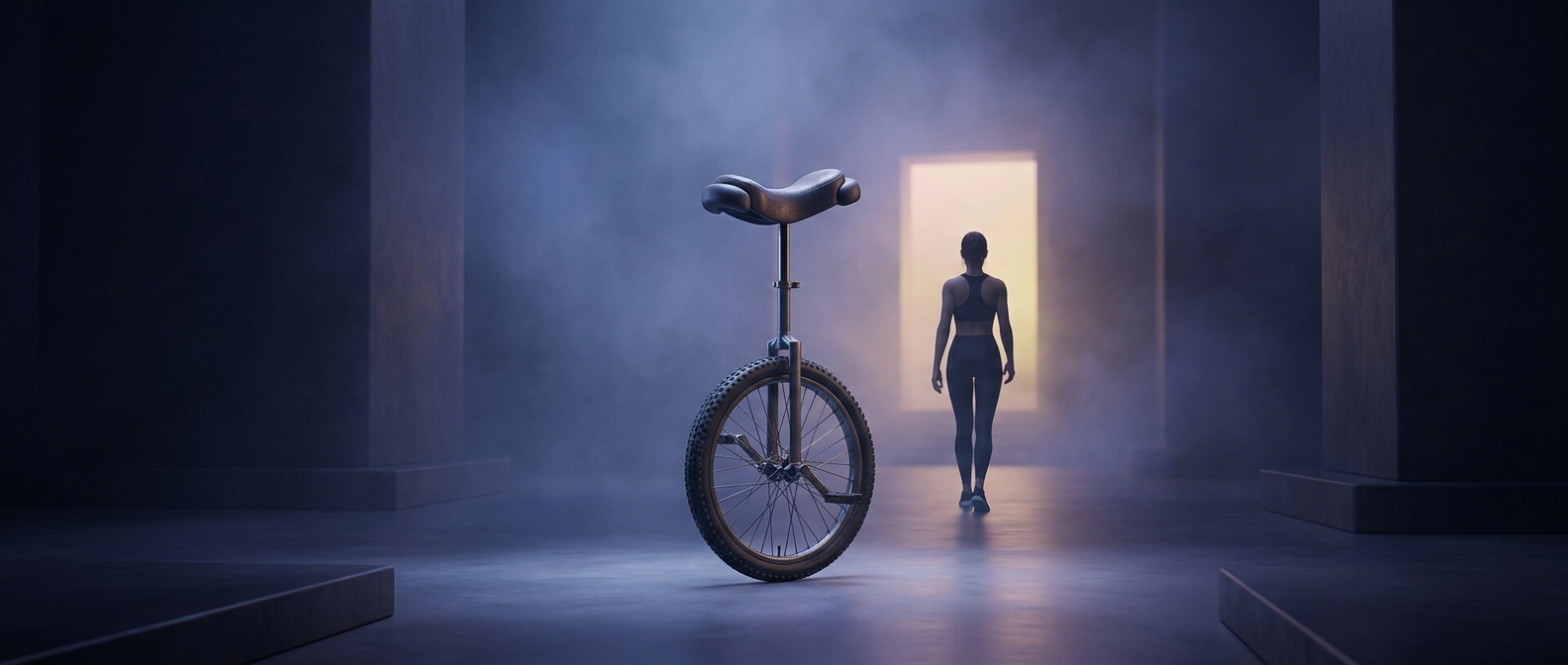
A unicycle has no second wheel to steady it when it is parked or dropped. If it tips onto its side, the saddle is often one of the parts that hits the ground. Its front and rear bumpers—thick guards built into the saddle’s ends—take that scrape and impact instead of leaving the seat covering or frame to absorb them. They are particularly useful because a unicycle’s narrow, upright shape makes it easy to knock over while handling or setting it down.
Built for Hands as Well as Impacts
The raised ends also give riders places to grip the unicycle. A rider may hold the front or rear of the saddle while mounting, carrying, or controlling the cycle during a trick. In freestyle riding, where the rider may briefly shift position or lift the unicycle, those protruding ends serve as practical handles.
That creates a useful design compromise: the saddle is not shaped only to support the rider’s weight. It also has to withstand contact with the ground and provide something secure to hold. The bumpers make the seat a durable, graspable part of a machine that is constantly balanced on a single point of contact.
Protection That Makes Tricks Practical
A unicycle can land awkwardly even when a rider is practicing a controlled maneuver. Bumpers help keep ordinary falls from quickly wearing down or damaging the saddle, while the same raised edges give the rider leverage for handling the cycle. On a unicycle, the seat is both riding equipment and part of the bike’s crash-and-grip system.