Why a raised tail matters when skiing backward
A conventional downhill ski has a rounded, turned-up front and a flatter tail. That shape suits forward travel: the front can ride over uneven snow, while the tail stays comparatively planted behind the skier. But when a skier moves backward—called skiing switch—the tail becomes the leading end. A flat tail can catch in the snow instead of gliding over it.
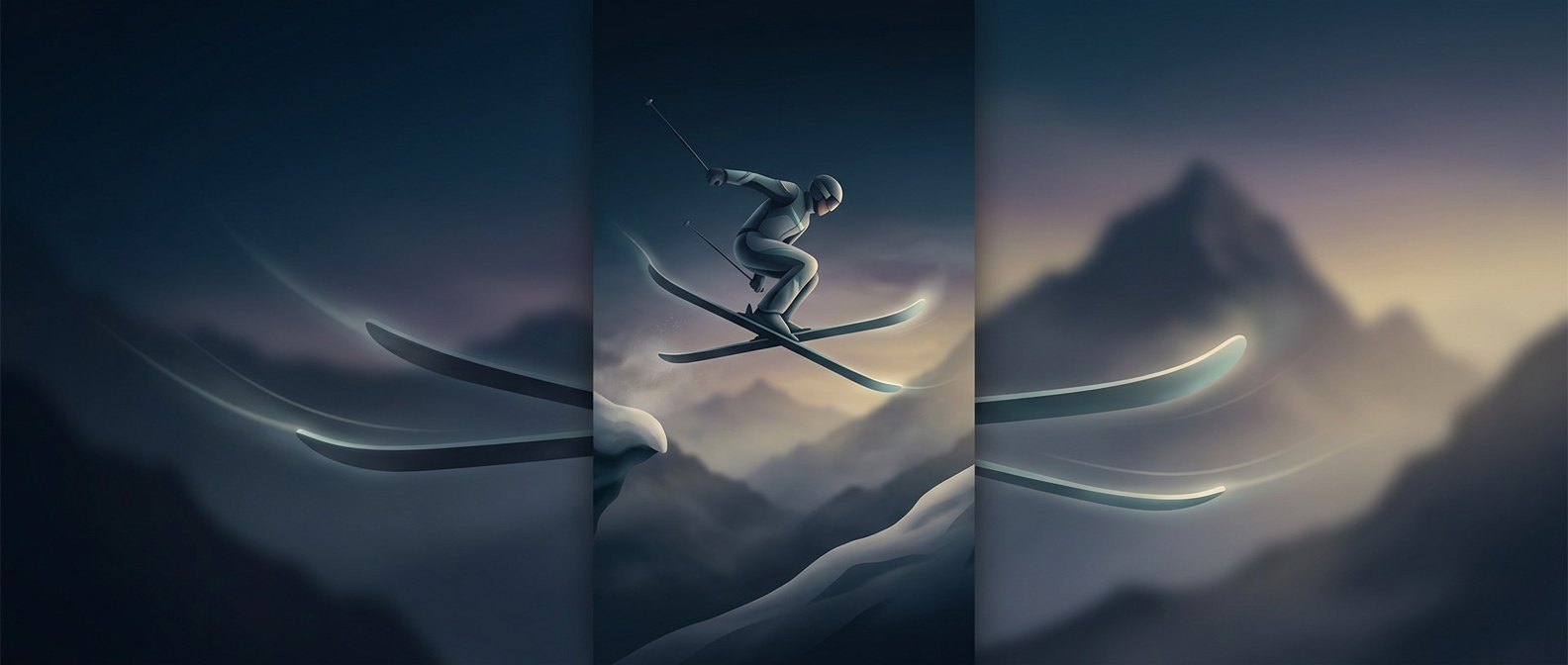
A twin-tip ski turns up both ends. Its raised tail is less likely to hook into the snow as it leads, making it easier to glide and steer in reverse. The ski does not become identical in both directions: its flex, sidecut, and binding position still affect how it handles. But the upturned tail removes one conspicuous obstacle to backward travel.
Built for changing direction without stopping
The shape is especially useful for freestyle skiing, where a skier may land facing downhill after rotating in the air, or link forward and backward sections in one run. With a conventional flat tail, switching direction can mean slowing down, turning around, and restarting. Twin tips let the skier keep moving through that change instead.
The design is a small example of how equipment can make a movement practical: raising the rear end does not make backward skiing effortless, but it helps keep the ski from acting like a brake at the moment it becomes the front.