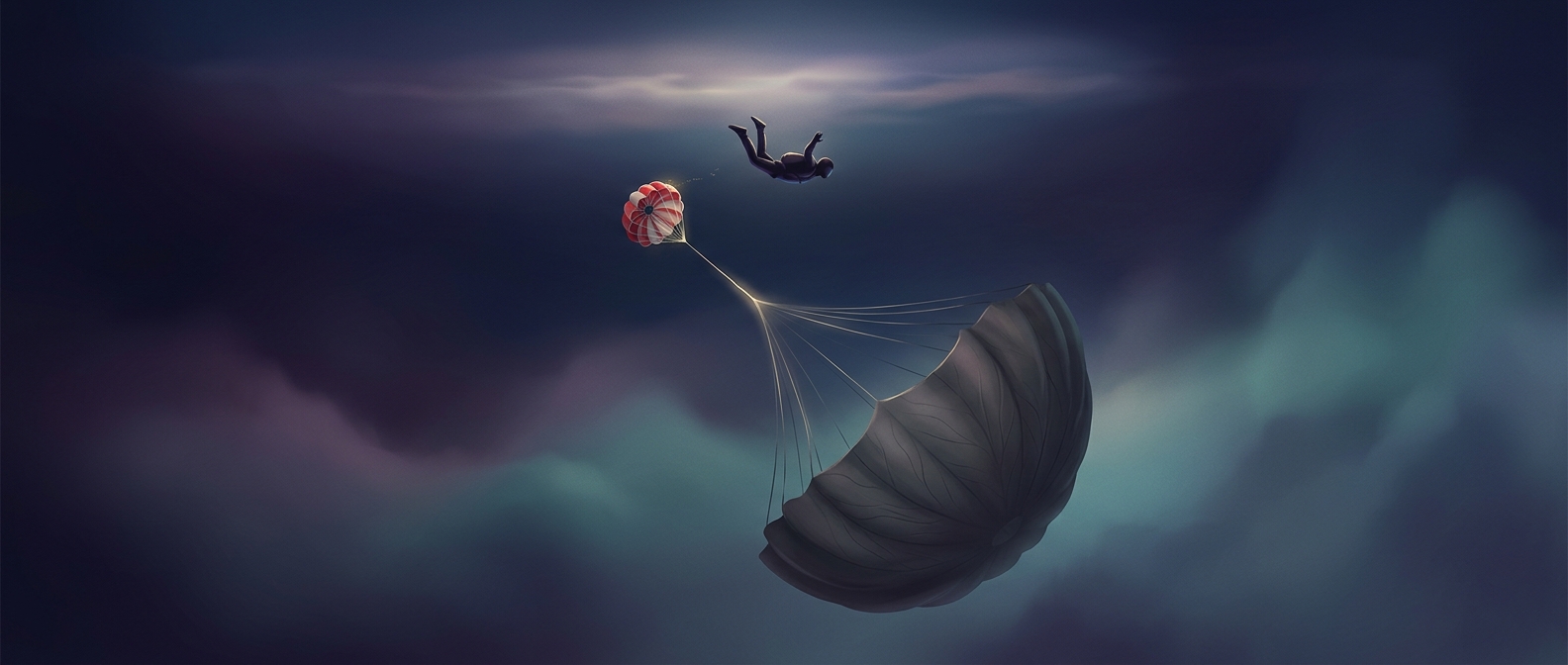
A small chute starts a carefully staged deployment
The little parachute is called a pilot chute. When a skydiver deploys the main parachute, the pilot chute enters the airflow and acts as a small drag device. Its pull travels through a connecting strap, called a bridle, to the container holding the main parachute.
That pull extracts the main canopy’s deployment bag. The bag is not simply flung open: it keeps the folded fabric contained while the suspension lines—long cords connecting the canopy to the harness—uncoil and extend.
Why the main canopy doesn’t open all at once
The sequence matters. If the large canopy filled with air before its lines had stretched out, it could twist, tangle, or inflate unevenly. The deployment bag helps delay that inflation until the lines are extended. Then the canopy is released from the bag and air fills it, turning packed fabric into a wing that can support the jumper.
This staged process also moderates the transition from freefall to descent. A parachute that catches air too abruptly can produce a hard opening; orderly extraction and inflation help make deployment more controlled. They do not guarantee a perfect opening, but they reduce the chance that fabric and lines will emerge in a disorderly rush.
A small pull with a large job
The pilot chute is useful because it can catch the air easily while the much larger main canopy remains packed. It does not provide the lift that carries the skydiver down. Instead, it begins a chain of events: pilot chute, bridle, deployment bag, extended lines, then an inflated canopy. The large parachute’s opening depends on that small first step happening in the right order.