The trigger is cabin altitude, not the force of the landing
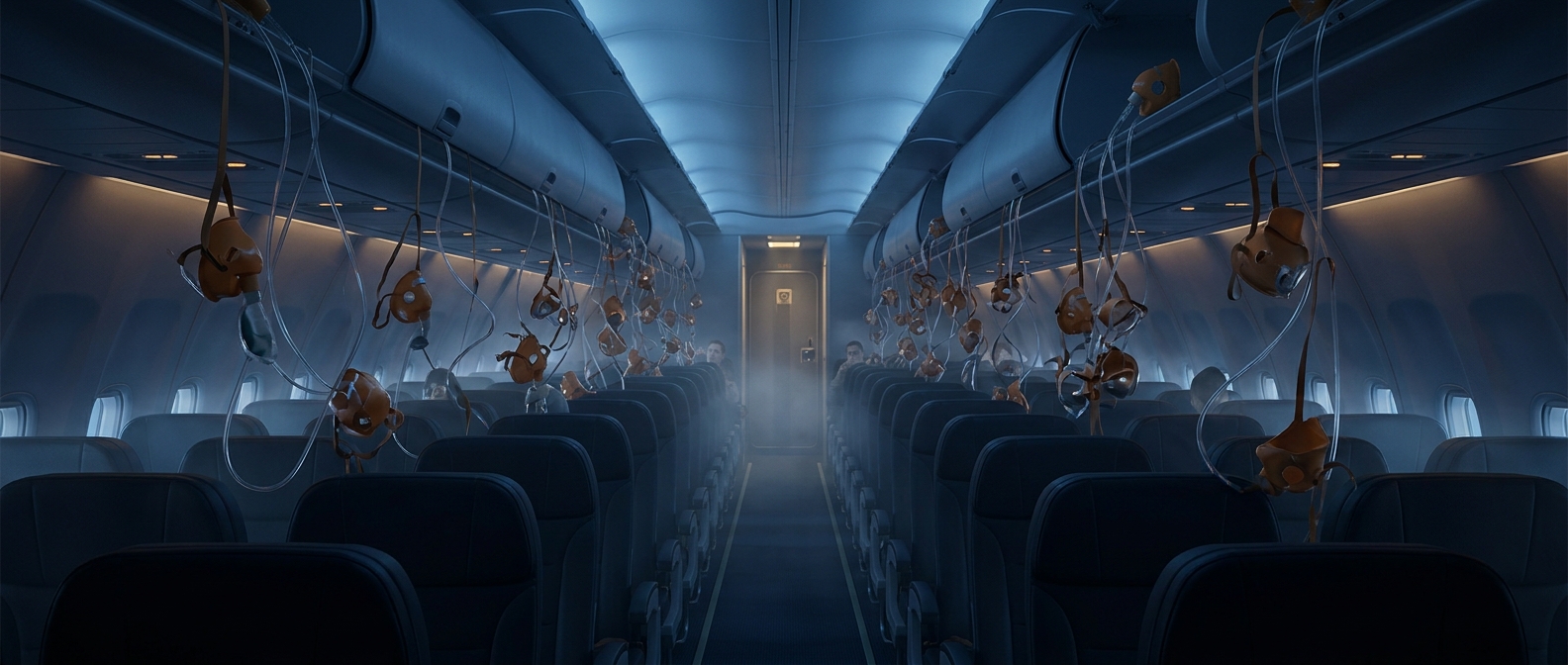
An airliner keeps its cabin at a pressure higher than the thin air outside, so passengers can breathe comfortably at cruising altitude. Sensors monitor that pressure. If it falls far enough, the cabin’s effective altitude—the altitude the air pressure would correspond to outdoors—rises, and the passenger oxygen masks are released automatically.
A severe impact could damage part of the pressure boundary, such as a door seal or fuselage panel, allowing air to escape. But the masks do not respond to a jolt by itself: the cabin pressure has to cross the system’s trigger point. That is why an unsettlingly timed mask deployment is evidence of a pressure problem, not a judgment about how rough the touchdown felt.
Why the masks need to drop quickly
At high altitude, a rapid loss of cabin pressure leaves little time for passengers to find oxygen equipment. The masks fall from overhead compartments so oxygen is immediately within reach. On many aircraft, pulling a mask down starts its oxygen supply; the system is designed to give passengers time while the pilots descend to denser air, where breathing is safer.
Passenger masks commonly draw oxygen from a chemical generator rather than a large tank. Once activated, the generator produces oxygen for a limited period, making the masks a bridge through the emergency descent—not equipment intended for the rest of the flight.
The practical consequence is that a cabin can go from an apparently routine landing to an oxygen emergency in moments if its pressure boundary is compromised. The masks are automatic precisely because there may not be time to wait for a crew member to assess the damage.