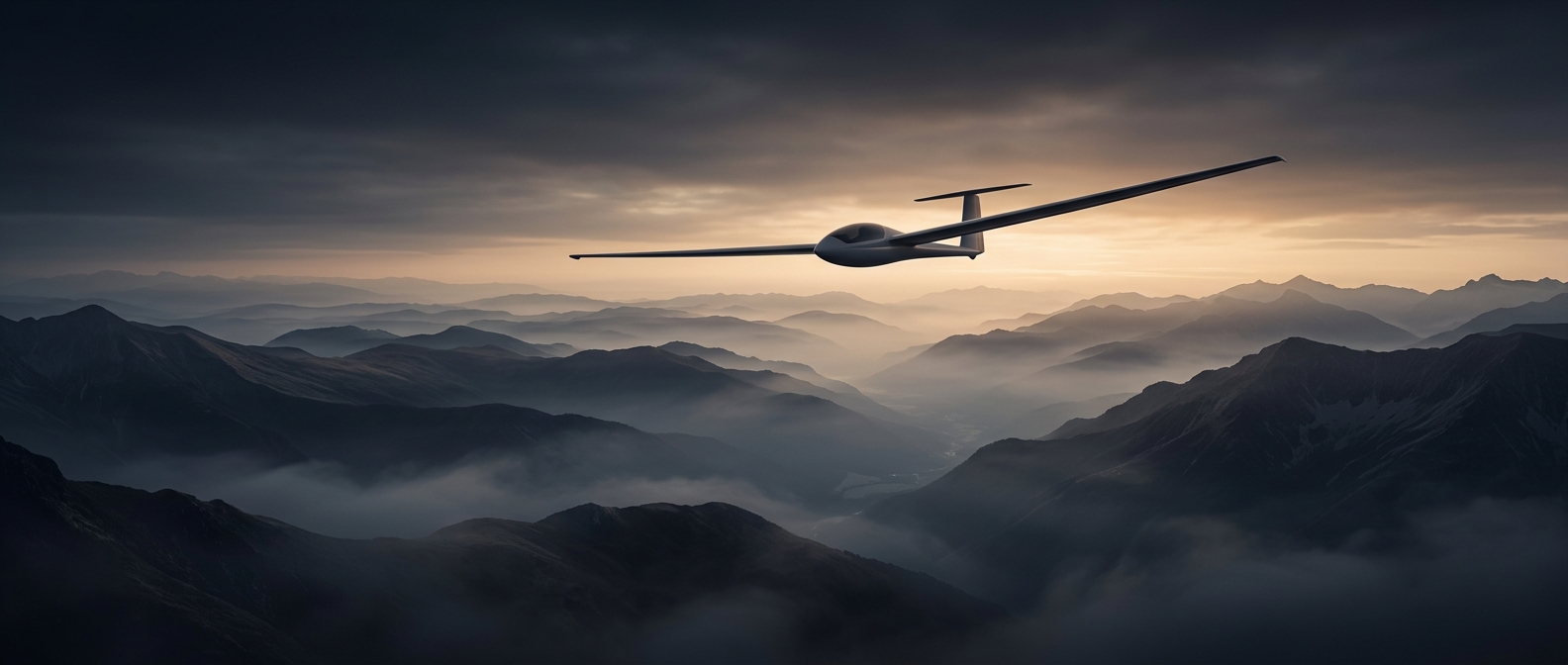
The energy bargain behind a glider’s flight
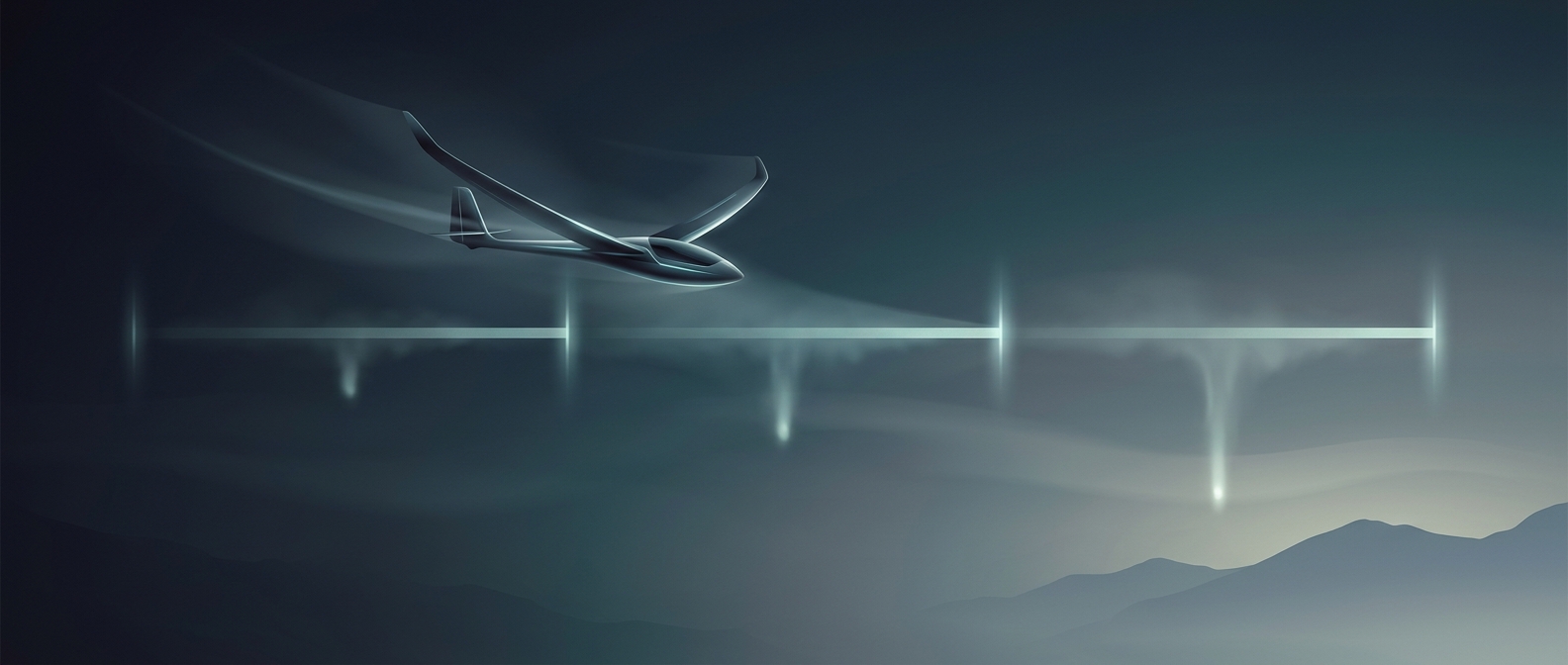
A glider has no engine to replace the energy it loses to drag—the air resistance that slows it down. Instead, it descends gradually through the air. As it moves forward, air flowing around its wings creates lift, the force that holds it up. That forward motion comes at the cost of altitude: in still air, the glider must keep sinking to keep moving.
How a thermal adds height
On a sunny day, the ground warms unevenly. Air above a sunlit field or dark surface can grow warmer and less dense than the air around it, so it rises in a column called a thermal. A pilot searches for these invisible columns using clues such as circling birds, clouds, or changes in the air, then banks into a turn to remain within the rising stream.
When the thermal’s upward movement exceeds the glider’s rate of descent, the aircraft gains height even as it continues to lose some energy to drag. The pilot can then leave the updraft and glide toward the next one, converting that altitude back into forward travel.
Why pilots circle
A thermal is often narrow, especially near the ground, so flying straight through it may provide only a brief lift. Circling keeps the glider inside the rising air long enough to climb. The tradeoff is practical: tighter turns can make it harder to stay in the strongest part of the updraft, while broad turns may carry the aircraft out of it. Pilots adjust their circle to the shape and strength of the lift.
The flight is therefore a sequence of climbs and descents, not effortless hovering. Each thermal replenishes altitude that the glider spends crossing the distance between rising-air columns. Its route depends on finding lift at the right moment—and on arriving at the next updraft with enough height to reach it.