Why some fighter jets need a computer to stay controllable
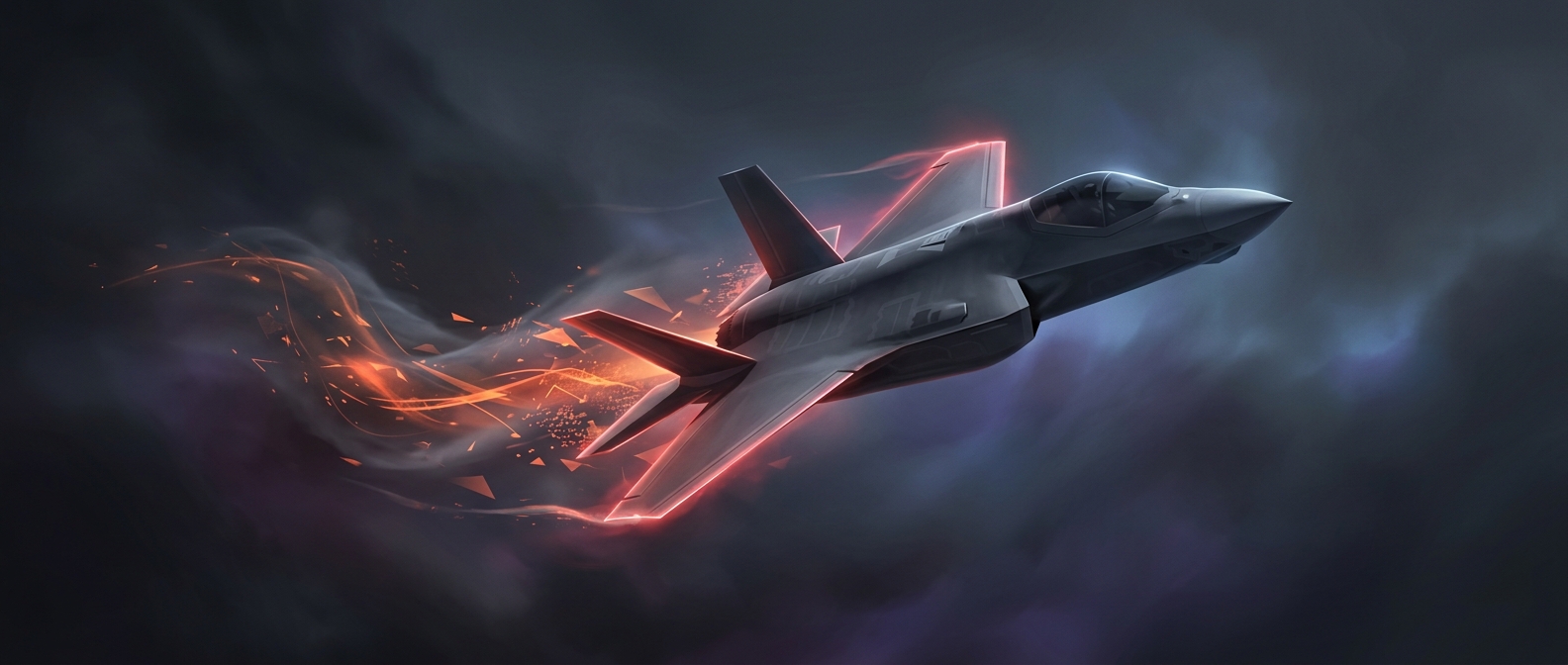
An aircraft is statically stable if, after a small disturbance, its aerodynamics tend to push it back toward its previous direction. Many conventional airplanes have that self-correcting tendency. Some fighter jets are designed with less of it—or even with instability in certain conditions—so they can change direction more readily.
The tradeoff is easiest to see in pitch, the nose-up or nose-down motion. A stable aircraft tends to resist a change in pitch. An unstable one may instead keep moving farther from its original attitude unless something corrects it. That responsiveness can help a jet point quickly, but it also means the pilot cannot simply let go and expect the airplane to settle itself.
The flight computer closes the loop
In a fly-by-wire system, the pilot’s controls send electrical signals rather than moving control surfaces through a direct mechanical linkage. Sensors measure the jet’s motion, and computers continually adjust surfaces such as the tail and wing controls to keep the aircraft on a controllable path.
The pilot might ask for a turn or a change in pitch; the computer translates that request into rapid, precise corrections. If the aircraft begins to depart from the intended motion, the system counters it before the movement grows. This happens far faster and more continuously than a person could manage by hand.
Agility comes with dependence
Reducing natural stability can make an aircraft more responsive, but it shifts work from the airframe to its control system. The computer is not merely adding convenience: it is part of what makes the design practical to fly. The result is a jet that can react sharply to a pilot’s command while relying on constant electronic correction to keep that sharpness from turning into an uncontrolled departure.