Why a Headwind Shortens the Takeoff Roll
A wing makes lift by moving through air. What matters is airspeed—the aircraft’s speed relative to the surrounding air—not how quickly it is moving past the runway. As air flows over the wing faster, lift increases; at a particular airspeed, the wing can support the aircraft’s weight and it can leave the ground.
A headwind supplies some of that airflow before the plane has gained as much speed over the runway. If the aircraft needs a certain airspeed to take off, a steady wind blowing toward its nose means it can reach that airspeed at a lower groundspeed. For example, the plane may be moving relatively slowly over the pavement while air rushes over its wings at the speed needed for lift.
The Runway-Distance Tradeoff
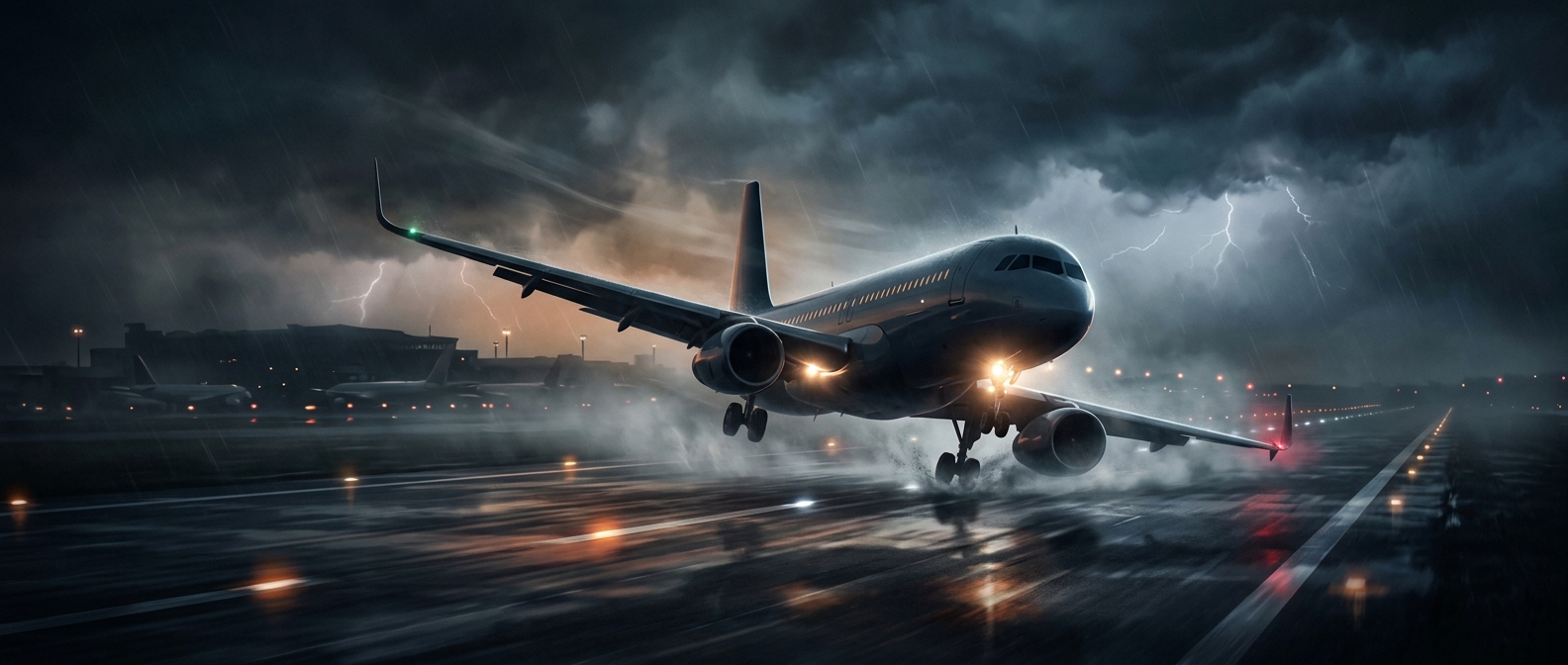
That difference matters because the aircraft must accelerate across the ground. Reaching takeoff airspeed at a lower groundspeed generally means less runway is needed. A tailwind has the opposite effect: the plane must travel faster over the ground to achieve the same airflow over its wings, usually requiring a longer takeoff roll.
Pilots and aircraft performance calculations account for wind, along with factors such as aircraft weight, temperature, and runway conditions. The benefit also depends on the wind being reasonably steady and aligned with the runway; gusts or a strong crosswind introduce other handling concerns. A headwind does not propel the aircraft upward by itself. It changes how quickly the wing gets the airflow needed to produce enough lift—and lets the plane reach that point sooner along the runway.