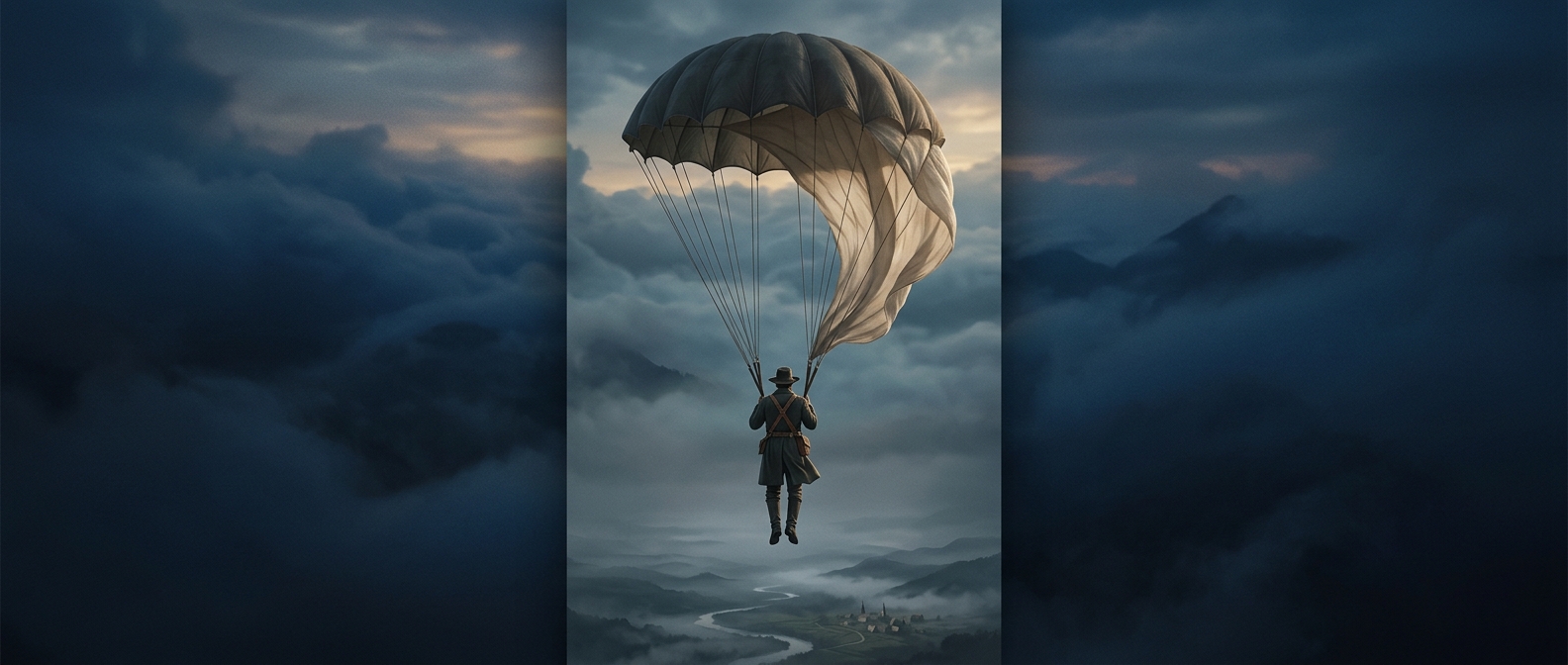
A Balloon Was the Launch Platform
In 1797, French aeronaut André-Jacques Garnerin rose in a balloon with a parachute attached beneath it. At altitude, he released himself and descended under the canopy. The balloon solved a basic engineering problem: it could lift a person high enough to test a parachute before powered aircraft existed.
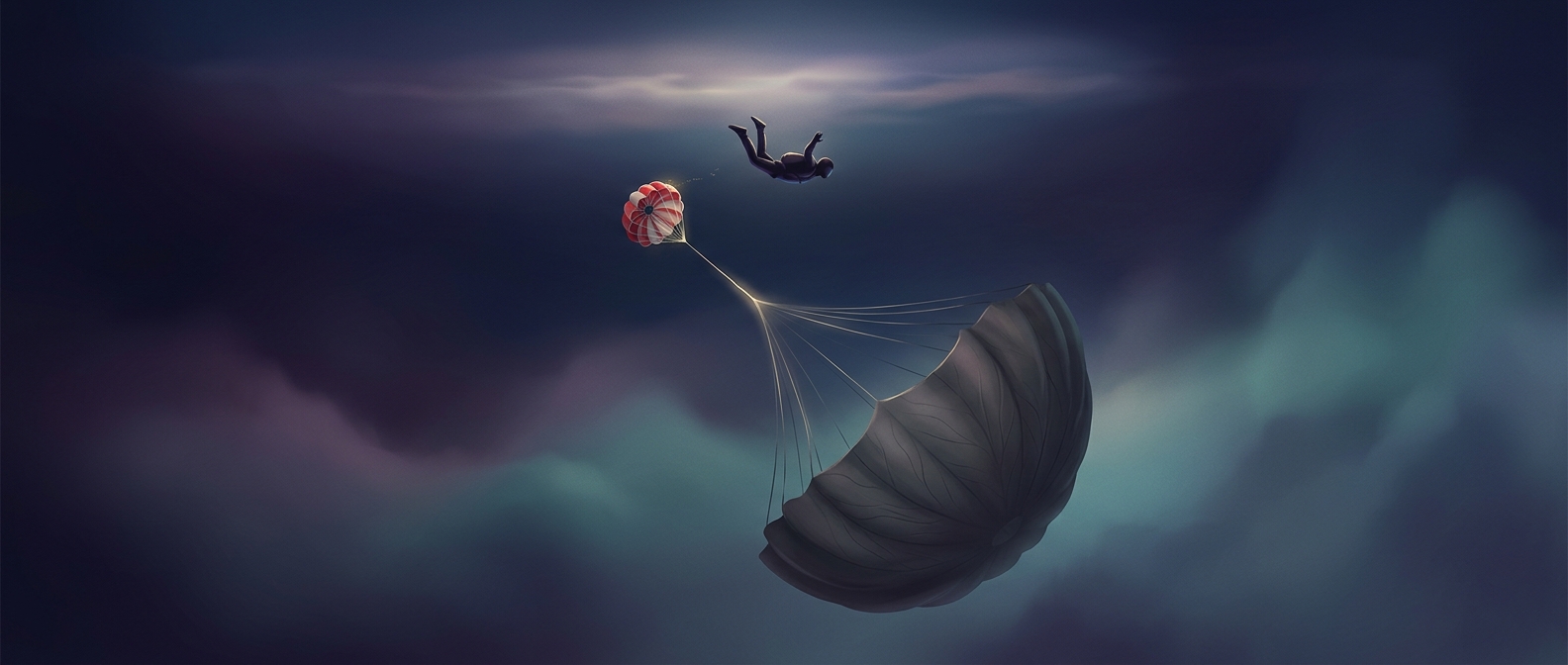
The jump was not a modern skydive. Garnerin’s parachute was a broad, umbrella-like canopy suspended from lines, with no rigid frame to keep it steady. As air filled the fabric, the canopy slowed his fall—but it also began to sway and swing.
Why the Canopy Oscillated
A parachute needs to catch air to create drag, the force that resists downward motion. But air trapped under an early canopy had no opening at the top through which to escape. Pressure could build unevenly, then shift from side to side, pushing the canopy off balance. The hanging jumper followed its motion, turning the descent into a pendulum-like swing.
That instability was a design problem, not just a frightening sensation. A canopy that oscillates can make a descent harder to control and can place uneven strain on its fabric and suspension lines. Later parachute designs added ways for air to flow through or out of the canopy, helping reduce that motion.
A Test of a New Kind of Descent
Garnerin’s balloon launch showed that a parachute could carry a person safely down from the sky, while also revealing that simply slowing a fall was not enough. The ride itself mattered: a useful parachute had to manage airflow as well as provide lift-like resistance.
That is why the first jump is remembered as both a demonstration and an engineering lesson. The balloon supplied the height; the swinging canopy exposed the next challenge—making the descent stable enough to steer and trust.