Restraints are a last step in managing an onboard threat
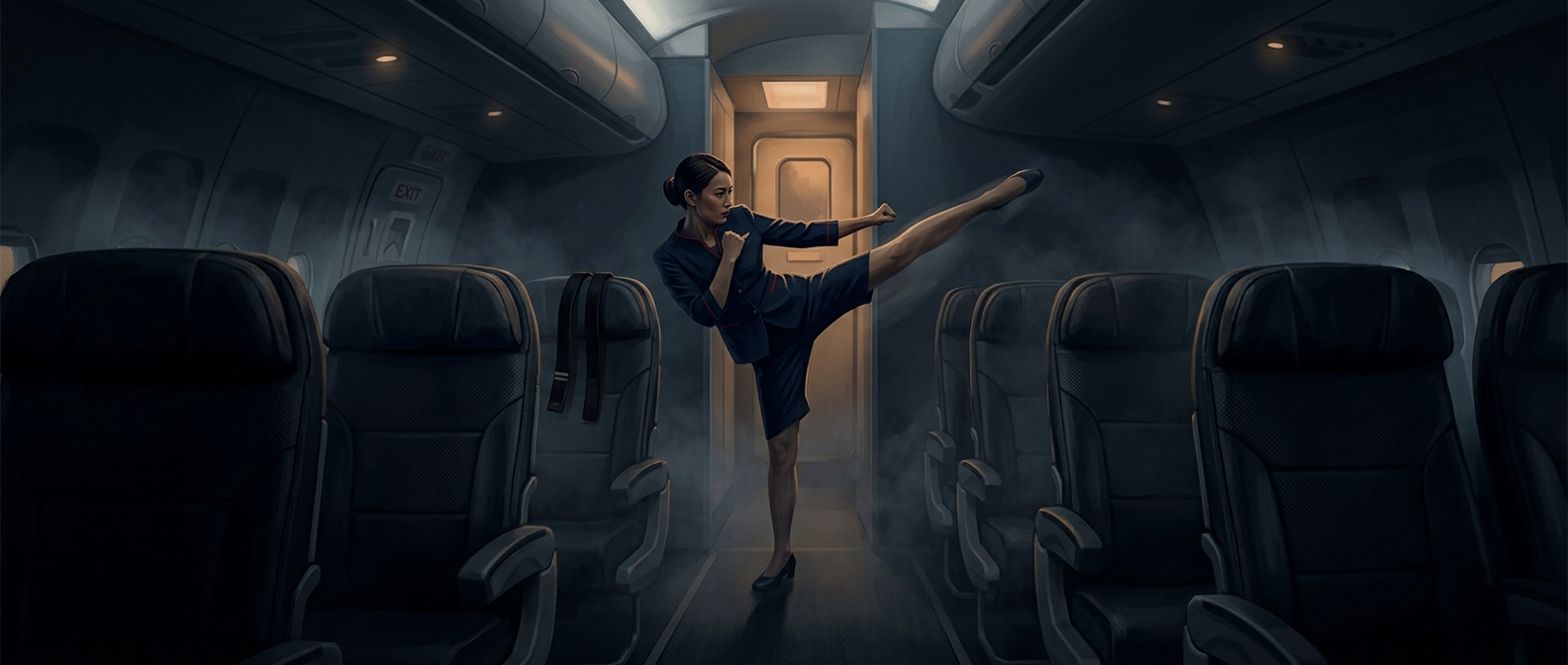
A passenger who becomes violent can endanger people in a confined cabin, where there is little room to move away and the flight crew cannot simply stop the journey. That is why many international airlines train cabin crew not only to calm disruptive behavior but also to restrain someone when the threat cannot otherwise be controlled.
The goal is not punishment. It is to prevent an immediate risk to passengers and crew while the aircraft continues to a place where authorities can take over. Crew members must also weigh the danger of intervening: a physical struggle can injure the person being restrained or anyone nearby.
Why use flex-cuffs?
Flex-cuffs are strong, adjustable plastic restraints. They are compact and can be carried aboard more easily than bulky equipment, making them practical in an aircraft’s limited storage space. Once tightened, they restrict a person’s movement; removing them generally requires cutting the tie, so crews need to treat their use as a serious intervention rather than a casual response to noncompliance.
Training matters because restraint in a narrow aisle or crowded row is different from restraint in an open space. Crew members have to coordinate, protect nearby passengers, and keep the situation from spreading through the cabin. The central challenge is containing one person without turning a confrontation into a larger emergency.
A restraint does not resolve the underlying incident. It buys time—and, on a flight, time can mean reaching a safe landing before the situation escalates further.