A Pilot’s Restraint Has to Preserve Control
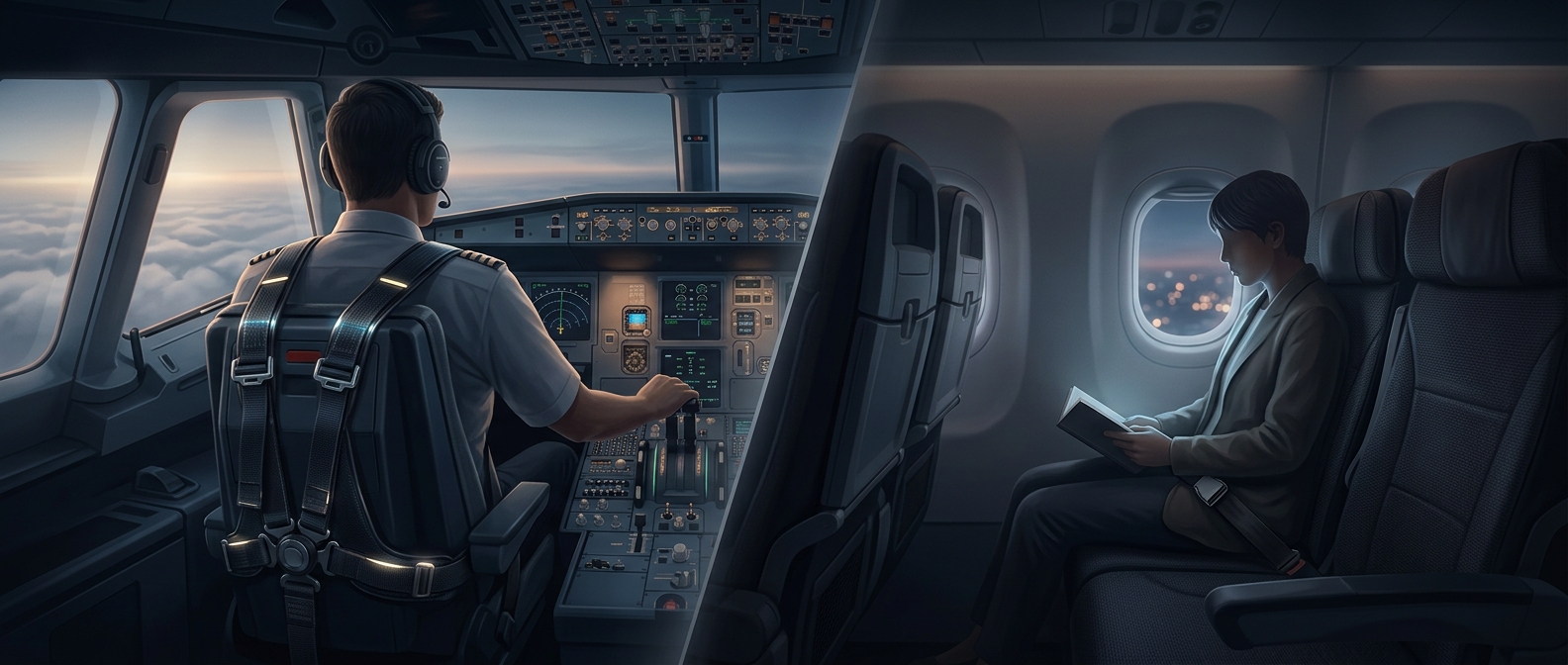
A five-point harness anchors the wearer at five places: over both shoulders, at both hips, and between the legs. The shoulder straps meet the lap belt at a central buckle, while the lower strap helps keep the buckle and belt from riding upward. Together, the straps limit how far the pilot’s upper body can lurch forward or sideways.
That matters because a pilot must remain positioned to reach the controls and read the instruments. In a sudden jolt or hard landing, a lap belt alone can let the torso pitch forward; the shoulder straps help keep the pilot in the seat and within reach. The restraint is part of the practical connection between the pilot and the cockpit, not just protection against injury.
Passenger Seats Serve a Different Job
Most passenger seats use a lap belt because passengers are not expected to operate controls, and the belt is quick to fasten and release. Aircraft seats and their attachments are also designed to manage crash forces, so the belt is only one part of the protection system. Some aircraft and specialized passenger seats use shoulder restraints too; the lap-belt arrangement is common, not universal.
The difference reflects two priorities: passengers need a simple restraint for takeoff, landing, and unexpected movement, while pilots need a restraint that also keeps them in a useful working position. In a cockpit, staying securely seated can help preserve not only the pilot’s safety but also the ability to keep flying the aircraft.