Why Some Contrails Become Broad Veils
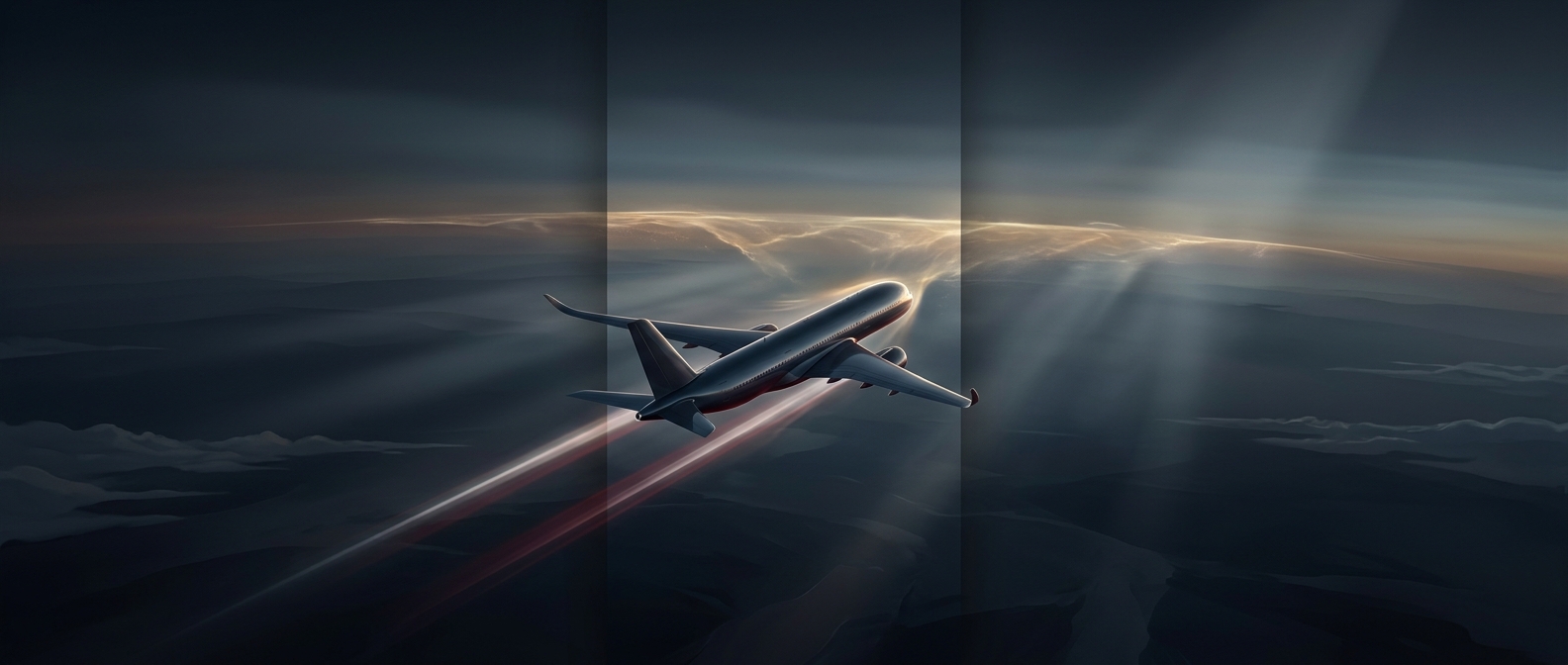
A jet’s exhaust contains water vapor, but a visible contrail forms only when the exhaust mixes with air cold and humid enough for that vapor to freeze. The resulting ice crystals may quickly evaporate in dry air. In air that is already humid with respect to ice, they can persist and grow by drawing in water vapor, then spread as winds shear them across the sky.
That is why two planes passing through nearby parts of the sky can leave very different traces: a narrow line that vanishes, or one that widens into a thin, cloudlike veil. The second can shade a much larger area than the aircraft’s path alone suggests.
A Small Cloud With Two Opposing Effects
The ice veil changes Earth’s energy balance in two directions. It reflects some incoming sunlight back toward space, reducing the energy reaching the ground. At the same time, it absorbs and re-emits some heat rising from Earth, slowing its escape to space. Which effect dominates depends partly on the time of day: blocking sunlight matters only while the Sun is shining, but trapping outgoing heat can continue after dark.
Across the planet, persistent contrails and the clouds they grow into tend to produce a net warming effect, though the balance varies with conditions and location. That makes the visible line behind a plane more than a brief exhaust trail: in the right patch of atmosphere, it can become a thin, moving cloud layer that affects the ground below and the heat leaving Earth.