Why a Bus Needs More Than One Lane to Turn
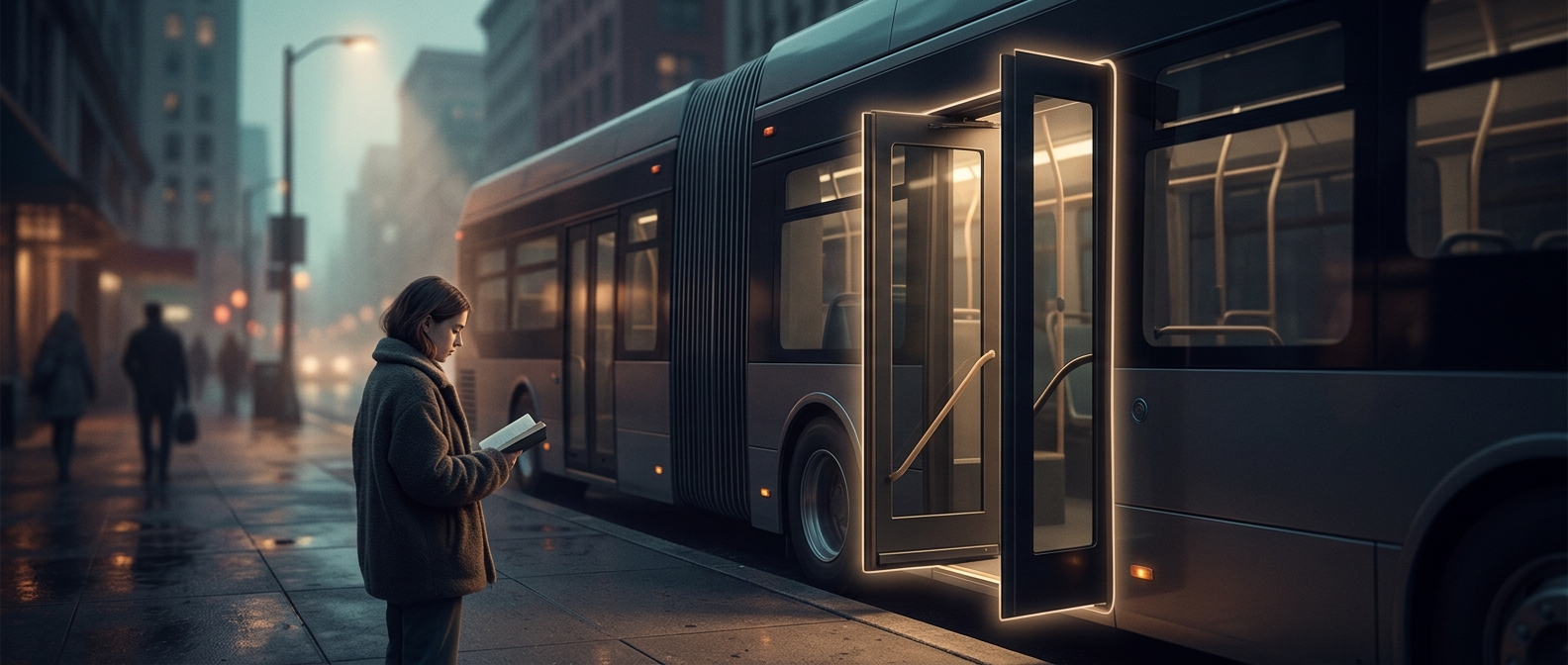
An articulated bus is made of two rigid sections joined by a flexible pivot. The joint lets the sections bend around a corner, but it does not make the bus behave like a short vehicle: the front and rear sections trace different paths as they turn.
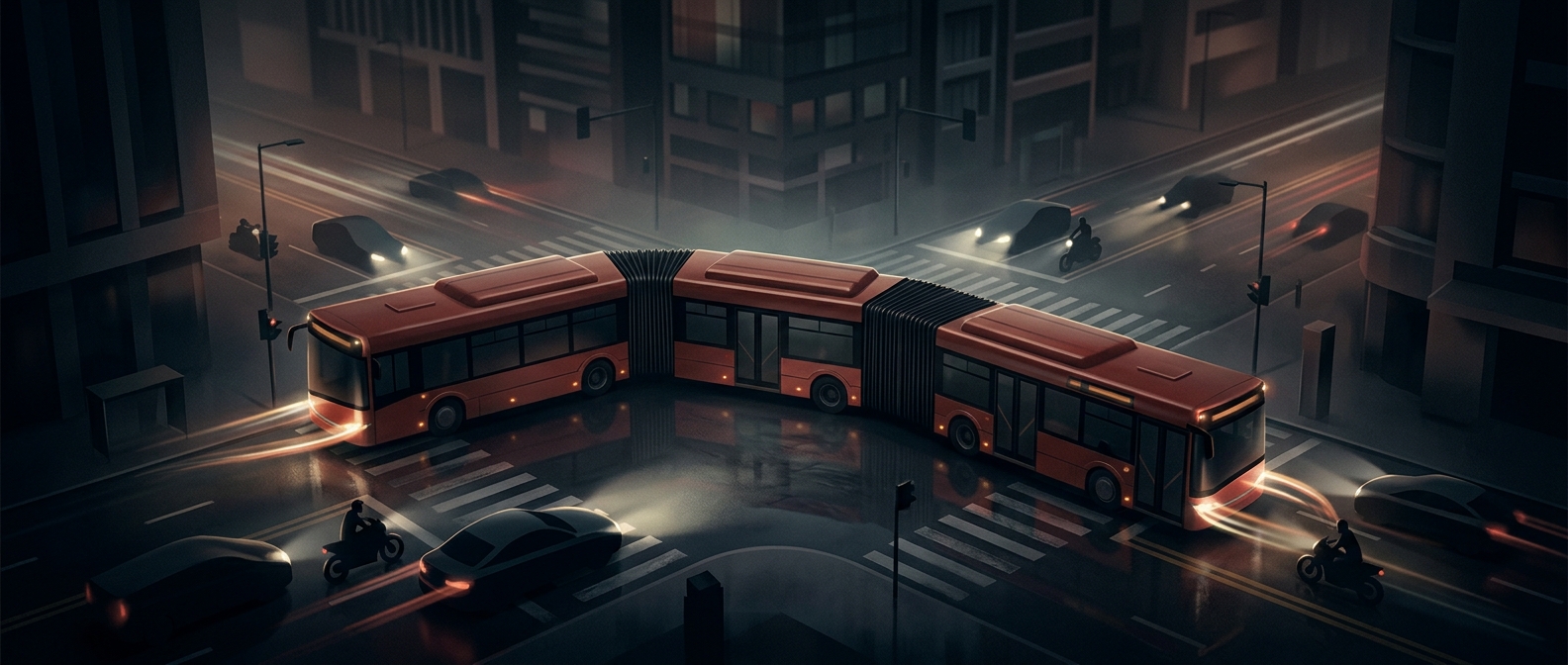
The rear wheels tend to cut inside the front wheels’ path, while the body’s overhangs sweep across space beyond the wheels. Together, those movements create a broad swept path—the full area the bus occupies during a turn. A bus may fit comfortably along a straight street yet need extra room at a tight corner.
The Intersection Becomes Part of the Turning Space
To keep the rear wheels from clipping a curb or obstacle, the driver may begin the turn from farther out than a car would. As the front clears the corner and the joint bends, the rear section follows through the intersection. For a few moments, that moving envelope can occupy multiple lanes or block the crossing entirely.
This is an engineering tradeoff built into the vehicle’s purpose. Two connected sections carry more passengers than a typical single bus, but their length demands wider turns and more clearance. Street designers account for that with generous corners or turning space; where streets are narrow, other drivers and pedestrians may simply have to wait until the whole bus has cleared.