How a bus lowers itself for boarding
Many city buses ride on air suspension: flexible rubber-and-fabric air springs support the body instead of conventional steel springs. To kneel, the bus’s control system releases some air from selected springs, allowing that part of the body to settle closer to the road. The suspension can then be brought back to its normal height by adding air again.
The exact movement depends on the bus. Some models lower the front of the bus; others can tilt toward the curb. “Kneeling” does not always mean that only the curb-side wheels move downward—the design determines which part of the suspension changes height.
A small change in height, a meaningful difference
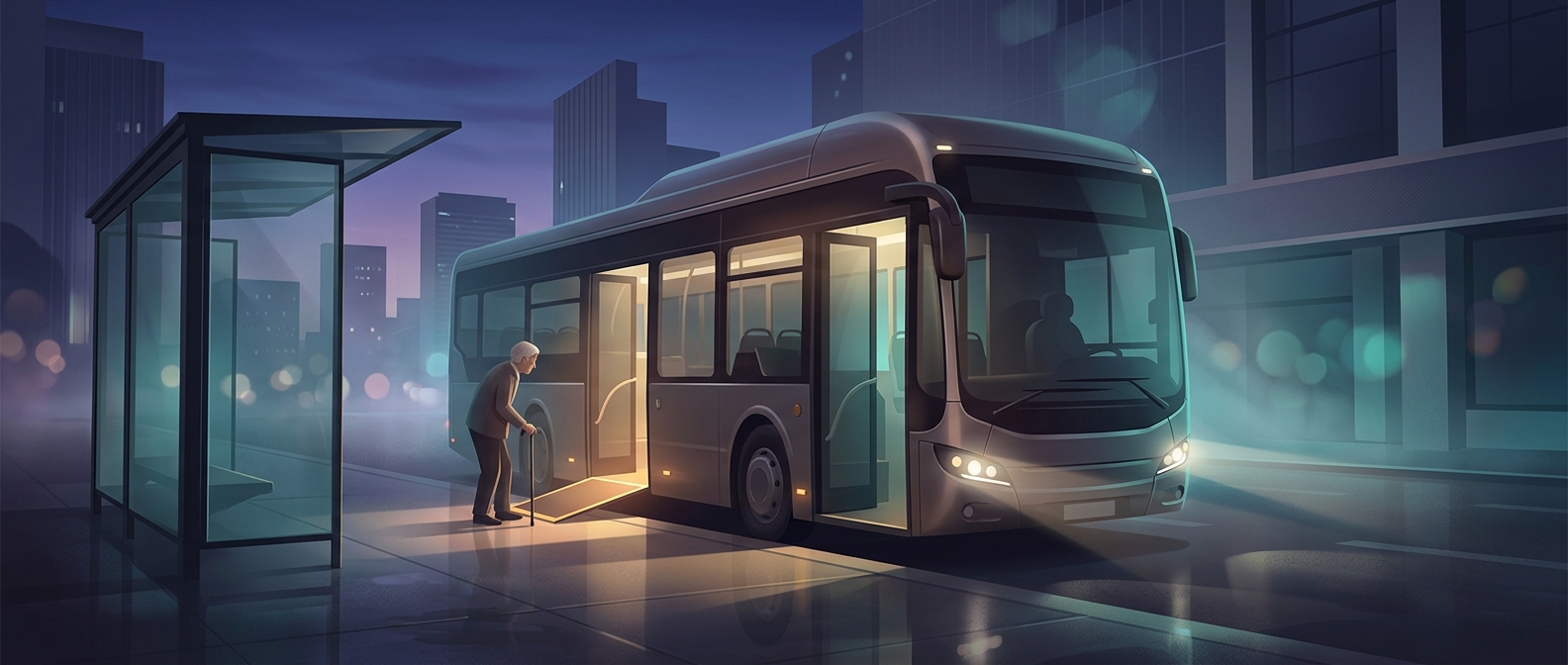
Lowering the floor reduces the step up from the sidewalk and makes the ramp less steep when it is deployed. That helps passengers using wheelchairs or walkers, but it also makes boarding easier for people with strollers, luggage, or limited mobility. The bus is not turning a step-free entrance into a literal guarantee of level access; curb height and the gap between the bus and sidewalk still matter.
The system works alongside the bus’s normal suspension, which adjusts as passengers board and leave and as the vehicle carries different loads. Kneeling is a deliberate, temporary lowering for a stop—not a separate suspension designed only for accessibility.
Why it happens at the stop
A driver activates the kneeling function when the bus is stopped, then raises the vehicle before pulling away. This gives passengers a lower entry point without requiring the bus to travel with its body unusually close to the pavement. In practical terms, the bus can adapt its height at the moment boarding happens, shrinking the first step between sidewalk and floor.