The grip is the cabin’s link to the drive system
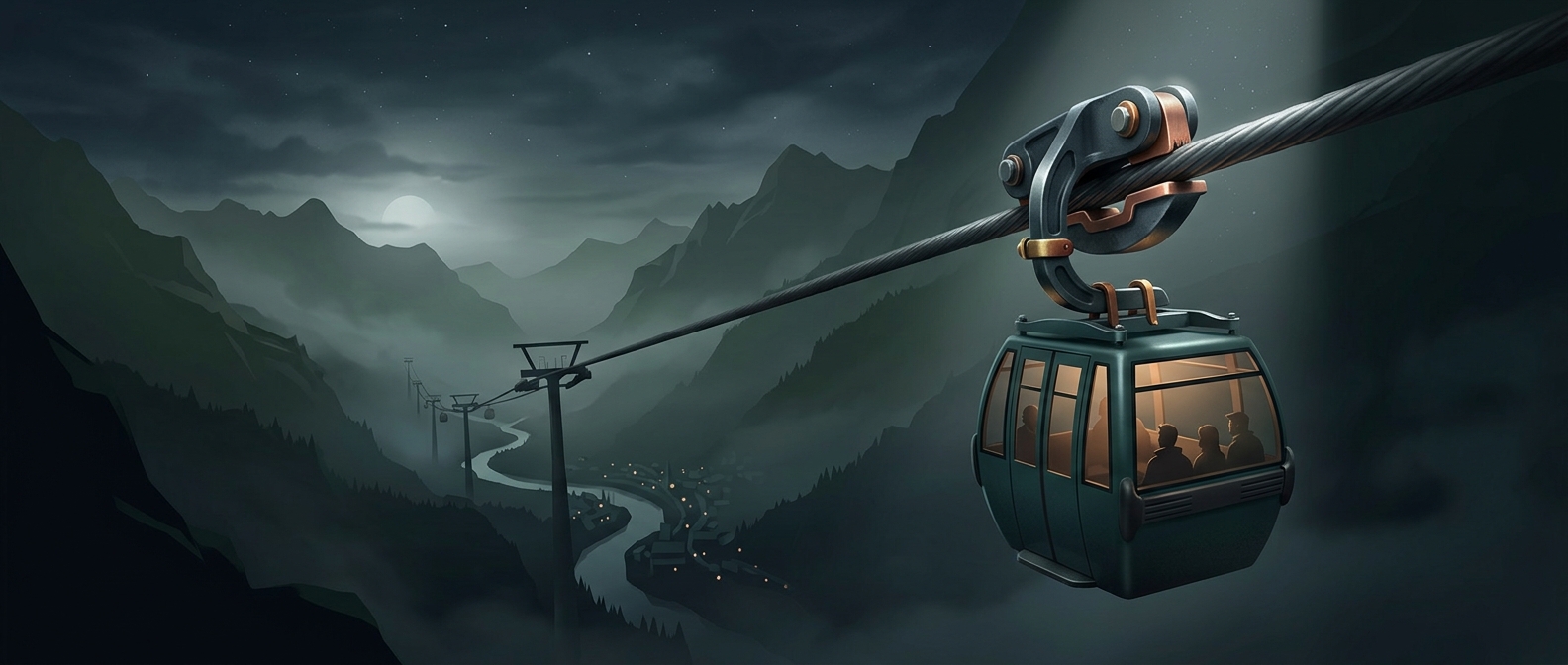
A gondola’s cable is both its route and its source of motion. At the terminal, a large drive wheel pulls the cable around; along the line, the cable’s movement carries the cabin. The grip—the metal assembly between cabin and cable—has to hold securely while allowing the cable to keep circulating around the terminal wheels.
In a fixed-grip lift, the grip stays clamped to the cable throughout the trip. Because the cabin cannot slow independently, it arrives at the station at line speed. That makes boarding and unloading a matter of timing, and stations are designed around that moving approach.
Detachable grips trade simplicity for easier boarding
Some gondola systems use detachable grips. As a cabin enters a station, guide rails engage the grip and open it, separating the cabin from the moving cable. The cabin then rolls on station tires, which slow it for passengers. Near the exit, the grip closes around the cable again, and the cabin accelerates to match its speed.
That extra mechanism lets cabins move slowly through stations without forcing the entire cable to slow down. It also adds equipment that must be carefully aligned and maintained. Fixed-grip systems avoid that transfer machinery, but their cabins remain tied to the cable’s pace.
The key design choice is not whether the cabin has its own motor—it does not—but whether its grip can release at a station. That small piece of hardware determines whether passengers board a moving cabin or one that has been temporarily taken off the line’s speed.