A Cutout Made Validation Visible
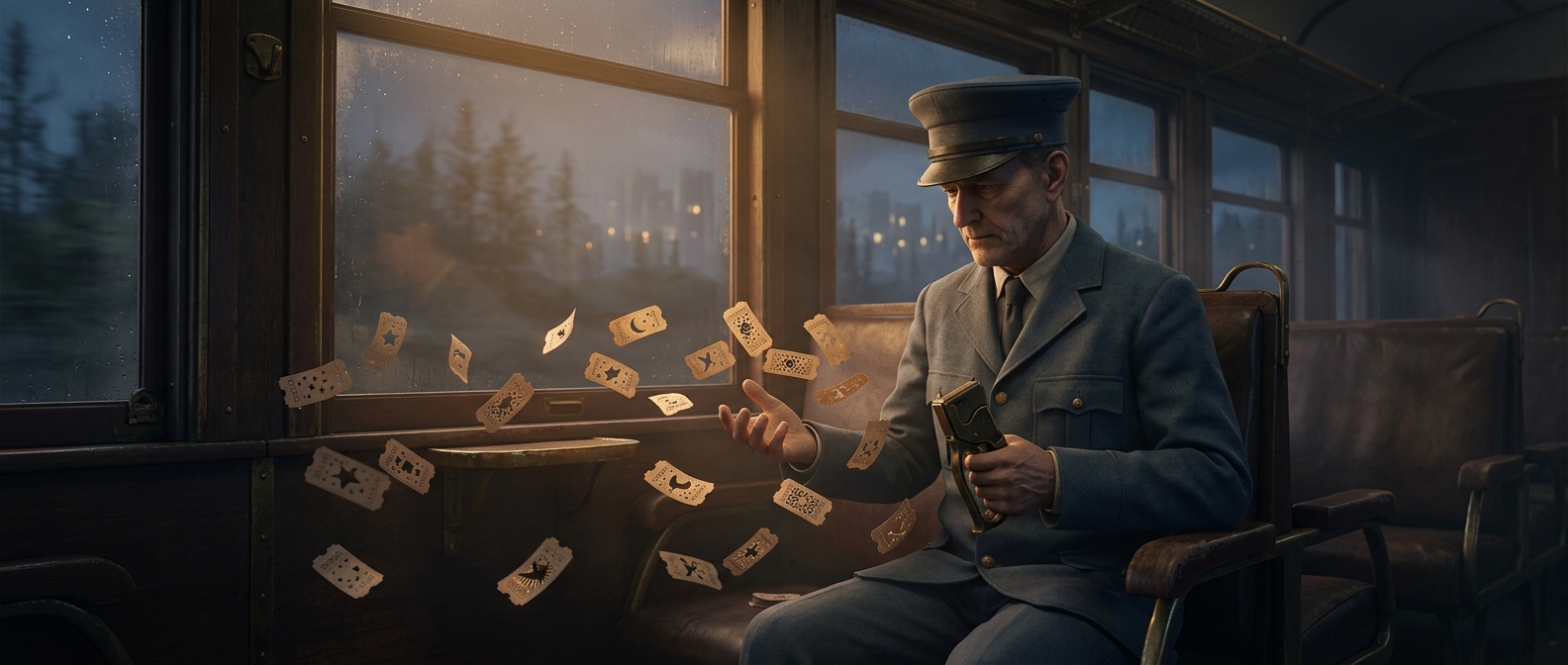
A ticket punch was a small hand tool whose jaws cut a hole or notch through the paper. Its shape came from the cutter itself: one punch might leave a round opening, another a sharply angled one. Once a conductor used it, the ticket carried a physical mark that could be recognized without reading a stamp or relying on ink that might blur.
That mattered in a crowded carriage, where checking a ticket needed to be quick. A conductor could look for the expected cutout, while the passenger’s ticket remained a record of the check. The punch did not explain itself—the mark only made sense as part of the operator’s routine—but its distinct outline made the result easy to see.
Why the Shape Helped Against Reuse
A punched ticket was harder to present as untouched: the missing paper could not simply be smoothed away. A would-be reuser might face a visible hole or an unusually shaped notch, rather than a faint mark that could be overlooked. The distinctive cut also gave staff a simple visual cue for distinguishing one validation mark from another.
The system’s strength was practical rather than elaborate. It turned an invisible administrative step—“this ticket has been checked”—into a small, durable change in the ticket itself. A tiny cut in paper could therefore speed inspection and make reuse more conspicuous, one passenger at a time.