Why a Few Minutes Can Destabilize a Bus Route
A bus route is not just a sequence of departures; it is a moving queue of vehicles sharing the same road and stops. When buses are meant to arrive at regular intervals, operators care about headway—the time between one bus and the next—as much as whether each bus matches a printed timetable.
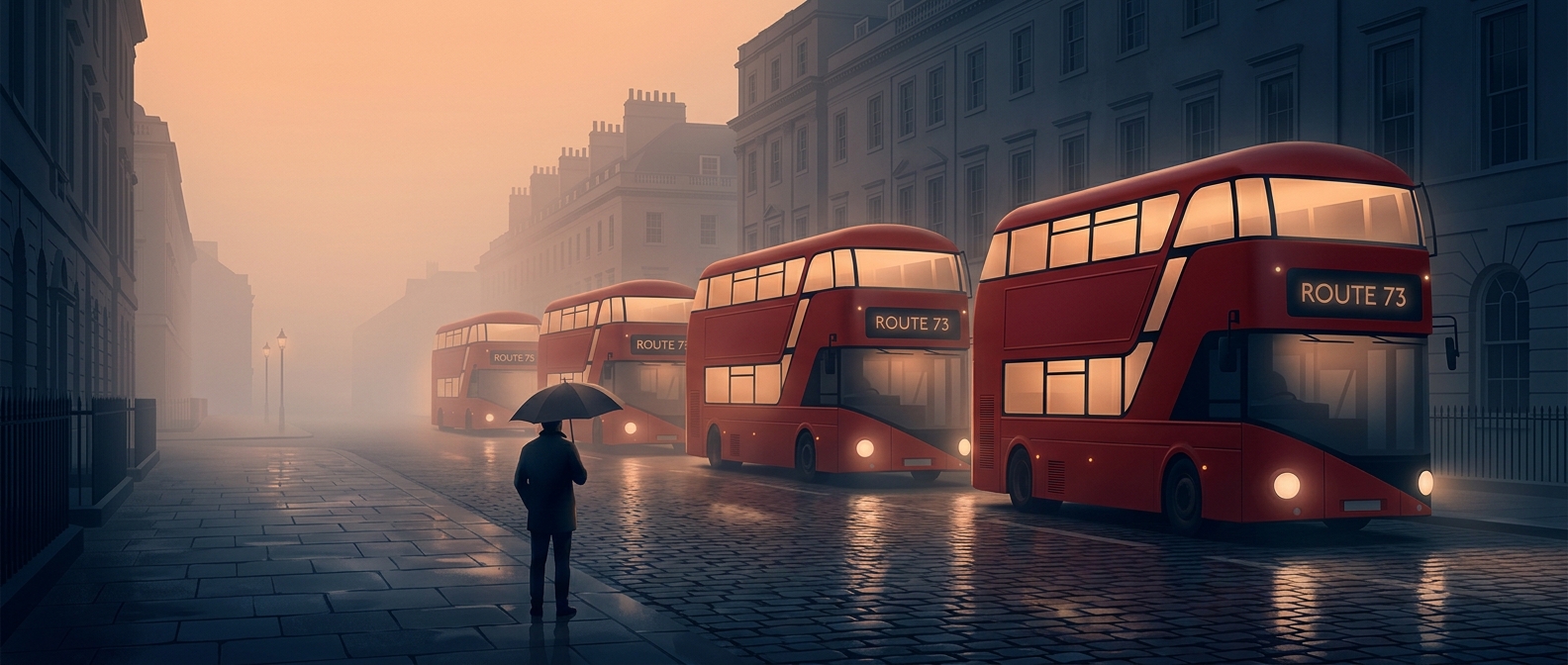
If a bus slips behind, the gap ahead of it grows. More passengers accumulate at the stops in that gap, so the late bus may spend longer boarding them. The bus behind then encounters fewer waiting passengers and can move faster. That combination can make the gap widen further while the two buses draw closer together: the start of “bus bunching.”
Holding a Bus Can Keep the Route Moving
At a control point, an operator may tell an early bus to wait briefly before continuing. The pause gives the trailing bus time to close some of the distance, helping restore a more even interval. The goal is not necessarily to make the first bus arrive at every stop as quickly as possible; it is to keep service distributed along the route.
That distinction matters to riders. If two buses arrive almost together, they may carry many of the same passengers, then leave a long gap behind them. A short, deliberate wait can therefore reduce the chance of a much longer and less predictable wait farther down the line.
The intervention has limits: traffic, passenger demand, and other delays can still disrupt spacing, and holding a bus affects the people already aboard. But it addresses a self-reinforcing problem early. On a busy route, a bus that waits for a moment can help prevent the next bus from arriving to an empty stop—and the one after that from arriving much later.