How a booking becomes a bus route
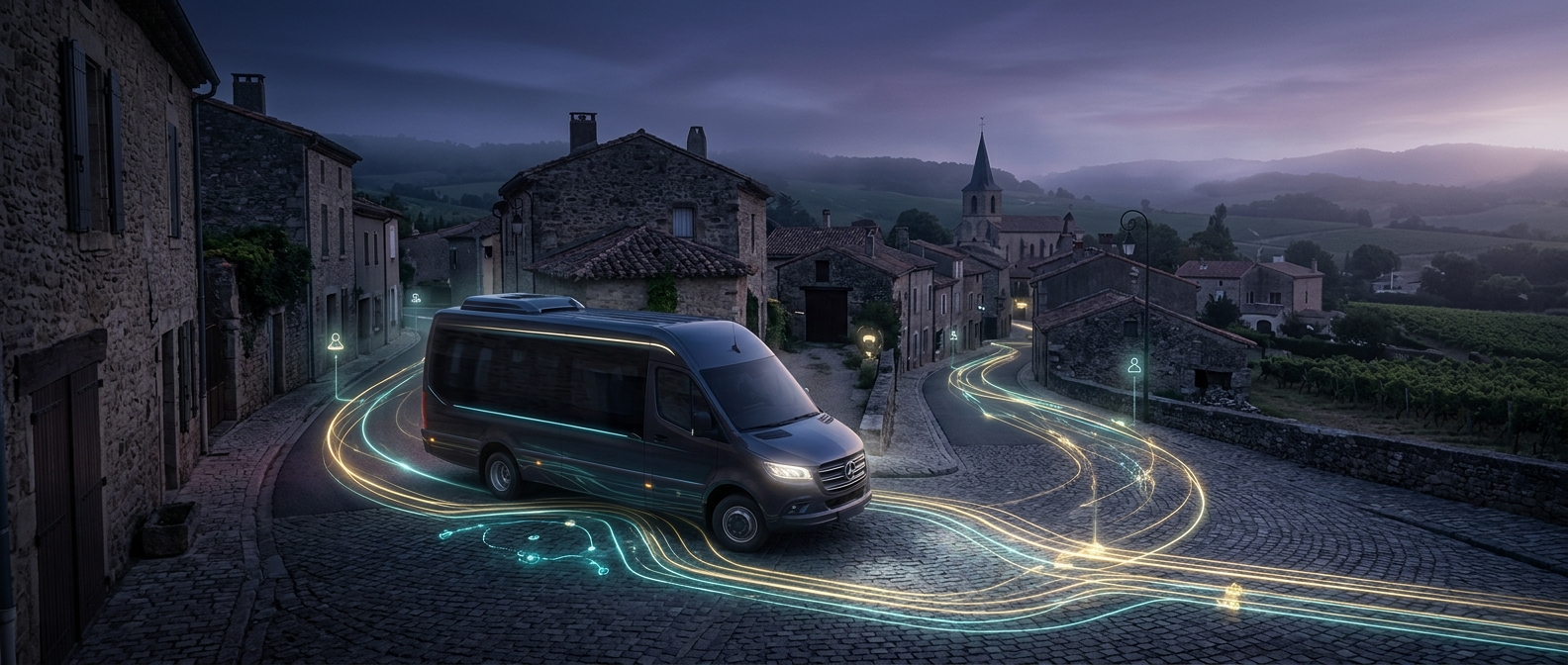
A fixed-route bus commits to a path before anyone boards: it visits the same stops in the same order, whether or not riders are waiting. Demand-responsive transport reverses that sequence. A passenger first requests a trip; software then combines compatible requests and gives the minibus a route that serves them.
The key is grouping journeys that overlap enough to share a vehicle. If several people need rides in the same general area and time window, the system can plan a sequence of pickups and drop-offs rather than dispatching a separate minibus for each person. Each booking adds a constraint: where someone must be collected, where they are going, and when the ride needs to happen. The route has to accommodate those needs while keeping the trip workable for everyone aboard.
Why this matters in scattered villages
In a rural area, homes and destinations can be far apart, while passenger numbers on any one road are low. A regular loop may spend much of its time and fuel traversing empty stretches simply to preserve its timetable. A demand-based service instead concentrates driving around actual requests, which can make it practical to offer rides across dispersed villages without running a full-size bus along every route all day.
That flexibility involves a tradeoff. Riders gain access to places a fixed line might not serve often, but the exact path depends on who else has booked. A minibus may take a less direct journey to collect another passenger, and a trip generally has to be requested rather than assumed to arrive at a particular stop on a fixed schedule.
The result is public transport shaped by the day’s passengers: the map of the service is not a permanent loop, but a route assembled from the people who need to travel.