How a dolly turns trailers into a road train
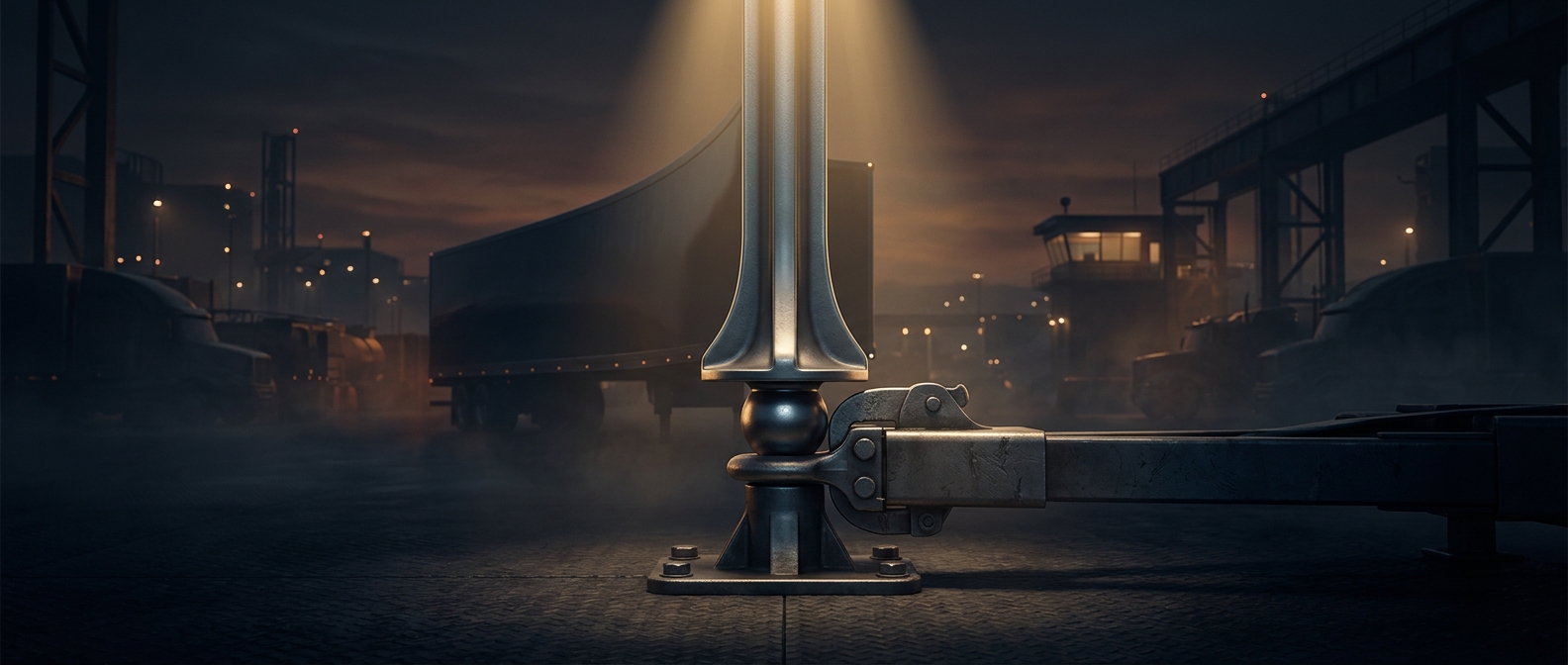
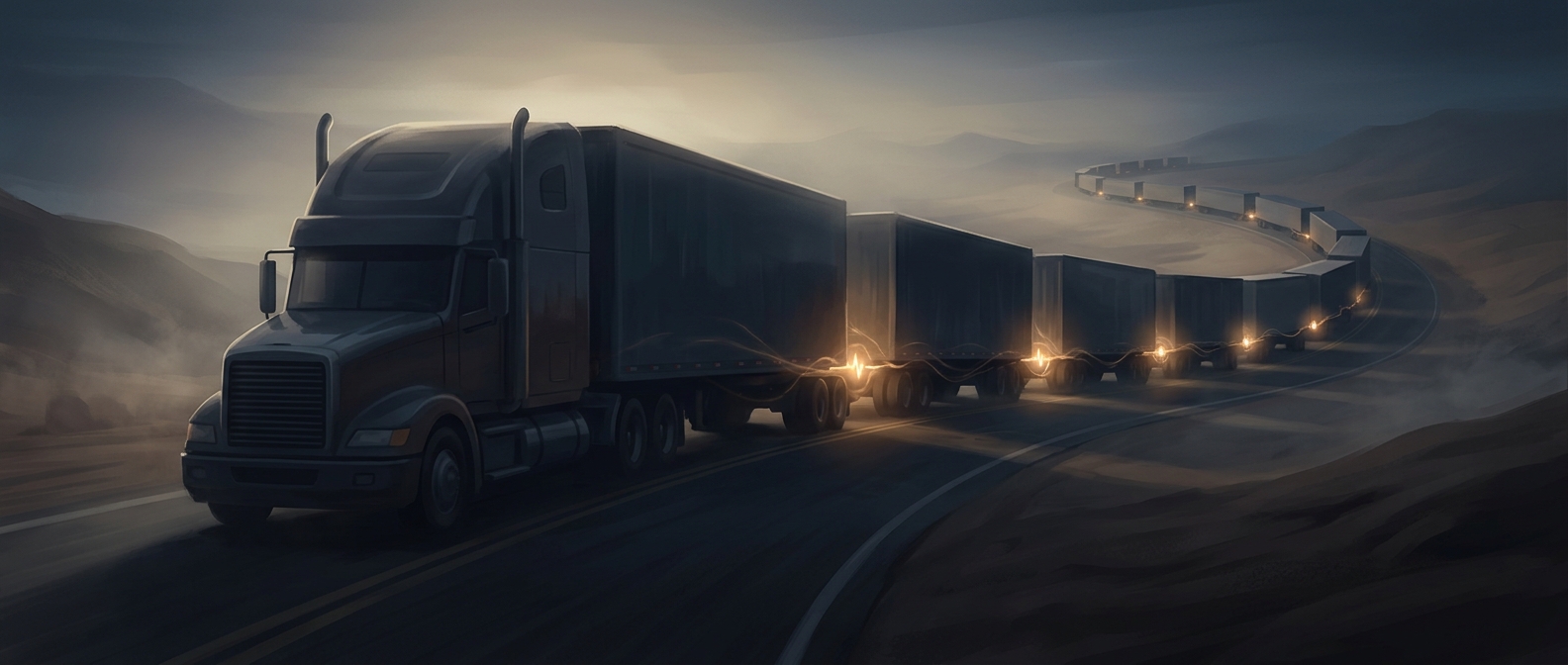
A trailer is normally built to connect to a towing vehicle at its front. To add another trailer, a truck can pull the first one while a small wheeled frame—called a converter dolly—supports the front end of the next. The dolly’s hitch couples to the rear of the first trailer; its own wheels carry the load, and a second hitch connects it to the trailer behind.
That extra set of wheels matters: the first trailer is not required to bear the weight of the second trailer’s nose. Instead, each unit has a supported connection, allowing the pull to continue through a chain of trailers.
The tradeoff is length and control
Linking trailers lets one truck move more cargo in a single trip, but every added joint can pivot. When the truck turns, the trailers trace different paths: those farther back cut closer to the inside of the turn. Drivers therefore need more room, and backing up becomes especially challenging because a small change in steering can make a trailer angle sharply at a coupling.
The dolly makes a longer combination possible, not effortless. Its practical value is that it gives the next trailer a rolling, articulated connection—one that can follow a truck over ordinary roads without rails.